


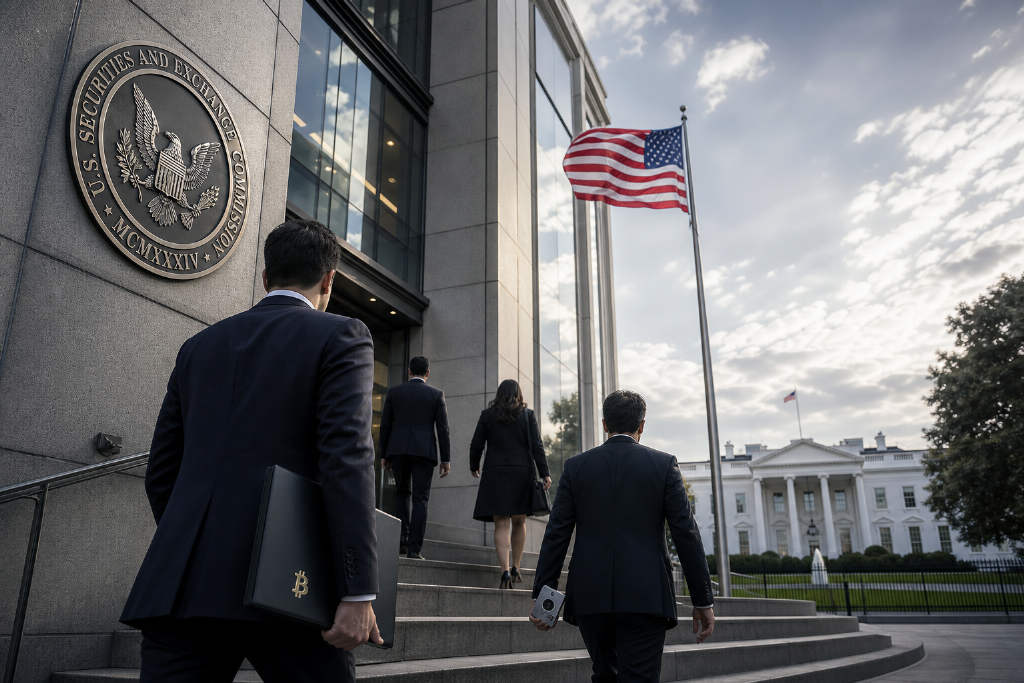
The U.S. Securities and Exchange Commission has this week sent a revived concept for a crypto custody rule to the White House Office of Management and Budget, or OMB, for review, reopening a regulatory push that had stalled during former Chair Gary Gensler’s time in office. OMB review comes before a proposal is issued in the federal rulemaking process, so the measure is back on the normal administrative track toward a formal draft.
A different tone from the 2023 proposal
The main shift is in how this is being presented. In its public regulatory agenda, the SEC says the coming proposal is meant to optimize and modernize custody rules for investment adviser client assets and fund assets, crypto assets included. The agency also says it wants to remove provisions that no longer make sense after changes in markets and trading practices.
That wording is a plain break from the SEC’s 2023 stance. The earlier version was widely seen as restrictive. This time? The direction laid out in the agenda sounds much closer to clarification and deregulation than to tighter limits.
Why the earlier effort fell apart
This is the SEC’s second shot at setting custody rules for crypto. The 2023 version would have required investment advisers to keep client crypto only with a narrow group of “qualified custodians,” usually chartered banks, trust companies, or registered broker-dealers and futures commission merchants supervised by the Commodity Futures Trading Commission, or CFTC.
At the time, Gensler said: “Do not be mistaken, the way crypto platforms operate today is not enough for investment advisers to treat them as qualified custodians” (“Do not misunderstand, the current way crypto platforms operate is not sufficient for investment advisers to regard them as qualified custodians”). That statement left the agency’s view out in the open. And it drew unusual resistance from financial institutions, crypto platforms, and parts of the regulatory community.
Lawyers at the Small Business Administration warned the SEC that the proposal had “seriously underestimated the impact on small advisers” and could leave many smaller firms unable to survive. Venture capital firm Andreessen Horowitz, or a16z, went even further, calling it “illegal, impractical, and dangerous.” The proposal never won final approval before Gensler left office, and it was formally withdrawn last year.
Atkins has taken a friendlier approach
Since taking office, current Chair Paul Atkins has described his approach to crypto regulation as friendlier and easier for firms to operate under. Clarifying the custody process is part of that plan. Over the past year, the U.S. crypto industry has also produced a group of federally chartered trust banks, which gives more institutions the legal ability to hold digital assets for clients and creates a more workable base for any new rule.
At the same time, the SEC has kept working around its previously released dedicated framework for crypto assets, identified here as “Reg Crypto.” And market participants are watching closely to see whether the tokenization pathway Atkins discussed earlier will open up.
October is the next date to watch
Based on the public review timetable, the SEC could formally release the custody rule proposal in October. But agency schedules are estimates, nothing more. Earlier items have slipped from spring into late summer, and some did not show up until the following year.
For investors and industry participants in Taiwan who want alignment with global markets, the meaning of the rule is pretty direct: if the United States clearly spells out who is qualified to custody client crypto and which risk-control standards apply, cooperation between traditional financial institutions and crypto-native platforms would rest on firmer compliance footing. That could also help later work tied to tokenized assets and ETF products.