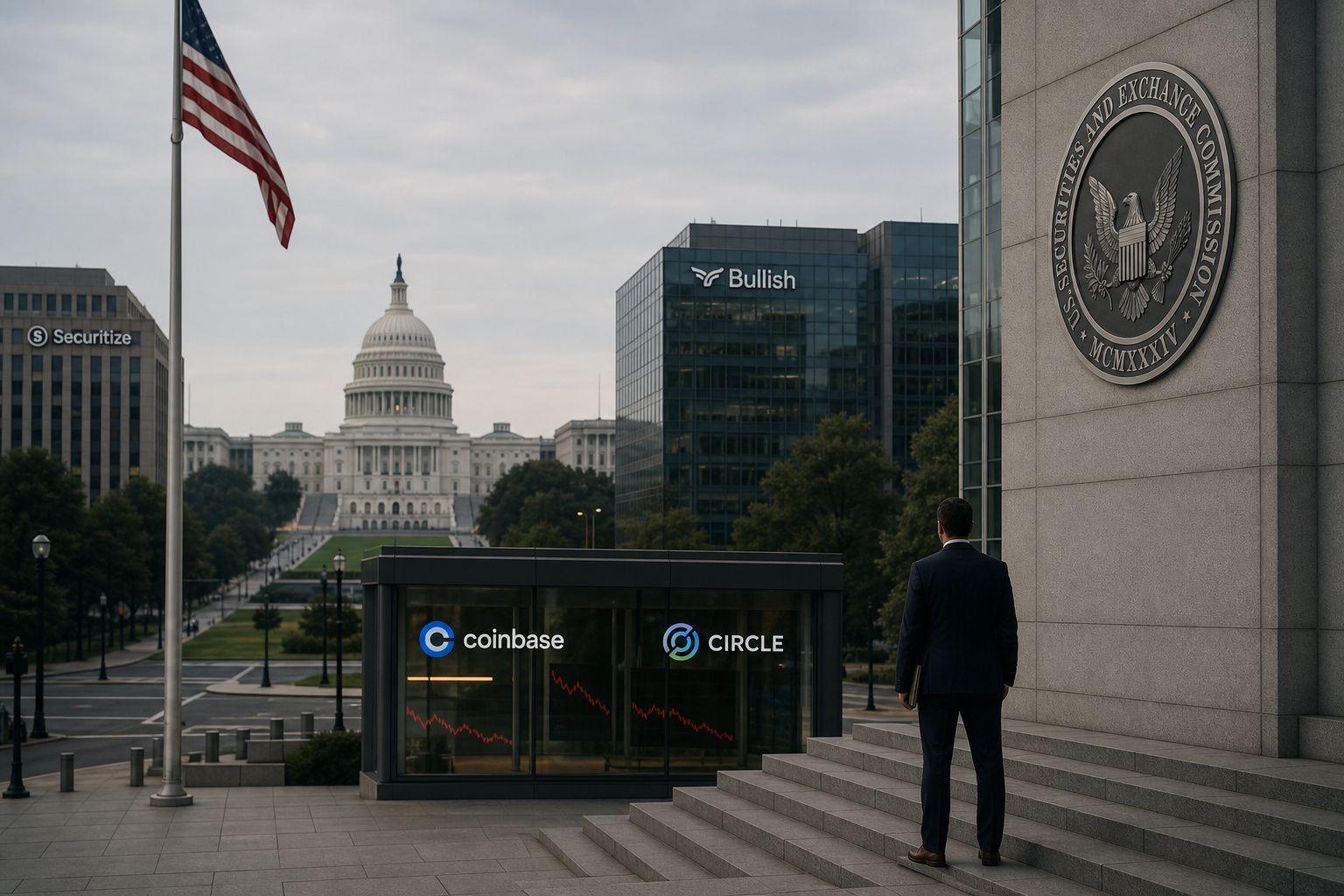
SEC delays tokenized securities plan, pressuring Coinbase, Circle and other related stocks

SEC delays tokenized securities plan, pressuring Coinbase, Circle and other related stocks

N
News Editor
2026-08-15 01:06:05
A fresh delay by the U.S. Securities and Exchange Commission on its tokenized securities agenda weighed on both crypto-linked equities and parts of the digital asset market on Friday. Shares of companies with exposure to tokenization moved lower, including Bullish, Figure, Coinbase, Circle and Securitize, the issuer behind BlackRock’s tokenized fund BUIDL. The market reaction followed another postponement of the SEC’s closely watched “innovation exemption” proposal, which had been seen as a possible path to lower regulatory barriers for issuing and trading tokenized securities. The agency also canceled a related meeting that had been scheduled to discuss whether to introduce a new framework for investment contracts tied to some crypto assets. The regulatory setback spilled into tokens as well, with Uniswap’s UNI falling about 7% over the past 24 hours and ranking among the weakest performers in the CoinDesk 20 index. Clear Street senior analyst Owen Lau said the delay acts as a “speed bump” for the tokenization sector, while stopping short of changing its long-term direction. Investors are now watching for clearer U.S. rules on tokenized securities and whether debate around the CLARITY Act and the scope of SEC authority will shape the next stage of industry development.
SECTokenized SecuritiesCoinbaseCircleUNIPolicy RegulationCLARITY Act

News that the U.S. Securities and Exchange Commission delayed its tokenized securities regulatory plan hit market sentiment on Friday, sending shares of several crypto companies with tokenization exposure lower.

Bullish, the digital asset platform, fell about 8% at one point in early trading, while blockchain lending company Figure dropped about 9%. Coinbase shares were down about 2%, and stablecoin issuer Circle slipped nearly 4%. Securitize, the issuer of BlackRock’s tokenized fund BUIDL, also fell as much as 5% intraday.

Innovation exemption plan delayed again

The market move was tied to another delay of the SEC’s closely watched “innovation exemption” plan. The proposal had been seen as a way to lower regulatory barriers for companies seeking to issue and trade tokenized securities, potentially helping Wall Street move deeper into on-chain securities.

At the same time, the SEC canceled a related meeting that had been scheduled to discuss whether to roll out a new regulatory framework for investment contracts tied to some crypto assets.

Regulatory uncertainty spills into crypto assets

The uncertainty did not stop with public companies tied to tokenization. It also weighed on the broader crypto market. UNI, the native token of decentralized exchange Uniswap, fell about 7% over the past 24 hours, making it one of the weakest-performing assets in the CoinDesk 20 index.

Analyst sees a short-term speed bump

Owen Lau, senior analyst at Clear Street, said the SEC delay is a “speed bump” for the tokenization sector, but does not change the longer-term trend.

Coinbase and Bullish are still moving ahead with tokenized stock efforts, while Nasdaq and the New York Stock Exchange are also building related infrastructure. Market attention is now turning to when U.S. regulators will provide clearer rules for tokenized securities, and whether debate over the Digital Asset Market Structure Act, or CLARITY Act, and the scope of SEC authority will affect the pace of industry development.

This article was originally published by Bit.Fan. For more cryptocurrency news and market insights, visit www.bit.fan.
300

Disclaimer:

The market information, project data, and third-party content displayed on this platform are for industry information sharing only and do not constitute any form of investment advice or return commitment.

Cryptocurrency trading carries high risks. Users should fully assess their risk tolerance and make independent decisions. All profits, losses, and legal responsibilities are borne by the users themselves.