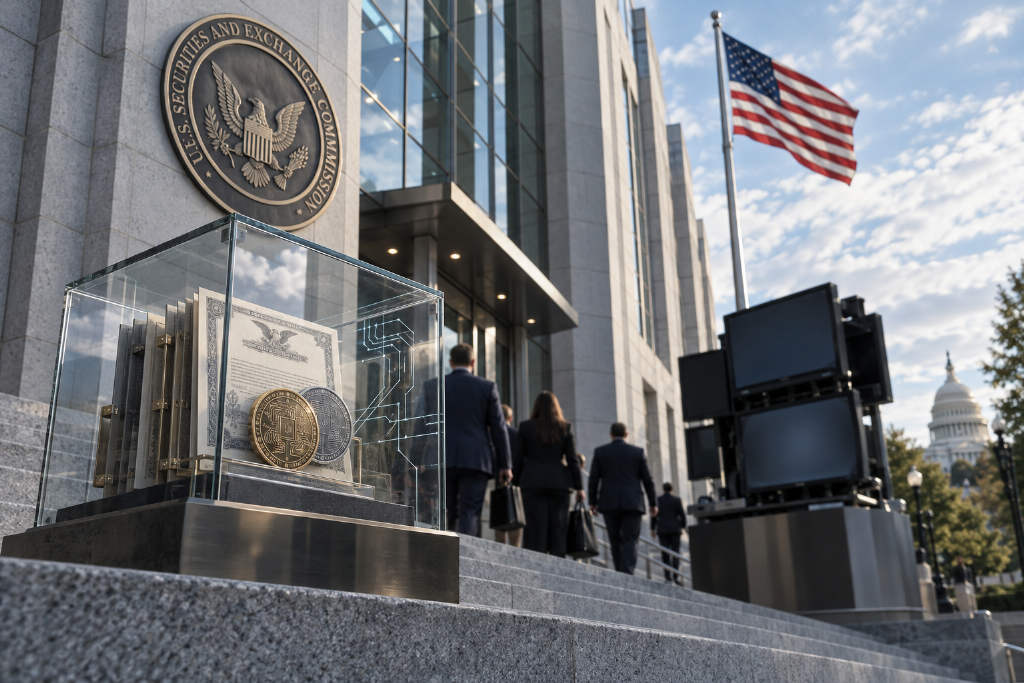
The U.S. Securities and Exchange Commission has established a five-year framework for tokenized stock trading, coming just days after the CLARITY Act failed to advance. The move lays out a regulatory path for the segment, but TD Cowen does not expect rapid uptake in the near term.
According to the investment bank, U.S. investors already have convenient access to equities through existing channels, while issuers have shown only limited interest in tokenization. On that basis, the firm said short-term adoption is likely to remain low.
TD Cowen also said perpetual futures still offer a stronger draw for investors seeking exposure to crypto-related stocks. It added that trading volumes in those products remain well above tokenized spot offerings. The report was cited by CoinDesk.
The U.S. Securities and Exchange Commission has established a five-year framework for tokenized stock trading, days after the CLARITY Act failed to advance.
Investment bank TD Cowen said U.S. investors already have convenient access to stocks, while issuers have shown limited interest in tokenization. It said adoption is unlikely to be high in the short term.
TD Cowen also said perpetual futures remain the bigger attraction for gaining exposure to crypto-related stocks, with trading volumes far above those of tokenized spot products.
The development was reported by CoinDesk.
This article was originally published by Bit.Fan. For more cryptocurrency news and market insights, visit www.bit.fan. Disclaimer:
The market information, project data, and third-party content displayed on this platform are for industry information sharing only and do not constitute any form of investment advice or return commitment.
Cryptocurrency trading carries high risks. Users should fully assess their risk tolerance and make independent decisions. All profits, losses, and legal responsibilities are borne by the users themselves.