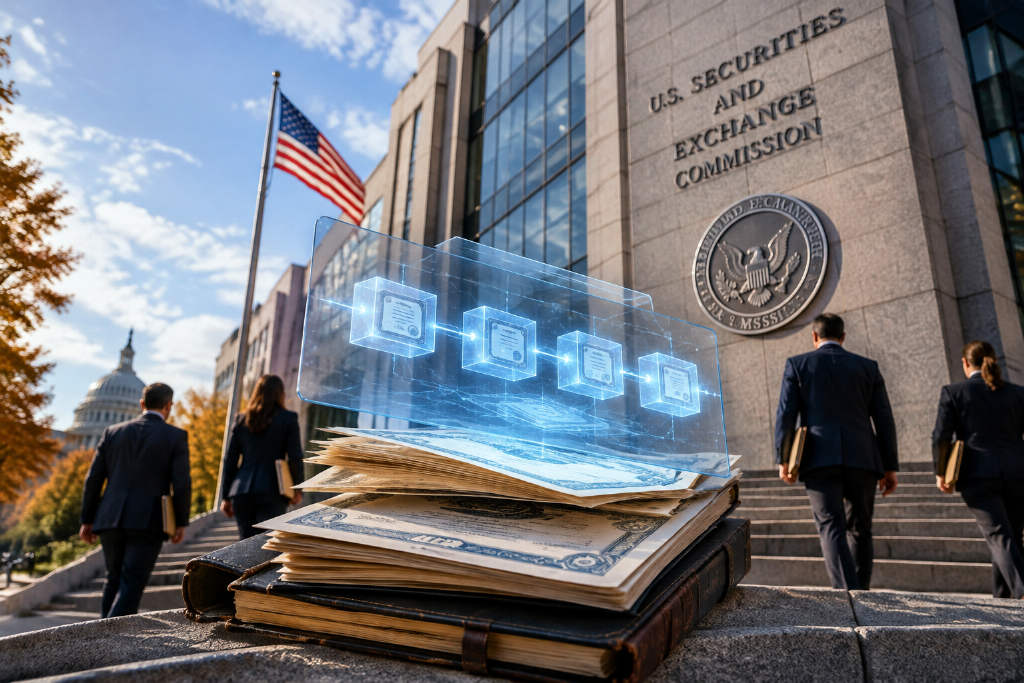
The U.S. Securities and Exchange Commission on Sept. 1 proposed what CoinDesk described as the first major update to transfer agent rules since the 1970s. SEC Chair Paul Atkins said the framework should cover how blockchain technology is used in securities issuance and share transfers, placing on-chain recordkeeping and tokenized ownership structures inside the regulatory discussion rather than at its edge.
In a related article, Fairmint co-founder Joris Delanoue argued that ownership data scattered across token wrapper layers, special purpose vehicles, broker-dealer internal ledgers and off-chain databases could recreate the late-1960s “paperwork crisis.” He said the token itself should serve as the official record required under Section 17A of the Exchange Act, instead of acting as a wrapper for an off-chain security.
Delanoue also called for the industry to consolidate ownership data around a unified open standard. His recommendations for the SEC included separating native on-chain registration from third-party wrapper models in Form TA-2, permitting cryptographic credentials as modern identity identifiers, and bringing smart-contract pre-trade restrictions into compliance enforcement.
According to CoinDesk, the U.S. Securities and Exchange Commission proposed a major update to transfer agent rules on Sept. 1, the first such overhaul since the 1970s. SEC Chair Paul Atkins said the rules should cover the use of blockchain technology in securities issuance and equity transfers.
Delanoue warns against fragmented ownership records
In an article, Fairmint co-founder Joris Delanoue wrote that if ownership data is split across token wrapper layers, SPVs, broker-dealer internal ledgers and off-chain databases, the market could replay the late-1960s “paperwork crisis.”
He argued that the token itself should be treated as the official record required under Section 17A of the Securities Exchange Act, rather than serving as a wrapper substitute for an off-chain security.
Recommendations focus on open standards and compliance design
The article called on the industry to consolidate ownership data around a unified open standard. It also suggested that the SEC distinguish native on-chain registration from third-party wrapper models in Form TA-2, allow the use of cryptographic credentials as modern identity identifiers, and incorporate smart-contract pre-trade restrictions into compliance enforcement mechanisms.
This article was originally published by Bit.Fan. For more cryptocurrency news and market insights, visit www.bit.fan. Disclaimer:
The market information, project data, and third-party content displayed on this platform are for industry information sharing only and do not constitute any form of investment advice or return commitment.
Cryptocurrency trading carries high risks. Users should fully assess their risk tolerance and make independent decisions. All profits, losses, and legal responsibilities are borne by the users themselves.