
The French semiconductor company Sequans Communications has quietly exited its corporate Bitcoin reserve strategy a mere 11 months after a high-profile launch. The NYSE-listed firm sold its Bitcoin holdings to fully repay convertible bonds and now intends to gradually offload the remaining 658 BTC. At its peak, the company held as many as 3,234 bitcoins; the venture turned into a costly case of buying high and selling low.

High-Profile Entry Amid Delisting Threat
Sequans launched the Bitcoin reserve plan on June 23, 2025, shortly after receiving a delisting warning from the New York Stock Exchange because its market cap and shareholders’ equity had both fallen below the $50 million minimum. Swan Bitcoin and its CEO Cory Klippsten acted as exclusive advisor and execution partner, loudly promoting the move. Klippsten declared that “Sequans could become a leader in the corporate Bitcoin treasury space.” At the time, SQNS shares traded at $23.40; CEO Georges Karam also publicly expressed strong conviction in Bitcoin’s long-term value.
A Flawed Debt-Fueled Structure
To fund the strategy, Sequans completed a $384 million private placement via joint bookrunners Northland Capital Markets and B. Riley Securities. However, only $195 million came from American depositary shares priced at $1.40 each; the remaining $189 million consisted of convertible bonds secured by Bitcoin collateral. From day one, therefore, the BTC held as reserves was effectively pledged to creditors. By October 3, 2025, Sequans held 3,234 BTC at an average cost of approximately $116,643 per coin, just as the market price had sunk to the $73,000 range, leaving the company deeply underwater on its holdings.

Forced Selling Betrays “Never Sell” Mantra
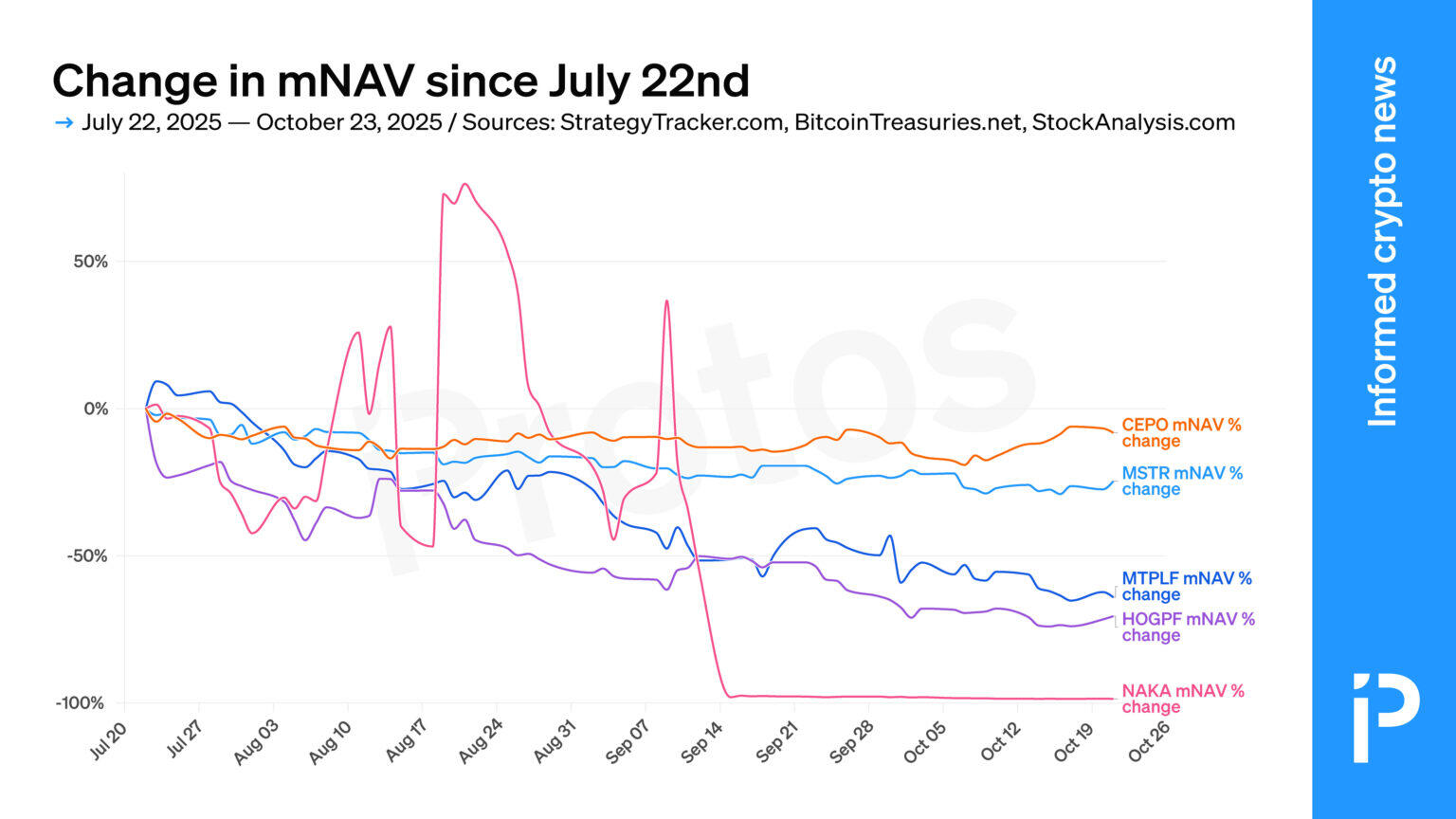
In November 2025, the company sold 970 BTC to meet debt obligations, directly violating the core hodl principle championed by MicroStrategy’s Michael Saylor: “Never sell your Bitcoin.” Over the following five months, the adjusted net asset value per share of many Bitcoin treasury companies deteriorated. In May 2026, Sequans announced simply: “The Bitcoin reserve strategy has been terminated.”
Financial Carnage and Refocus on Core Business
CEO Karam now characterizes the debt repayment as a turning point, with Sequans returning to its IoT semiconductor roots. Yet warning signs had already appeared in the fiscal Q1 2026 report, which revealed revenue of just $6.1 million against an operating loss of $50.5 million, and explicitly noted the planned exit from Bitcoin treasury operations. The full-year 2025 annual report paints an even grimmer picture: net loss of $109.3 million, including a $67.4 million unrealized impairment loss on Bitcoin assets, pushing accumulated losses to $145.1 million. SQNS stock has dropped 77% year-to-date, more than 80% from the day the Bitcoin plan was launched, and 92% from its one-year high. The dual aims of strengthening financial resilience and delivering long-term shareholder value through Bitcoin reserves failed completely, leaving only tens of millions of dollars in realized losses and a nearly worthless equity story.