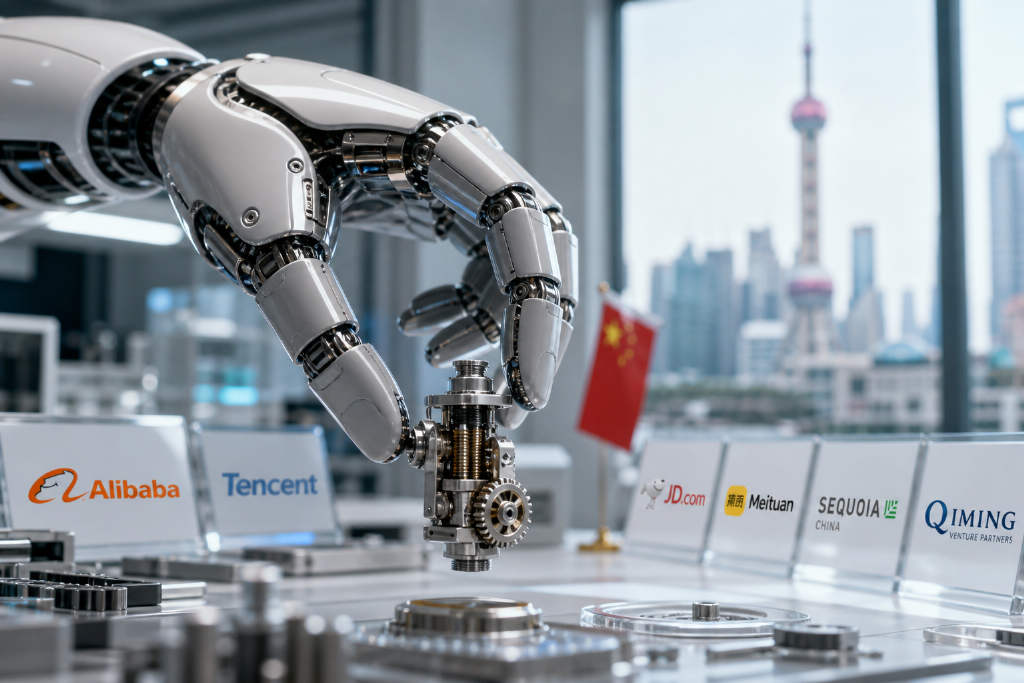
General-purpose robotics company Sharpa has completed more than 4.5 billion yuan in funding, according to LatePost, with investors including Alibaba, Meituan, Tencent, JD.com, Sequoia China, Qiming Venture Partners, and Meituan Longzhu. The company was valued at 22 billion yuan after the financing round. This marks the first time Sharpa has publicly disclosed its fundraising since its establishment. Sharpa was founded at the end of 2024 by Hesai Technology CEO Li Yifan, CTO Xiang Shaoqing, and chief scientist Sun Kai. The company develops general-purpose robots and components focused on dexterous manipulation. Co-founder Li Yifan said Sharpa’s approach is to first fully penetrate several real-world application scenarios, building generalized capabilities and real operational data within those tracks before gradually entering households starting in 2028. He said such real-world scenarios need to meet three conditions: the environment is not specially modified for robots, the robot operates autonomously throughout the process, and it can complete complex tasks involving multiple steps.
General-purpose robotics company Sharpa has raised more than 4.5 billion yuan, according to LatePost, with backing from Alibaba, Meituan, Tencent, JD.com and other industrial investors, as well as Sequoia China, Qiming Venture Partners, and Meituan Longzhu. The company’s post-money valuation was reported at 22 billion yuan.
This is the first time Sharpa has publicly disclosed its fundraising since the company was founded.
Founding team and business focus
Sharpa was founded at the end of 2024 by Hesai Technology CEO Li Yifan, CTO Xiang Shaoqing, and chief scientist Sun Kai. The company develops general-purpose robots and components focused on dexterous manipulation.
Li Yifan outlines the company’s rollout plan
Co-founder Li Yifan said Sharpa’s logic is to first fully work through several real deployment scenarios, building generalized capabilities and real-world data within those tracks, before gradually moving into homes starting in 2028.
He said real-world scenarios must meet three conditions:
- The environment is not specially modified for robots.
- The robot operates autonomously throughout the entire process.
- The task involves multiple steps and is complex to complete.
This article was originally published by Bit.Fan. For more cryptocurrency news and market insights, visit www.bit.fan. Disclaimer:
The market information, project data, and third-party content displayed on this platform are for industry information sharing only and do not constitute any form of investment advice or return commitment.
Cryptocurrency trading carries high risks. Users should fully assess their risk tolerance and make independent decisions. All profits, losses, and legal responsibilities are borne by the users themselves.