
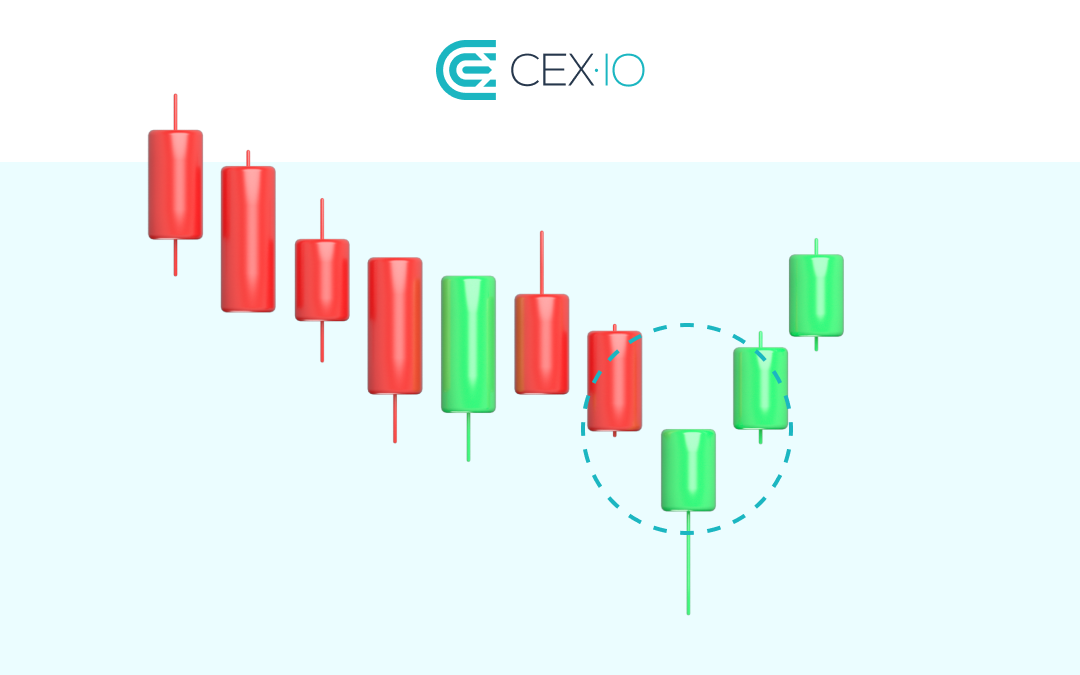
Single candlestick patterns, formed by just one Japanese candlestick, can indicate further price movement. They typically appear at the end of trends, hinting at reversals or indecision. Here's a breakdown of six common patterns.
Doji: Indecision That May Signal a Turn
A Doji has a tiny body where open and close are nearly equal, with long upper and lower shadows. Variations include cross, T-shape, and inverted T. By itself, Doji is neutral, reflecting a standoff between buyers and sellers. After a downtrend, it may signal an upward reversal; after an uptrend, a downward reversal. Dragonfly Doji (T-shape) and Gravestone Doji (inverted T) point more clearly to reversals. Dojis are relatively rare and not highly reliable on their own, so confirmation from the next candle is crucial.
Spinning Top: Loss of Momentum
A Spinning Top has a small real body with long shadows of equal length. It can be bullish or bearish. Like a Doji, it signals indecision and potential reversal. A Bullish Spinning Top after a downtrend hints at an upward reversal; a Bearish Spinning Top after an uptrend hints at a drop. The color matters less than the shape and the preceding trend. Formation shows both bulls and bulls tried to move price but failed to gain control, closing near open. Spinning Tops are more common than Dojis, and a reversal requires a confirming candle.
Marubozu: A Strong Directional Move
Marubozu is a long-bodied candle with little or no shadows. Bullish Marubozu suggests continued upside; bearish Marubozu suggests continued downside. Even after a downtrend, a Bullish Marubozu can signal a shift in sentiment. Traders must identify Marubozu while it's forming for early entry, but waiting for the candle to close is less risky. If the open equals the low and current price equals the high, a Bullish Marubozu may be forming; the opposite indicates a bearish one.
Hammer and Inverted Hammer: Bottoming Signals
A Hammer has a small body and a long lower shadow, forming after a downtrend. It suggests sellers have been exhausted and buyers are stepping in. An Inverted Hammer has a long upper shadow, also after a downtrend, showing buyers tried to push price up but sellers resisted, yet could not force price lower. Both can be either bullish or bearish. The signal is a potential bottom reversal, confirmed by a subsequent bullish candle.
Hanging Man and Shooting Star: Top Reversal Warnings
These patterns look identical to Hammer and Inverted Hammer but occur in an uptrend. Hanging Man has a long lower shadow, indicating sellers growing strong while buyers barely maintain the trend. Shooting Star has a long upper shadow, showing buyers pushed high but sellers took over. Both signal weakening of buyers and a likely downward reversal, which needs confirmation from a bearish candle.