
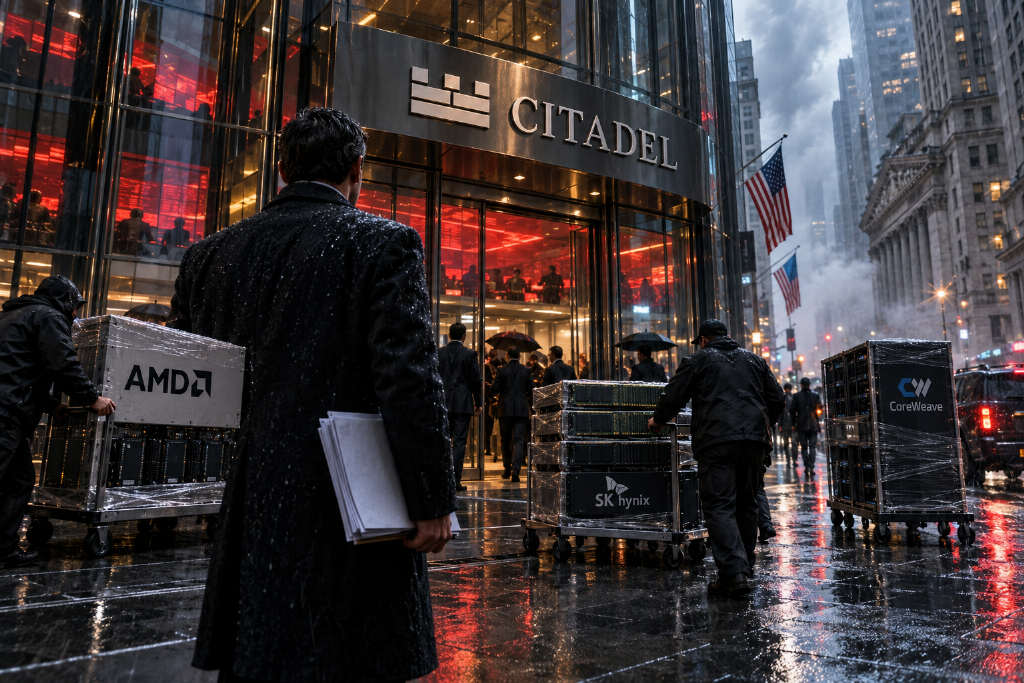
Situational Awareness, the hedge fund founded by former OpenAI researcher Leopold Aschenbrenner, suffered another setback after re-entering AI infrastructure trades in September. The fund had already been hit hard in July, when a sell-off in AI stocks and leverage pressure drove a 67% monthly decline in portfolio value and forced it to sell most of its public-market holdings to Citadel to avoid a deeper liquidity crisis.
The rebound attempt has also run into losses. After putting several hundred million dollars back to work in early September through options tied to AI supply-chain names such as AMD, SK Hynix and CoreWeave, the fund saw those positions come under renewed selling pressure. Data compiled by Coin Bureau in mid-October showed that seven major holdings had fallen an average of 18.3% since Sept. 8, with CoreWeave down 37.4%.
From a 439% gain to a 67% monthly drawdown
Situational Awareness had been one of Wall Street’s most closely watched AI-themed funds this year. Aschenbrenner’s investment thesis centered on fast-growing demand for AI compute, with positions across memory, semiconductors, energy and data-center supply chains, amplified through heavy leverage.
The strategy produced a return of as much as 439% in the first half of the year. That changed in July, when global AI-related stocks corrected sharply. In a letter to investors, the fund said portfolio value dropped about 67% during the month. It then moved to deleverage aggressively and sold most of its public-market positions to Citadel.
Aschenbrenner said in the letter that the fund had come close to what he described as an unacceptable risk of permanent capital loss, and he apologized to investors. Even after the July hit, the fund was still up about 80% for the year as of the end of that month because of its earlier gains.
Ken Griffin says market expectations can accelerate a fund’s collapse
In a recent Bloomberg interview and at Citadel Securities’ annual Future of Global Markets conference, Citadel founder Ken Griffin gave his most detailed public account so far of how the firm handled the trade.
He said that when the market starts to suspect a large fund may be forced to sell stocks, other traders often react before the liquidation is complete. Some institutions may short the names involved. Others may stop buying or cut exposure to similar holdings. That can worsen liquidity conditions, turning a potential forced-unwind risk into a real one.
Griffin said Situational Awareness ran into that kind of chain reaction. Citadel decided to step in with a portfolio-level solution that would allow the fund to raise cash quickly, and the transaction was completed in less than 24 hours.
His explanation of the trade was straightforward: once fears of a sudden large-scale liquidation begin to fade, the affected assets often rebound quickly. Citadel then used its own trading and risk-management systems to reduce the concentration risk in the positions it had taken on.
According to an investor letter released in August, Citadel completed more than $4 billion in market transactions through nearly 100 block trades and removed more than 80% of the overall risk exposure tied to the acquired portfolio. Asked about the outcome, Griffin said only, 「We did pretty well.」
September re-entry also turned lower
Despite the July losses, Aschenbrenner did not abandon his long-term view on AI infrastructure. By September, Situational Awareness had put several hundred million dollars back into the market through FLEX Options tied to AI-related names.
The new basket included AMD, Intel, SK Hynix, SanDisk, CoreWeave, Bloom Energy and the Roundhill Memory ETF (DRAM), which tracks the memory industry.
This time, instead of using total return swaps to build highly leveraged positions, the fund used options premiums to gain market exposure. That structure reduced the risk of margin calls and forced liquidation.
The instrument changed, but the direction of the bet did not. Aschenbrenner remained focused on long-term growth in AI infrastructure, and the timing again ran into a weak market. From Sept. 8 to Oct. 18, six of the fund’s seven main positions declined, for an average drop of 18.3%.
CoreWeave fell 37.4%, SK Hynix dropped 25.8%, SanDisk lost 23.8%, the DRAM ETF declined 22.9%, and Bloom Energy and Intel fell 18.1% and 9.4%, respectively. AMD was the only gainer, rising about 9.1%.



