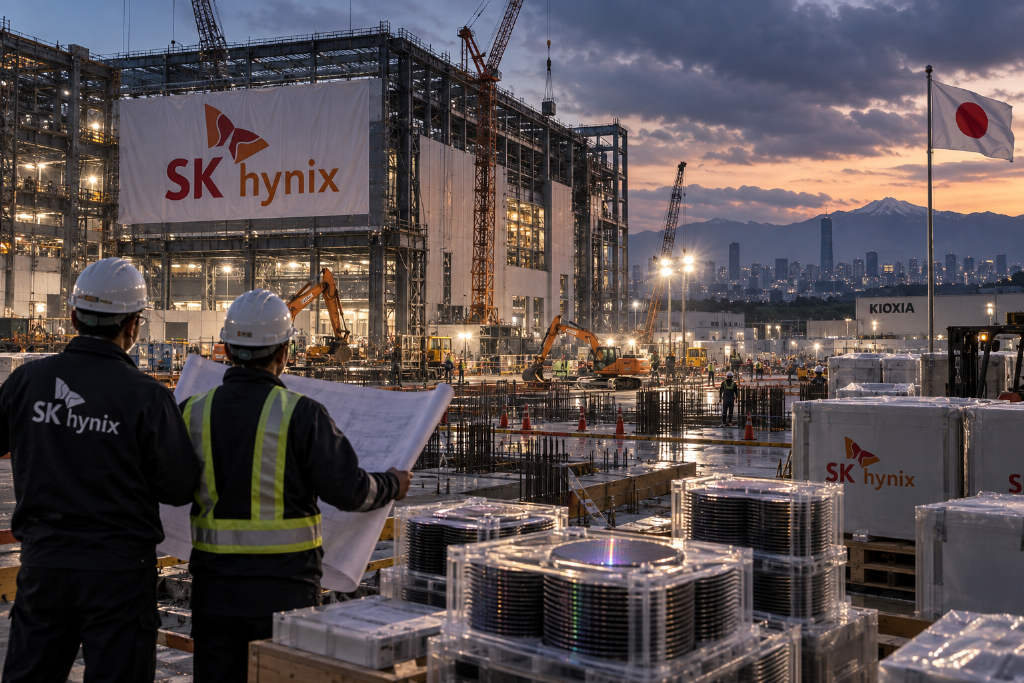
SK Hynix has reportedly begun construction of a memory chip plant in Japan, according to South Korean media outlet SME Daily. The report said the company had started foundation work for a semiconductor factory in northeastern Japan, even though it had said just one month earlier that no specific decision had been made.
People familiar with the industry told the outlet that groundwork is already underway at the site. One industry source said it remains unclear whether the factory is being built solely by SK Hynix or as a joint venture with Kioxia. Still, the source said the start of foundation work indicates SK Hynix’s intention to enter the Japanese market.
The same source also said SK Hynix recently asked domestic South Korean parts suppliers to increase shipments, a move described as part of the company’s response to tight memory chip supply.
SK Hynix has started construction of a memory chip plant in Japan, South Korean media outlet SME Daily reported on Sept. 28. The report came just one month after the company had said there was 「no specific decision」 on the matter.
According to industry sources cited in the report, SK Hynix has begun foundation work for a semiconductor factory in northeastern Japan. One source said it is still unclear whether the plant is being built solely by SK Hynix or through a joint venture with Kioxia, but added that groundwork has already started at the local site.
The source said the move shows SK Hynix’s intention to enter the Japanese market. The same person also said SK Hynix recently asked domestic South Korean component suppliers to expand supply, indicating that the company is actively responding to tight memory chip supply.
This article was originally published by Bit.Fan. For more cryptocurrency news and market insights, visit www.bit.fan. Disclaimer:
The market information, project data, and third-party content displayed on this platform are for industry information sharing only and do not constitute any form of investment advice or return commitment.
Cryptocurrency trading carries high risks. Users should fully assess their risk tolerance and make independent decisions. All profits, losses, and legal responsibilities are borne by the users themselves.