
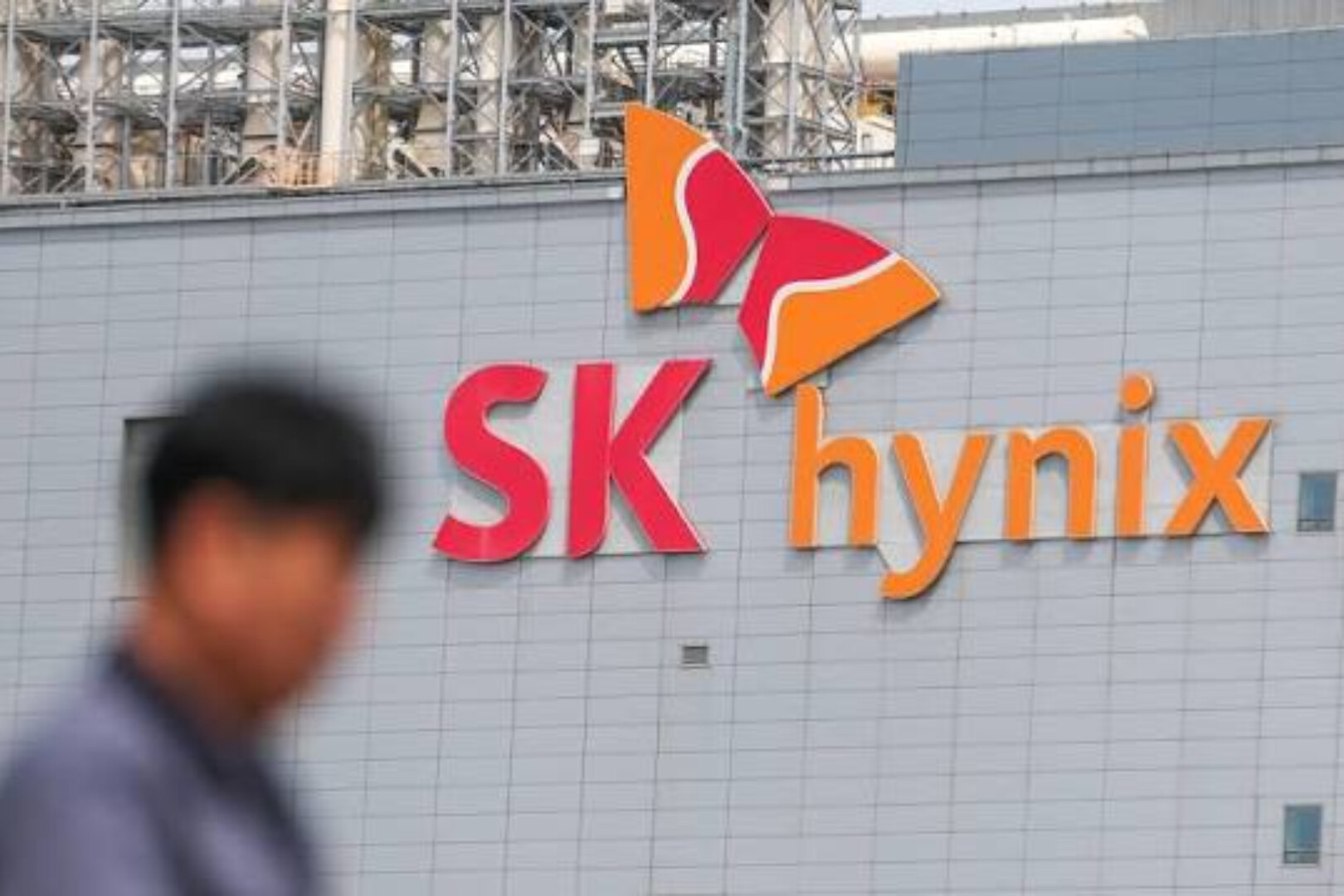
SK Hynix slides as Seoul market trips a circuit breaker
South Korea’s AI stock trade took another hit on July 13. At 9:35 a.m., the Korea Exchange activated a circuit breaker after the KOSPI’s intraday decline widened to 6%. SK Hynix fell as much as 12%, dropped below KRW 2 million, and touched its lowest level since June 11. From its June 25 record high, the stock had pulled back 33%.
A Hong Kong-listed 2x long Hynix ETF fell more than 22% on the day.
After a 12-month surge, the AI memory trade is being repriced
The scale of the reversal reflects how extreme the earlier rally had become. Over the past 12 months, SK Hynix’s Seoul-listed shares had risen about 850%, lifting its market capitalization above $1 trillion. On June 22, it set a record closing mark and at one point overtook Samsung Electronics in market value.
The source text says SK Hynix holds more than 56% of the global HBM market, supplies roughly 70% of HBM orders for Nvidia’s new-generation AI servers, has long-term contracts booked through 2028, and posted a 72% operating margin in the first quarter.
Sentiment shifted in early July after news that Meta planned to sell AI computing capacity externally. Buyers interpreted that as a sign that hyperscalers may have built too much. Morgan Stanley’s chief U.S. equity strategist then recommended cutting semiconductor exposure, and the Philadelphia Semiconductor Index has fallen more than 13% since the start of July. On the first Seoul trading day after that signal hit, the KOSPI dropped nearly 8% and SK Hynix lost more than 12%, erasing more than $100 billion in market value in a single session.
Volatility did not stop there. On July 3, the KOSPI rebounded more than 5% and rose enough to trigger a volatility curb that halted program buying. On July 7 and July 8, the market hit circuit breakers on consecutive down days. By the July 8 close, the index was down more than 20% from its June 19 high, meeting the threshold for a technical bear market. SK Hynix has already logged more than 50 trading days this year with moves greater than 5% in either direction, versus 37 in all of last year.
Strong earnings were not enough
One of the clearest signs of how far expectations had run came on July 7. Samsung Electronics released second-quarter guidance showing operating profit of KRW 89.4 trillion, up 1810% from a year earlier, above market expectations and even above its full-year 2025 profit. The stock still sold off sharply, and the broader market hit a circuit breaker.
The immediate trigger for July 13’s selling was a preview note from local brokerage KIS. It forecast SK Hynix second-quarter operating profit at KRW 60.4 trillion, up 556% year over year, but about 8% below the KRW 65 trillion consensus.
KIS tied that gap to pricing mechanics. HBM is sold under long-term supply agreements with prices locked in, so contract pricing does not reset quickly with spot moves. In the second quarter, standard DRAM spot prices rose about 30% from the prior quarter and NAND prices rose about 50%. That left SK Hynix, the company with the heaviest HBM mix, capturing less of the short-term price upside than investors expected.
Record Nasdaq deal, but pressure stayed in Seoul
On July 10, SK Hynix’s ADR debuted on Nasdaq at $149 a share, raising $26.5 billion. The source text says that topped Alibaba’s 2014 record to become the largest U.S. IPO ever by a foreign company, and the second-largest stock offering in U.S. history behind last month’s SpaceX deal.
The deal was more than seven times covered, with participation from over 500 institutions. The ADR opened at $170, traded as high as $177, and closed at $168.01, up nearly 13% on the first day. Based on the close, market value reached about $1.22 trillion, moving ahead of Micron. At the listing ceremony, CEO Kwak Noh-Jung said the global memory industry was heading toward the most severe supply shortage in history by 2027, while Chey Tae-won said future demand would grow exponentially.
Back in Seoul, the equity raise created a different set of pressures. The reference price for the deal was initially set at KRW 2.555 million, based on the June 23 close, but was later lowered to KRW 2.425 million using the July 3 close. That cut about $1 billion from the fundraising size. The company also issued 17.79 million new common shares, which are scheduled to start trading in Seoul on July 29.
Reuters reported that SK Hynix plans to begin converting and remitting more than $20 billion of the proceeds back to South Korea around July 15. The source text adds that ADRs are trading at about a 17% premium to the Seoul shares because conversion from local common stock into ADRs is restricted.
Leverage turned a pullback into repeated stress
The structure of the Korean market helps explain why an AI correction became a chain of circuit-breaker sessions. The KOSPI has more than 800 constituents, but Samsung Electronics and SK Hynix together account for more than 43% of the index weight.
South Korea approved single-stock leveraged ETFs in May. After that, those two names and their related derivatives at one point made up 84% of stock-market trading value in the country. A 2x long Hynix ETF from CSOP South Korea at one stage held more than $16 billion in assets and had risen more than 1000% this year, according to the source text. One institutional estimate cited in the article said every 1% move in the market could force about $9 billion of mechanical rebalancing demand from related leveraged ETFs. Because those products rebalance daily, losses force more selling when prices fall. Around July 2, margin calls in products tied to Hynix reportedly accounted for a large share of the underlying stock’s turnover.
Over the past month, more than 90% of investors in Hynix leveraged ETFs were in the red. Retail participation added another layer. By the end of May, margin balances in South Korea had climbed to a record KRW 38 trillion. Since the start of this year, foreign investors have been net sellers of about $95 billion in Korean equities. From the June 19 peak, they sold for 13 straight trading sessions, including KRW 3.73 trillion on July 7 alone. Over the same period, Korean retail investors, known locally as “ants,” were net buyers of about $80 billion, almost fully absorbing that supply.
The debate is about the cycle, not survival
KIS kept an overweight rating on SK Hynix in the same report and set a target price of KRW 3.8 million. Its argument is that as the industry shifts toward three- to five-year contract structures, valuation should be anchored less to a single quarter’s spot-price jump and more to how long elevated profitability can last. Kwak Noh-Jung is betting shortages will continue beyond 2030.
The bearish case points elsewhere. The source text says Samsung and SK Hynix could invest more than KRW 1000 trillion over the next decade, the South Korean government is planning four more chip plants, and Micron is also expanding capacity. The disagreement is not over whether SK Hynix survives. It is about where the cycle stands.
Two dates now stand out. More than $20 billion in IPO proceeds is expected to start being converted around July 15, and the 17.79 million new shares are due to begin trading in Seoul on July 29.