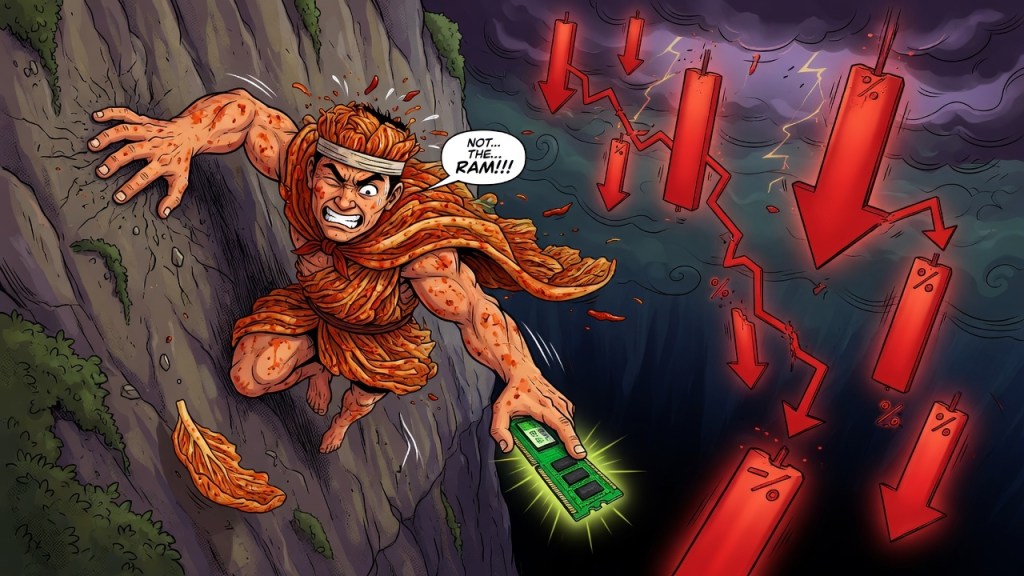
SK Hynix fell more than 15% in South Korea on July 13, setting off a broader pullback across memory stocks in Asia and the U.S. Nanya Technology closed down 2.87% at NT$423, while Macronix, Winbond, and Powerchip fell about 2% to 5%.
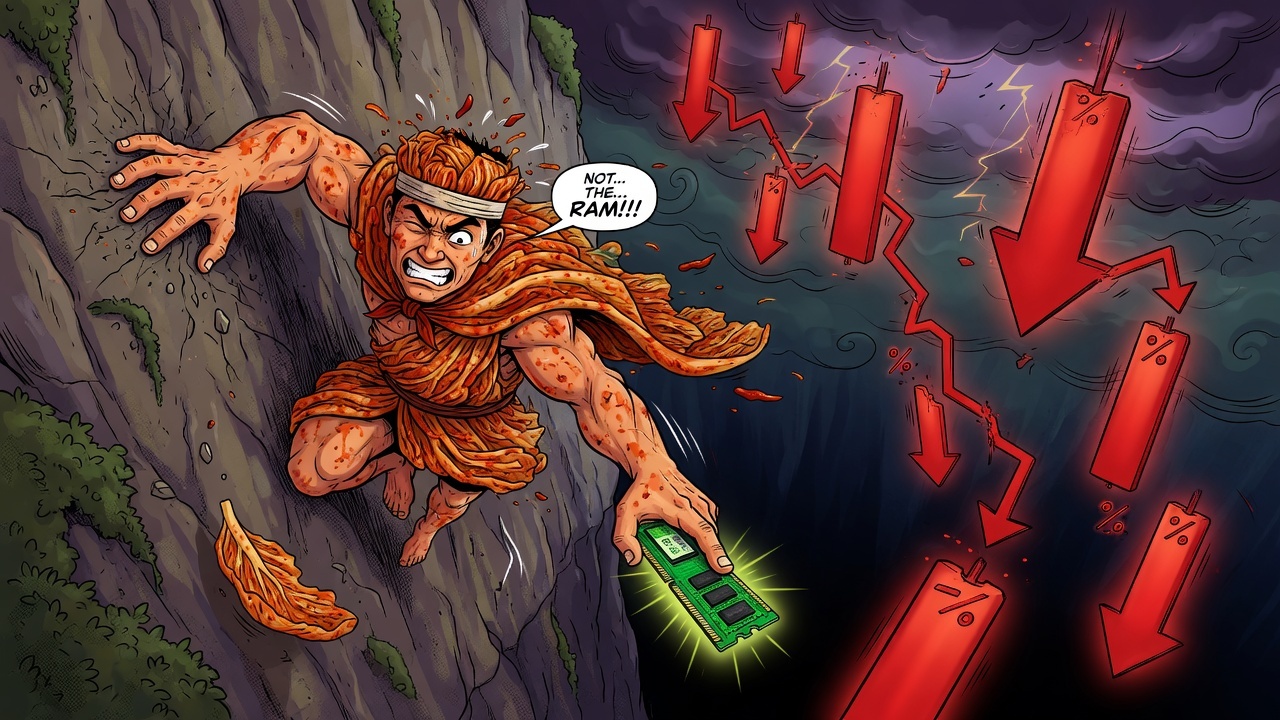
According to ABMedia, the move reflected concern that enthusiasm around artificial intelligence had overheated and that profits may come in below expectations. Korea Investment Securities said strong AI demand has not translated into equally fast price gains for high-bandwidth memory, or HBM, compared with conventional chips, which could leave SK Hynix operating profit below market expectations. Samsung shares also dropped 10% on the day.
Nanya gives up an early surge
Nanya, which had reported strong results last week, posted June 2026 consolidated revenue of NT$29.388 billion, up 621.34% year over year. Its second-quarter gross margin reached 79.5%, and quarterly earnings per share came in at NT$14.66. The stock opened higher on Monday and at one point neared the daily limit before reversing lower alongside the sell-off in South Korea.
ADR slide spreads pressure to U.S. peers
SK Hynix’s American depositary receipts, or ADRs, dropped 9.3% on Monday. The company had recently completed a $26.5 billion U.S. ADR listing, and the shares rose 13% on their debut last Friday. Monday’s drop erased almost all of that gain. Micron and Western Digital also traded lower.
The report cited cross-asset analysts as saying that South Korean and U.S. markets have become tightly linked through concentrated technology positioning, making it easier for volatility in one market to spill into another.
Kospi drops 9% and triggers circuit breaker
The Kospi fell 9% on Monday, triggering a circuit breaker again. Data cited in the report showed the exchange has activated the mechanism 13 times since 2000, with seven of those instances occurring in 2026. The story said both retail and institutional investors in South Korea have actively used leveraged ETFs to chase technology shares, leaving crowded positions vulnerable to forced unwinds when the market turns.
Foreign selling reaches 1.7 trillion won
Bloomberg reported that foreign investors were net sellers of 1.7 trillion won, roughly $1.1 billion, on the Kospi on Monday, and SK Hynix accounted for most of that selling. SK Hynix’s market capitalization has fallen from a $1 trillion peak to $875 billion. Together with Samsung, it has dropped back below the $1 trillion threshold and is down at least 30% from last month’s high.
Views on what comes next are split. Some hedge fund managers said the decline looks more like a sell-the-news move and a technical portfolio adjustment than a fundamental deterioration. Even as the market worries that expanding memory capacity may lead to oversupply, SK Hynix Chief Executive Officer Kwak Noh-Jung said in an earlier interview that the memory chip shortage is expected to last beyond 2030. The report added that technical indicators now place the stock in oversold territory, with investors watching whether the picture becomes clearer after foreign holding adjustments are completed by late July.