
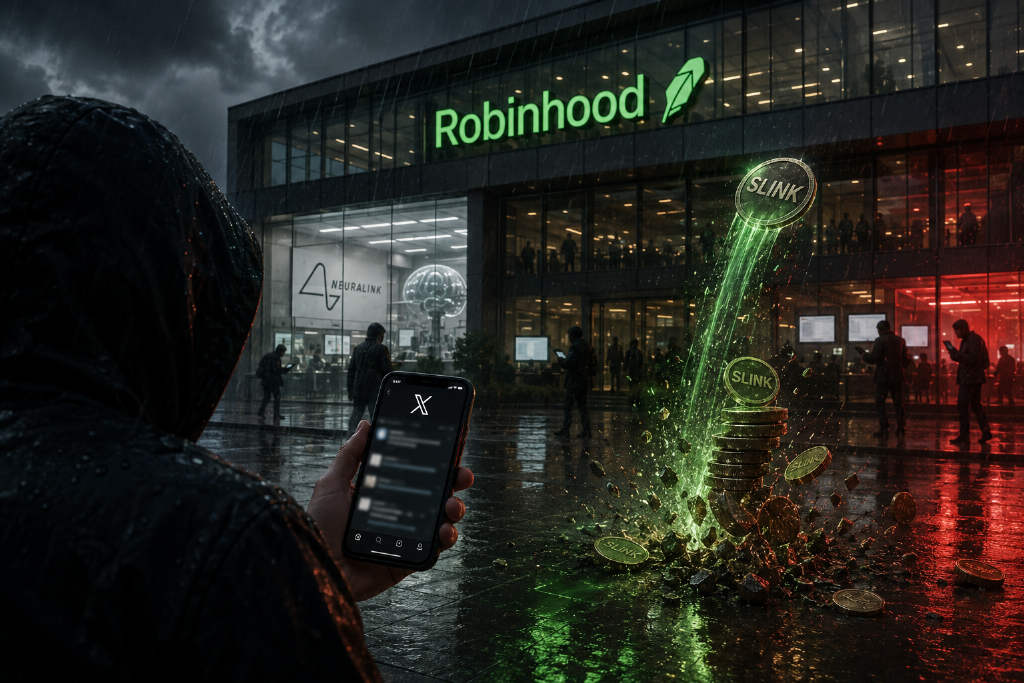
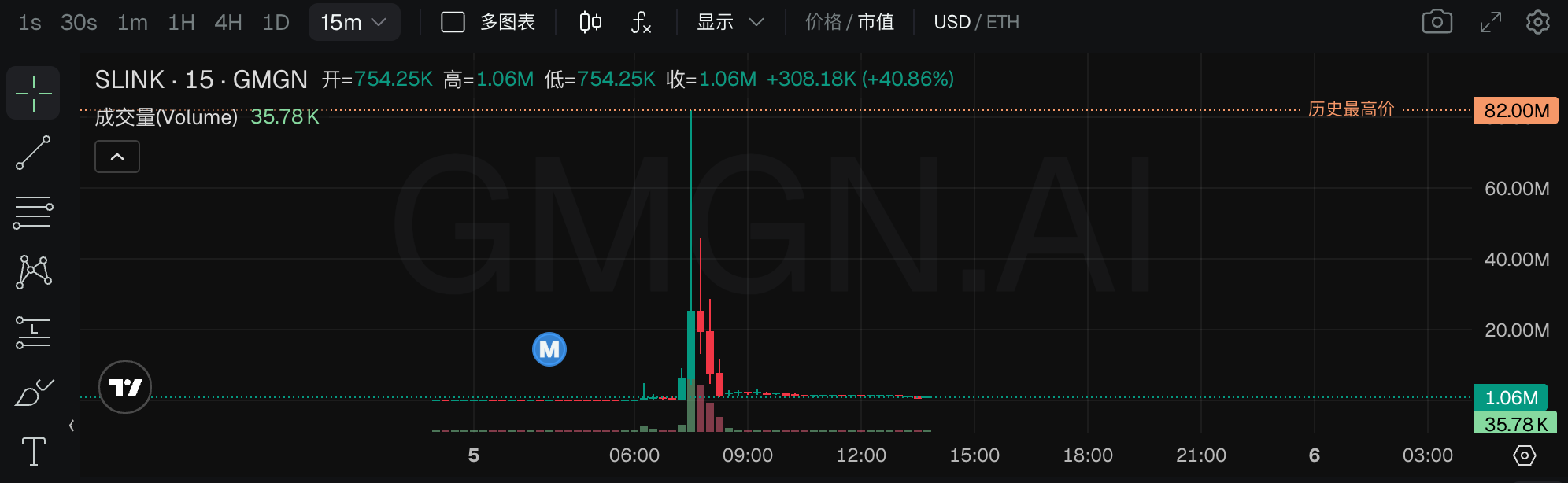
SLINK, a meme coin on Robinhood Chain, shot from a $500,000 market cap to $82 million in about 30 minutes on Sept. 5, then gave it all back within 45 minutes as what the source described as a carefully staged scam came apart.
A real account was compromised and used to build credibility
The operation centered on Shivon Zilis. The source identifies her as Neuralink’s director of operations and special projects and the mother of several of Elon Musk’s children. Her X account, @shivon, has hundreds of thousands of followers and usually posts about brain-computer interface developments rather than crypto.
Instead of immediately pushing a contract address or an airdrop link, the attackers allegedly took a more deliberate route after compromising the account. They updated Zilis’ profile to include Neuralink’s official account and added a newly registered so-called experimental account, @shivolink, which the source says has since been suspended.
A fake brain-computer interface story was used to sell the token
That account promoted a story designed to fit neatly into Neuralink’s public narrative. It claimed to be a nonprofit experiment led by MIT students in which multiple paralyzed chip implant patients jointly controlled a single social account with their thoughts. To keep the experiment running, it said, the project relied on token trading taxes for funding, and it attached the SLINK contract address.
The attackers then used the compromised Zilis account to quote the post and add a message that, in substance, said she rarely talks about crypto apart from DOGE, but was impressed by what these young people were building.
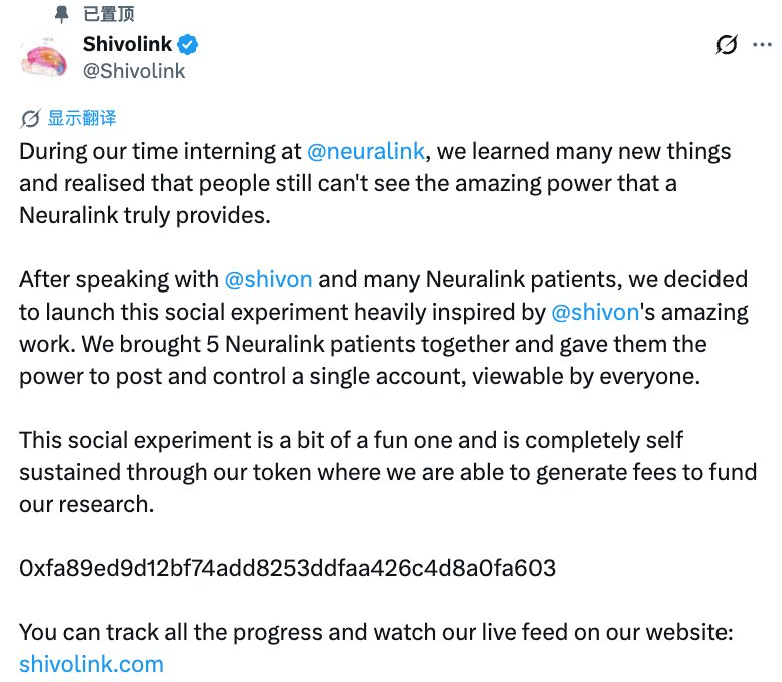
Zilis reposted it, then Musk replied with “💯”
Once the account description had been updated and the project post had been reposted and commented on from Zilis’ account, the story gained traction quickly. The biggest turn came next: Musk replied to the related post with a single "💯."
The source article says he most likely meant to react to the idea of a brain-computer interface application and did not closely review the full content of the post. Even so, the market treated the reply as a strong signal.
According to the figures cited in the article, Zilis’ repost lifted SLINK from a market cap of a little over $500,000 to more than $6 million. Musk’s "💯" then pushed it from more than $6 million to $82 million.
The token collapsed after the posts were removed
The rally did not last. After the scam was identified and the related posts were deleted, SLINK fell sharply.
On-chain data cited in the source showed that dozens of insider wallets that had been positioned in advance sold into the spike near the top, taking more than $4.7 million in combined profit. Some traders who entered with large positions after seeing what they read as both Musk interaction and Zilis backing were left with heavy losses.
A cross-reinforcing chain of proof
The article argues that the sophistication of the scheme was not just in the account takeover. It was in the way the operators built a chain of signals that appeared to confirm one another: a real executive account, profile links tied to an official entity, a story that matched Neuralink’s field, and then an unexpected Musk interaction on top of it.
In that setup, ordinary monitoring tools or AI filters could easily rate the story as highly credible, helping accelerate FOMO and push the token higher in a very short window.
Celebrity social graphs are now part of the attack surface
The article’s broader takeaway is that in meme coin cycles driven by celebrity attention, the social graph itself has become an attackable asset. The more complete and mutually reinforcing a story looks, the more caution the market may need.
Its conclusion is straightforward: position sizing and independent verification matter more than chasing a trade simply because a well-known figure appears to have engaged with it.