
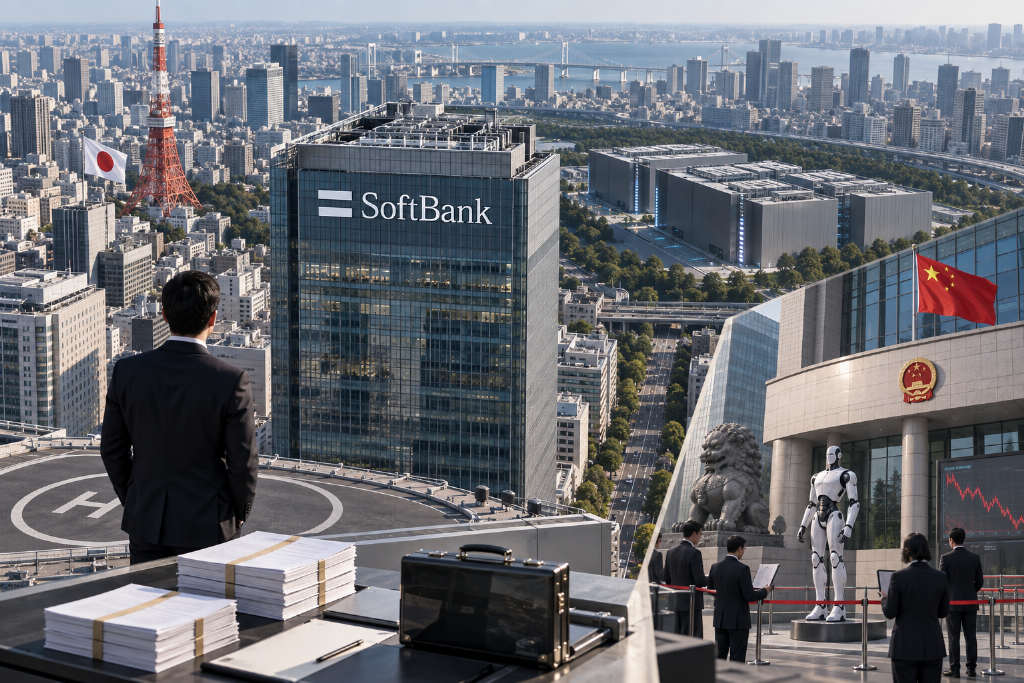
WuBlockchain’s WhiteLine Daily said AI funding expansion and commercialization tests are moving in parallel. SoftBank has launched a new bond sale, Firmus is preparing an IPO, and large technology companies are backing infrastructure financing with residual value guarantees. At the same time, scrutiny of some humanoid robot IPO candidates in China is centering more closely on revenue quality and real demand.
SoftBank launches $10 billion and €1 billion bond sale
Reuters, citing term sheets, reported that SoftBank Group has launched an offering of $10 billion in senior unsecured dollar bonds and €1 billion in senior unsecured euro bonds. The proceeds are earmarked for the third $10 billion payment tied to SoftBank’s additional investment in OpenAI, as well as general corporate purposes, and to refinance a bridge loan previously arranged for that investment.
The dollar bonds span maturities from 3.5 years to 7.5 years. The euro tranche carries 4-year and 6-year maturities. Citi and JPMorgan are leading the transaction, which is expected to be priced on Sept. 24 and settled on Sept. 29.
WhiteLine Daily said replacing a bridge loan with medium- and long-term bonds could ease SoftBank’s near-term funding pressure, though the company would still bear interest costs before any return on the OpenAI investment is realized.
Reuters says China is slowing some humanoid robot IPOs
Reuters, citing people familiar with the matter, reported that Chinese regulators are using informal “window guidance” to slow the listing process for some humanoid robot companies. The focus is on whether revenue tied to lofty valuations and local government-supported projects reflects genuine commercial demand.
According to the report, some companies derive revenue from robot data collection centers and joint venture projects. Those orders can help support valuations and meet listing thresholds, but questions remain over whether that revenue is sustainable and whether it comes from independent customers.
One person familiar with the matter said there is currently no formal ban on listings. The China Securities Regulatory Commission did not respond to a request for comment.
WhiteLine Daily said orders tied to government-backed projects do not necessarily prove that a company has developed a durable customer acquisition model. Revenue sources and repeat demand are likely to weigh more directly on both listing prospects and valuations for robot companies.
Firmus plans about $5 billion IPO starting Oct. 6
Reuters, again citing term sheets, reported that Australian AI data center operator Firmus plans to launch an IPO on Oct. 6. The company is seeking to raise A$7 billion, or about $5 billion, and is scheduled to list on the Australian Securities Exchange on Oct. 22.
The deal also includes an over-allotment option. If exercised in full, total proceeds could rise to about $5.5 billion. If completed as planned, the offering would rank as the second-largest IPO in Australian history.
Firmus did not comment on the report. WhiteLine Daily said the company’s listing plan has moved into a stage that can be tested by the market, with investor demand and final pricing showing how much risk public investors are willing to absorb for its computing capacity expansion.
Financial Times says AI residual value guarantees reached as much as $300 billion
The Financial Times said Meta, Nvidia and Broadcom, among other technology companies, have provided AI residual value guarantee commitments worth as much as $300 billion over the past year. The commitments were used to support financing for data center construction and chip purchases.
Under this type of arrangement, a project company that holds the relevant infrastructure typically borrows the money, while the technology company guarantees a minimum future value for the assets. If contractual conditions are triggered and proceeds from a sale or a re-lease still fall below the guaranteed value, the guarantor must make up the difference under the contract.
The report added that only a small portion of the related exposure is currently recognized on those companies’ balance sheets.
WhiteLine Daily said the arrangement leaves major technology companies relying on AI projects to drive business while also backstopping the value of the underlying assets. If demand falls short, slower revenue growth and guarantee-related losses could emerge at the same time.
Main thread of the day
WhiteLine Daily summed up the day’s main thread this way: AI funding expansion and commercialization tests are unfolding at the same time. SoftBank is issuing debt, Firmus is preparing a listing, and large technology groups are supporting infrastructure financing through guarantees. In robot IPO reviews, regulators are paying closer attention to revenue and real demand.
The report said shareholder returns will hinge on whether new investment can turn into profit and cash flow, and on who ultimately bears the risk when operations fall short of expectations.