

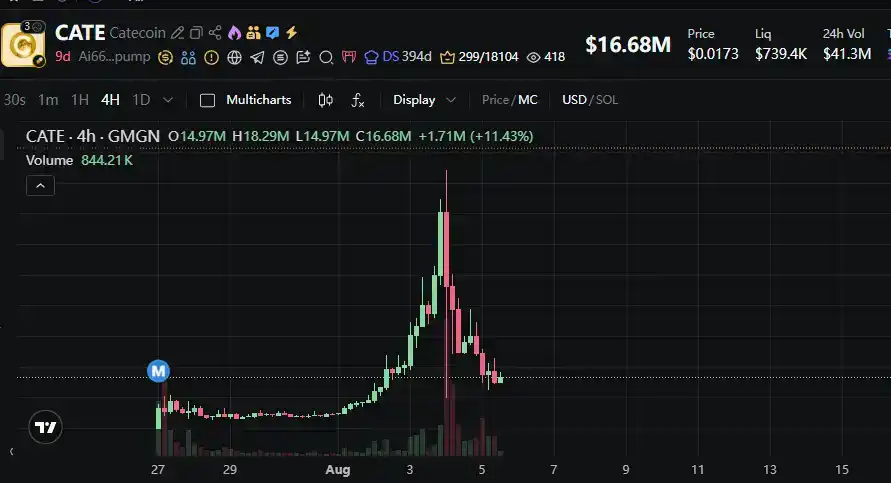
CATE, a Solana-based meme coin that had become one of the market’s focal points, ran from a market cap of just over $2,000 to more than $80 million in a little over a week, then plunged 65% in a single minute early yesterday. Sharp moves are common in meme coins, but MarsBit argued that this one stood out because of how visible the token had become and what the collapse exposed about the current market.
The crash and the two triggers cited by the market
According to MarsBit, traders largely pointed to two reasons for the move: CATE’s X account was suddenly suspended, and fomo suffered an outage that left users unable to trade during the disruption.
The account suspension was straightforward enough. The bigger question was why a fomo outage could matter so much. MarsBit’s answer was that CATE, much like ANSEM benefited from Ansem’s traffic and explicit support, relied heavily on the reach and open endorsement of Poorgoat, whom the piece described as a “mini Ansem.”
Poorgoat’s profile became part of the token’s trade
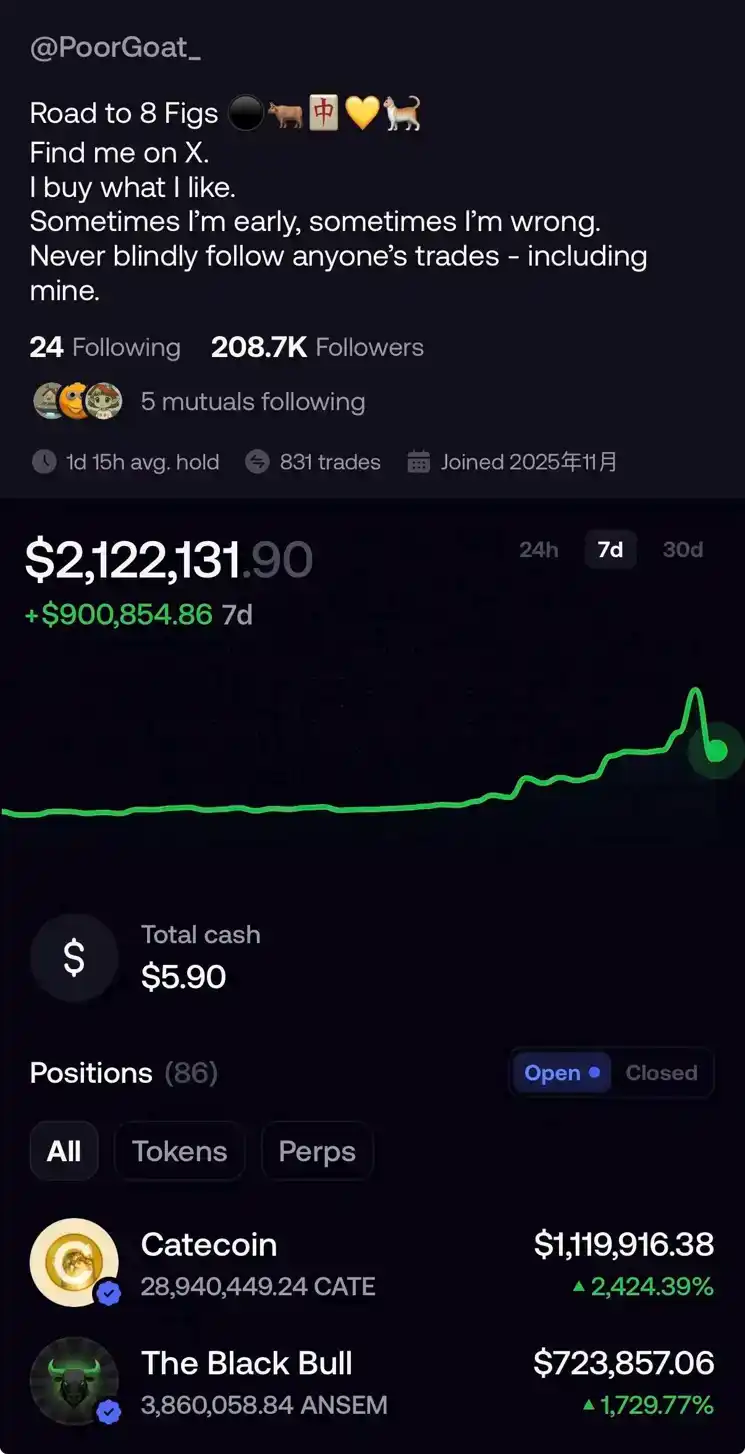
Poorgoat is listed in fomo’s hall of fame, a roster of traders recognized by the platform for generating large profits there. MarsBit said he ranks first on fomo’s 7-day profit leaderboard and second on its 30-day list. His average entry in CATE was around a $1.4 million market cap, with roughly $44,700 deployed in total. At the token’s peak, that single trade was showing more than $2 million in profit.
He had already become known for holding an ANSEM airdrop initially valued at $30,000 until it neared $1.75 million at the top. He now has more than 208,000 followers on fomo.
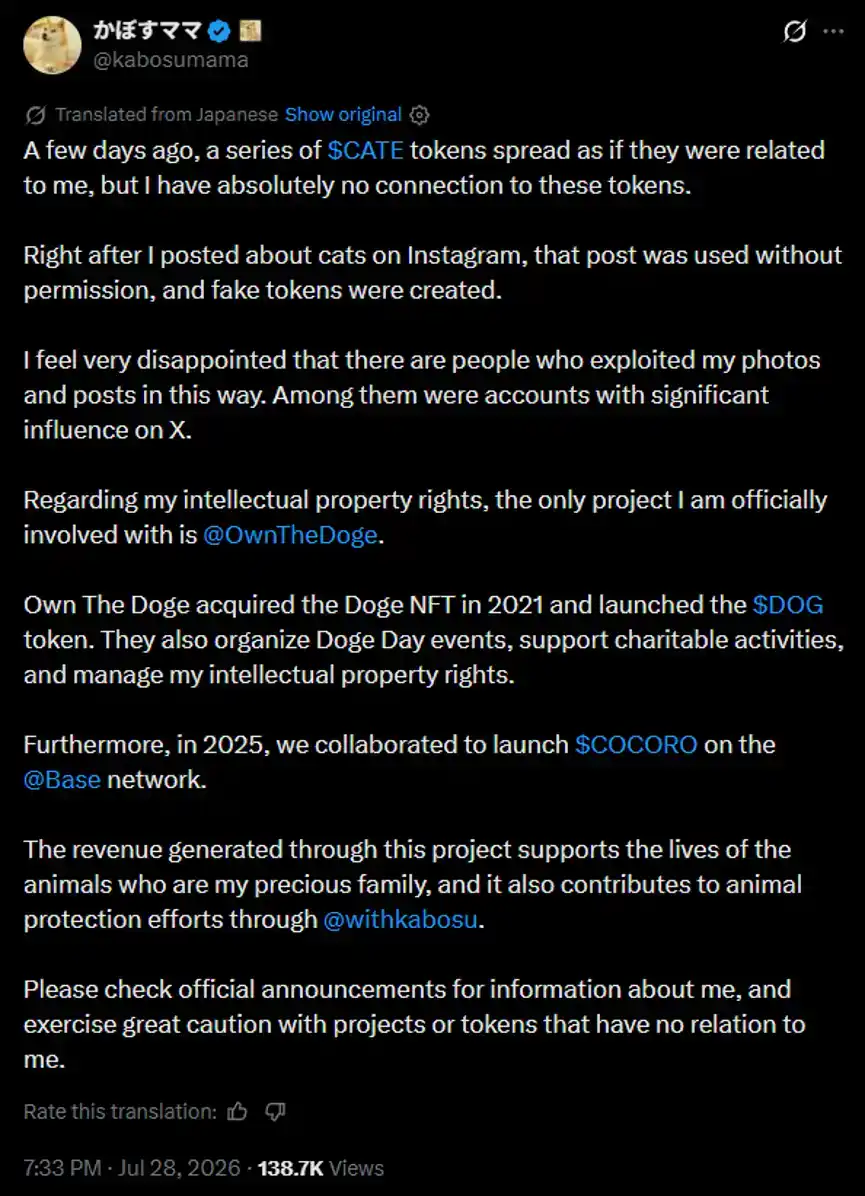
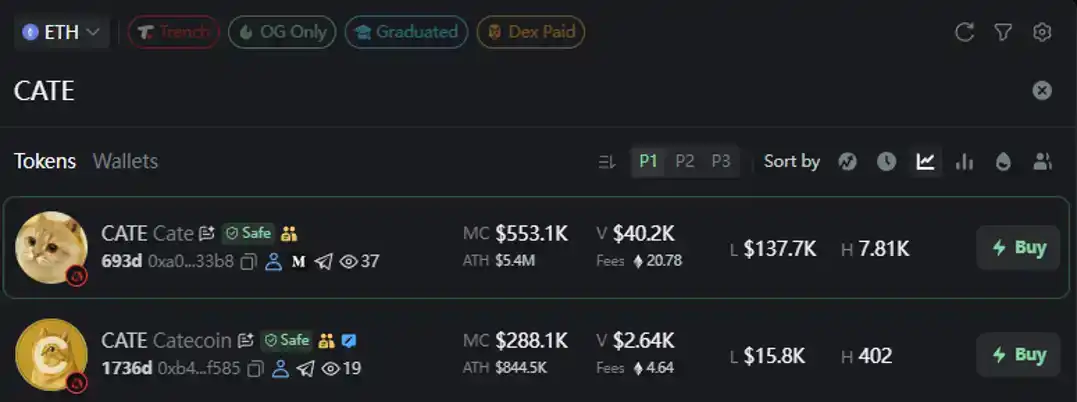
That profile helps explain why the outage was seen as central to the crash. MarsBit said CATE’s narrative was not especially new. It boiled down to being Doge’s “cat sister,” while Doge’s owner had publicly denied any connection to the token. The piece also noted that the same narrative has existed on Ethereum mainnet for a long time without showing signs of revival.
The “organic” claim meets market reality
MarsBit said the controversy was sharper because Poorgoat, now one of the biggest traffic drivers on fomo, had effectively CTO’d the token and posted a long thread on X arguing that CATE was “organic.”
That framing ran into a harsh test. The token still had more than 60,000 holder addresses, yet it was hit for more than a 60% drawdown in one minute on less than $1.5 million in traded volume.
From there, MarsBit drew a broader conclusion about the current market. Tokens trying to follow an “organic,” community-building route may now have a limited ceiling, excluding older names such as SPX and MOG that left a stronger impression under earlier market conditions. The piece said that ceiling may be closer to neet’s current market cap of roughly $17 million. It did not go into detail on why neet should be treated as organic, only saying that its price action over the past 460-plus days speaks for itself.
Why fomo is at the center of the backlash again
MarsBit said the platform’s problem is bigger than a one-off technical failure.
The report looked back to earlier this year, when the “Nietzsche Penguin” token PENGUIN rose 6,000x in a week and turned trader logjam into a well-known name. Logjam now has about 138,000 followers on fomo. At the time, he made about $564,000 in profit on PENGUIN, and the market reaction was mostly approval rather than suspicion.
That changed as ANSEM-style “airdrop wealth creation” trades, and the earlier rise of unc as what the article described as a prototype for small-circle airdrops followed by price promotion, brought more attention to fomo. Many of the people receiving those airdrops were active KOLs on the platform. Their airdrop profits were magnified through fomo’s rankings, and they effectively became living advertisements for those tokens.
As a result, some traders began to question whether fomo’s data was being gamed and whether certain KOLs were involved in coordinated extraction schemes designed to attract more users to the app before retail was left holding the bag. MarsBit added that whether such insider coordination actually exists is almost beside the point once traders can plausibly imagine it. The same reflex, it said, has also been visible on BSC.
Holder concentration on fomo has magnified the questions
In the CATE selloff, the most convenient explanation many users reached for was simply that fomo went down. MarsBit said this was not only because CATE was seen as tightly linked to the platform and an inability to trade was naturally bearish. The timing also looked too neat to many participants, feeding the idea that users trading through fomo had been trapped during the drop.

CATE still has more than 60,000 holder addresses. On fomo, the token shows more than 38,400 holder addresses, meaning over 60% of all holder addresses came from the platform. MarsBit argued that if those addresses were created in batches by fomo itself, the platform would struggle to shake manipulation suspicions. If not, then retail users on fomo were still the group hurt most badly by the collapse.
Top calls, exported wallets, and private-key handling all came under fire
Another contentious point involved trader MarcellxMarcell, who has nearly 40,000 followers on fomo and appeared to call the top by exiting around a $45 million market cap. MarsBit noted that even though users could still export addresses and trade on-chain during the fomo outage, the community kept asking the same question: if he had publicly bought near a $30 million market cap, suggesting conviction at the time, why would a fomo outage suddenly be enough to justify treating the event as a major bearish signal?
Recent changes to fomo’s user terms also drew fresh attention. MarsBit said the updated terms explicitly state that the platform does not guarantee the safety of user assets. At the same time, users who want to export a fomo address still need to log into the platform page and obtain the private key there. That process has prompted questions over whether the transmission of private keys to the page is protected with adequate encryption.

Official explanation failed to calm users
Fomo said the outage was caused by overload after a surge in users. For many traders, that answer did not land. MarsBit pointed out that the one-minute crash in CATE did not come with unusually large turnover, and total volume over five minutes was still below $5 million. That has sharpened criticism of the platform’s infrastructure, especially given that it has raised $75 million in funding.
The piece ends with a simple comparison: users trading through on-chain terminals such as gmgn might have avoided a situation where they had no time to react. MarsBit did not reduce the episode to one cause alone, but it made clear that the criticism surrounding fomo’s rapid rise is not without foundation.