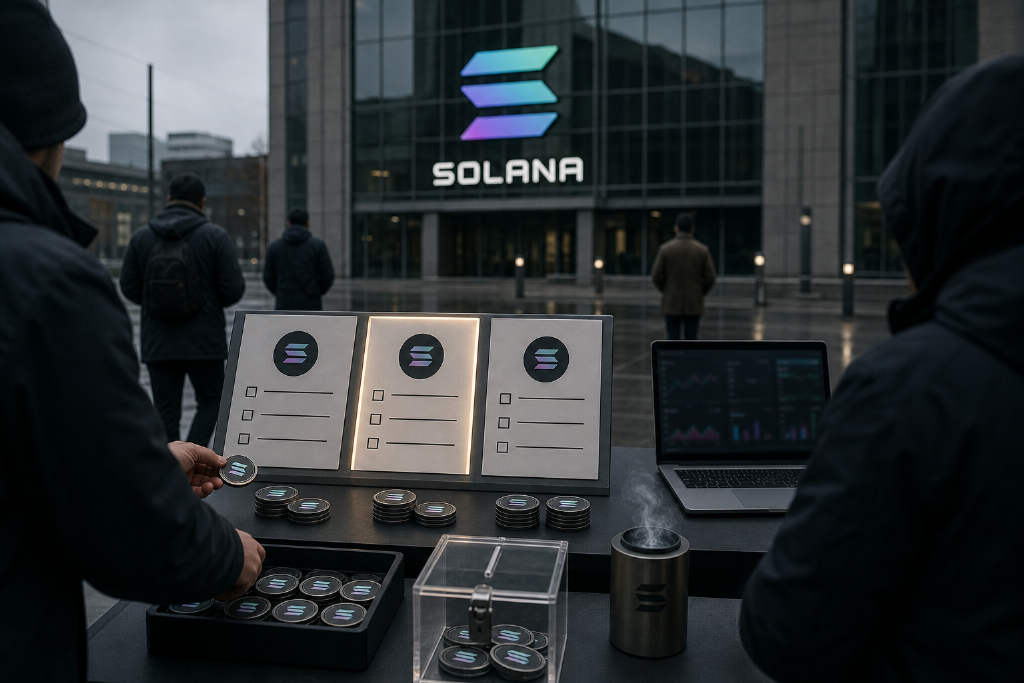
SOL rose more than 8% over the past 24 hours and is up about 44% for the month, marking its strongest monthly performance of 2024 so far, with the token climbing back above $105. The move came as Solana’s first binding on-chain governance vote entered its closing stage, with traders this week pricing in expectations of tighter future supply. The vote includes three Solana Governance Proposals, or SGPs: SGP-1 to approve a Solana constitution and formally establish future on-chain voting procedures; SGP-2, also known as SIMD-550, proposed by a Helius engineer, to double the disinflation rate from 15% to 30%, bringing the inflation schedule to its 1.5% floor by 2029 and cutting roughly 18.9 million SOL in issuance over the next six years; and SGP-3, or SIMD-553, proposed by Temporal, to split transaction fees into a base inclusion fee and a resource fee, with the latter burned directly. The two economic proposals each require a two-thirds absolute majority of participating stake weight to pass.
According to ChainCatcher, SOL gained more than 8% in the past 24 hours and about 44% for the month, its strongest monthly showing of 2024 so far. The token moved back above $105.
The rally came as Solana’s first binding on-chain governance vote reached its closing stage. Traders had already been pricing in expectations of tighter supply this week.
Three governance proposals in the vote
The ballot includes three Solana Governance Proposals, or SGPs. SGP-1 approves a Solana constitution and formally establishes the framework for future on-chain voting.
SGP-2, also known as SIMD-550, was proposed by a Helius engineer. It would double the disinflation rate from 15% to 30%, bringing the inflation schedule to its 1.5% floor by 2029 and reducing new SOL issuance by about 18.9 million tokens over the next six years.
SGP-3, or SIMD-553, was proposed by Temporal. It would split transaction fees into a base inclusion fee and a resource fee, with the resource fee burned directly. Daily burn volume is expected to rise from about 650 SOL to as much as 9,000 SOL.
Voting threshold and company stance
Both economic proposals require a two-thirds absolute majority of participating staked weight to pass.
Nasdaq-listed Solana Company (HSDT) supports the constitution proposal, but opposes the disinflation and burn proposals on timing grounds, saying institutional stakers currently place greater value on predictable yield.
Voting results are expected to be released within hours after the end of epoch 1023.
This article was originally published by Bit.Fan. For more cryptocurrency news and market insights, visit www.bit.fan. Disclaimer:
The market information, project data, and third-party content displayed on this platform are for industry information sharing only and do not constitute any form of investment advice or return commitment.
Cryptocurrency trading carries high risks. Users should fully assess their risk tolerance and make independent decisions. All profits, losses, and legal responsibilities are borne by the users themselves.