
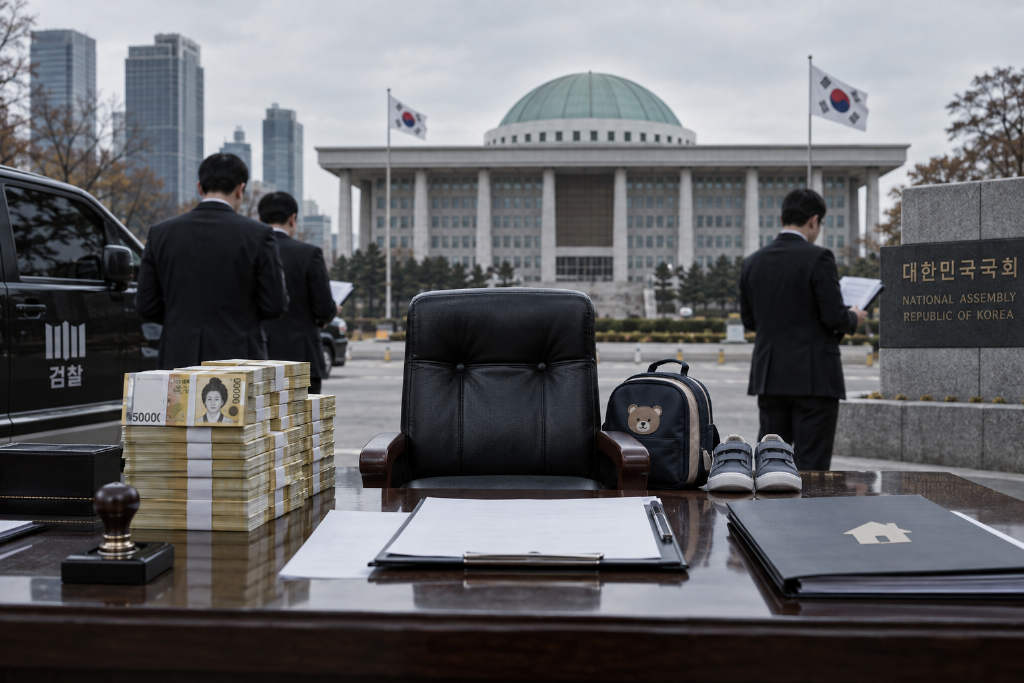
South Korean lawmaker Moon Jin-seok of the Democratic Party disclosed National Health Insurance Service data showing that 1,909 people under 18 were registered as heads of business entities from 2021 to 2025, averaging 382 a year. Among them, an average of 21 a year reported annual compensation above 100 million won, and one case was in the 0-to-5 age group.
The figures were released on Sept. 21. In the dataset, annual pay refers to compensation these business heads reported to the health insurance system. On an annual average basis, 318 of the 382 minors reported less than 50 million won, 43 reported between 50 million and 100 million won, and 21 reported more than 100 million won. That works out to roughly one in every 18 minor business heads reporting pay above 100 million won.
Most high-income cases were concentrated in the 11-15 age bracket
Among the 21 minors with annual compensation above 100 million won, 12 were aged 11 to 15, the largest group. Another six were 16 to 18, two were 6 to 10, and one was 0 to 5.
The age pattern was similar across the full annual average of 382 minor business heads. Those aged 11 to 15 made up 151 cases, followed by 129 cases in the 16-to-18 group, 81 in the 6-to-10 group, and 22 in the 0-to-5 group.
Real estate dominated the top 100 income earners
The data also listed the industries of the 100 highest-earning minor business heads over the five-year period. Of those, 95 were in real estate, rental and business services, four were in wholesale and retail, and one was in manufacturing.
Korean media reports said these cases are often tied to buildings handed down by parents or grandparents and then rented out. The rental assets included shops, officetels and residential housing.
Most cases were concentrated in the Seoul capital area
By place of residence, Seoul accounted for an average of 237 minor business heads a year, or 62%. Gyeonggi Province followed with 69, then Incheon with 23 and Busan with 19.
Among the 21 minors reporting more than 100 million won in annual compensation, 12 lived in Seoul, four in Incheon, three in Gyeonggi Province, and one each in Busan and South Gyeongsang Province. Nineteen of the 21 lived in the capital region of Seoul, Incheon and Gyeonggi.
Lawmaker calls for a joint review by tax and health authorities
Moon said, 「A child who has not even stopped wearing diapers is the boss earning 100 million won a year. That is the reality of inequality in our society.」
He said the National Tax Service and the National Health Insurance Service should jointly investigate whether some cases used family corporations for disguised gifting or split income across family members.
The report explained that income splitting means dividing income among family members so that each person falls under a lower progressive tax rate. Disguised gifting means moving assets to children under labels other than gifts in order to avoid gift tax.
Separate tax data showed 3,233 minors reported rental income in 2024
On Sept. 7, Moon also released National Tax Service data on the annual status of real-estate rental income among minors. The data showed that 3,233 people under 18 reported real-estate rental income in 2024. The total declared amount was 55.584 billion won, about NT$1.28 billion, with an average of 17.2 million won per person, or about NT$400,000.
Within that group, 179 were aged 0 to 5. The breakdown was nine aged 0 to 1, 15 aged 2, 33 aged 3, 51 aged 4, and 71 aged 5. The three-year-old group posted the highest average rental income at 18.4 million won per person.
The National Tax Service dataset covers all minors who reported rental income, while the health insurance data only counts those registered as heads of business entities. That means the tax authority's figure of 3,233 was more than eight times the health insurance dataset's annual average of 382.
Moon said at the time that early inheritance and gifting were increasing real-estate rental income among minors. He called on the tax authority to examine the funding sources behind real estate held in minors' names.
What the reported pattern points to
On why minors become heads of business entities, Korean media said many cases appear to involve buildings transferred from parents or grandparents and then rented out. In the 2021-2025 top 100 income list for minor business heads, 95 were tied to real-estate-related sectors.
On rental income, National Tax Service data showed that 3,233 minors reported real-estate rental income in 2024, for a total of 55.584 billion won and an average of 17.2 million won per person.