
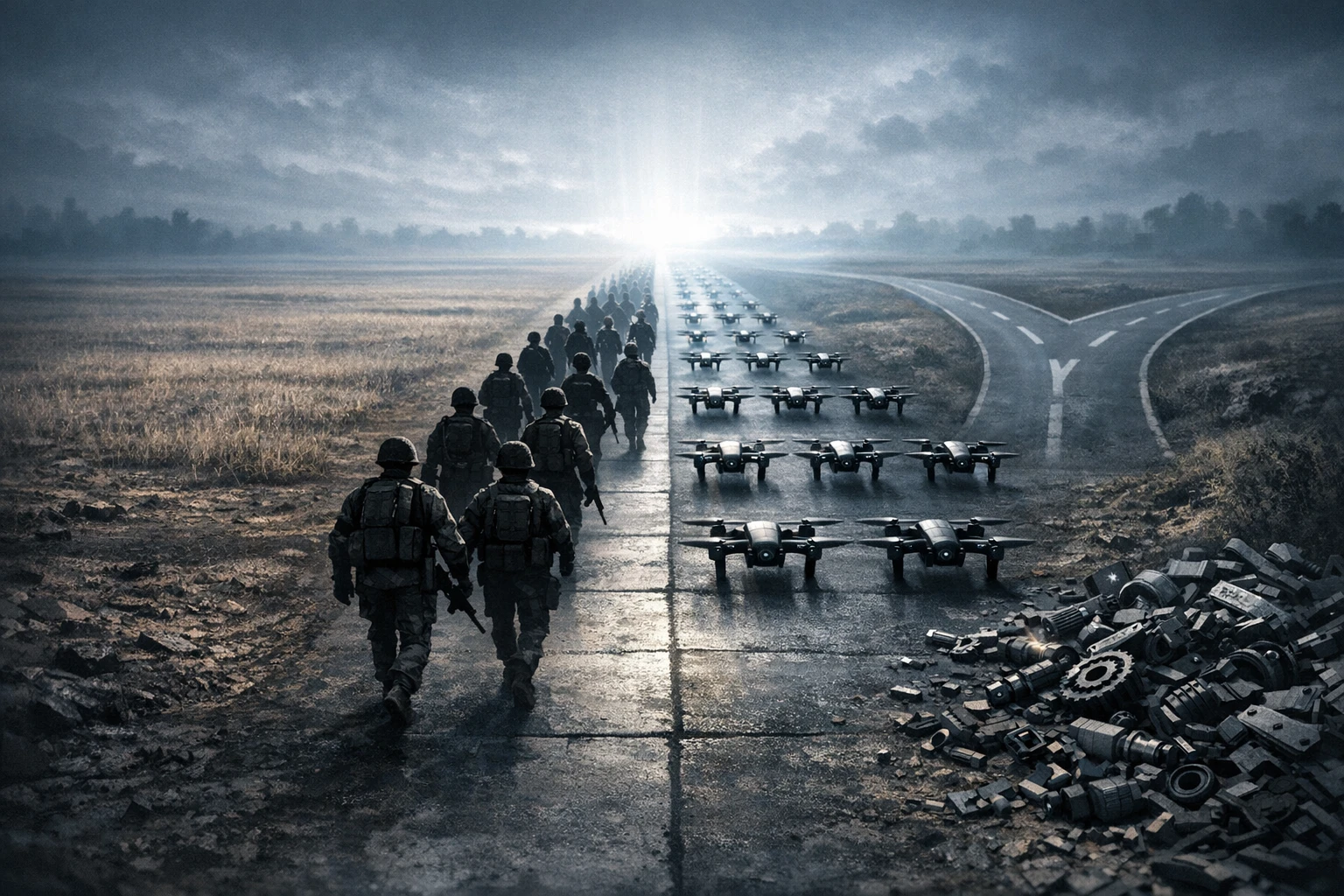
South Korean Defense Minister Ahn Ki-baek announced on July 26 that all 450,000 active-duty soldiers will be trained as drone operators, with all drone models required to use 100% domestically produced parts, explicitly excluding China's supply chain. The initiative aims to compensate for a nearly three-to-one troop disparity with North Korea through technological density.
Command Restructure and Mandatory Integration
According to The Korea Times, the defense ministry will reorganize the Drone Operations Command, shifting its role from directly commanding frontline units to coordinating industry partnerships and managing procurement of commercial drones. Additional measures include equipping units with more inexpensive, expendable reconnaissance and strike drones, and deploying laser and microwave anti-drone systems at the front. Ahn cited conflicts in Ukraine and the Middle East as inspiration, translating battlefield lessons into procurement and training policies. This year, about 11,000 training drones will be distributed, with a target of 60,000 by 2029. However, given the active force size, each soldier won't have individual access anytime soon.
Three Major Hurdles: Demographics, Parts, and Trainers
Demographics come first. South Korea's long-term low birth rate pressures conscription, and the current system excludes women. Studies show that maintaining a standing force of 500,000 is already challenging under demographic decline, and adding universal drone training exacerbates the problem. Second is parts. The defense ministry demands 100% domestic components, rejecting Chinese suppliers due to China's role as North Korea's primary economic partner and security backer. But DJI dominates the global commercial drone market; non-Chinese alternatives struggle with capacity, price, and performance. Filling the gap quickly is extremely difficult. Third is trainers. A critical article in War on the Rocks argues that a structural shortage of non-commissioned officers and officers could create a “skeleton force.” Without enough qualified instructors, drones remain just hardware in warehouses.
Reality of the Ukraine Model and Regional Context
South Korean officials often cite Ukraine, but Ukraine operates specialized drone teams supporting frontline units and has established an unmanned systems force—not universal training. North Korean soldiers who survived drone warfare in Ukraine have rotated home to train their own forces, prompting Seoul's response. Additionally, about 28,500 U.S. troops are stationed in South Korea. The Pentagon's FY2027 budget includes $54 billion for drone and counter-drone systems, suggesting converging thinking that could enable future joint training.