
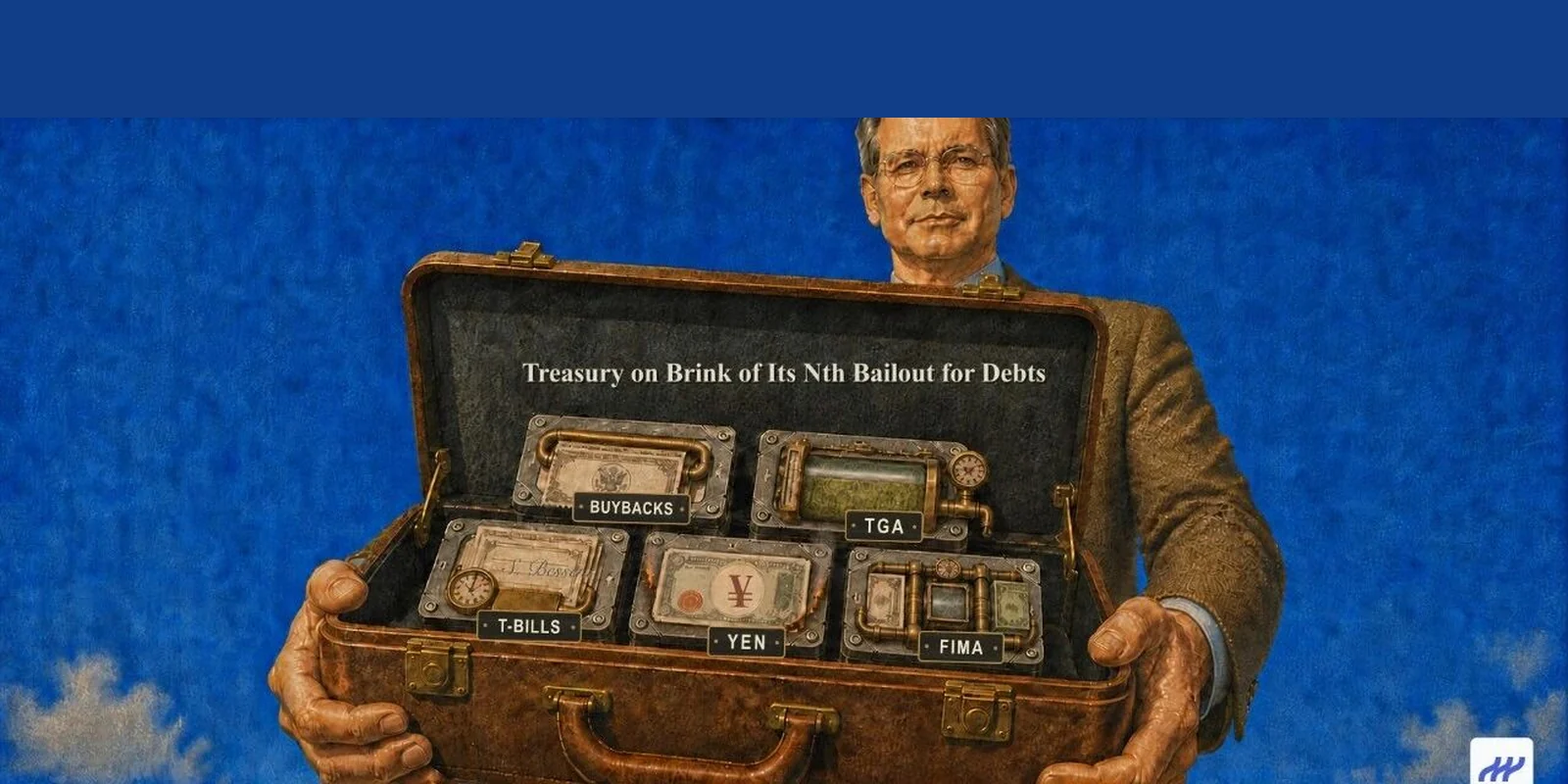
Sovereign assets have been repeatedly created through war finance, securitization and the passage of time, according to Zuo Ye Waibo Shan, writing in the first installment of a PANews series. The author calls the mechanism a “Ponzi” and contrasts it with the crypto industry’s ways of issuing assets.
Weak token prices and falling trading volumes partly explain crypto’s recent slump, he argues, but a loss of narrative is more important. In his account, SBF once inflated a bubble and guided crypto capital toward AI, a destination beyond the metaverse that had yet to be reached.
The underlying shortage, the author says, is in methods of creating assets. Crypto projects seeking an exit for liquidity largely choose between a token generation event (TGE) aimed at retail investors in the industry and an initial public offering (IPO) aimed at the stock market. Outside capital rarely chooses acquisitions, he says, and private equity (PE) buyers are seldom seen buying against the trend; more projects simply disappear.
Crypto’s creativity has diminished, the essay argues, with attention circling back to memes, perpetual contracts and prediction markets. Everything seems destined to become a perpetual, while brokers made a mockery of the SpaceX and ANT new-issue opportunities, the author writes. In his view, crypto offerings no longer attract outside buyers, making it useful to examine how the earliest “Ponzi” was invented repeatedly and survived.
His answer is the state. He describes the Ponzi not as an aberration in finance but as its essence, and sovereign assets as its most successful form: born through war, spread through securitization and given an appearance of permanence by time. Crypto’s problem, he argues, is not too many Ponzis but an inability to issue one at sovereign scale.
War and the birth of government debt
The essay places the origin of sovereign assets on the battlefield rather than in finance. In the Middle Ages, the author writes, running a state was the industry requiring large capital commitments, and war was the large project that needed substantial funding.
He links the invention of government debt to foreign wars: medieval Venice raising money for an expedition to Constantinople; Britain issuing debt to fight Napoleon, giving rise to the Rothschild legend; and Jay Cooke opening investment to a wider public during the American Civil War. In his telling, that last development helped make government debt a modern bond.
Feudal campaigns produced the precursor to modern finance, the author argues, while returns on financial risk helped bring about the age of exploration, capitalism and science and technology. Rather than finance separating from the real economy after the Industrial Revolution, he says, the creation of sovereign assets helped bring about that revolution.
He compares the mobilization behind war bonds with everyday fundraising in modern democratic politics: votes become donations, and election campaigns resemble civil war. The essay says that although Republicans did not win the midterm elections, the individual in question could raise more than $50 million in political donations. The author considers money more important than approval ratings and argues that donations are more rational than trading benefits for votes, because benefits create long-term liabilities with low returns.
Britain could absorb the South Sea Bubble over a long period, the author suggests, but could not afford to keep losing wars. It could lose a Boer War once, he writes, but had to win it back or financial confidence would collapse. He compares that with losing both chambers if a war against Iran cannot be won. In his account, commerce became militarized and was used across the Western world for social mobilization as new means of creating credit appeared.
Access to sovereign assets also opened to businesses and individuals, he argues. British privateers were effectively public-private ventures, with pirates who robbed Spain acting as partners of the English crown. The East India Company, he writes, could establish a stock-pricing benchmark by managing cash flows from India. Individuals and companies could be principals rather than merely financiers, and those forms recognized innovators rather than being deliberate government inventions.
Securitization, derivatives and recurring manias
War taught states to borrow, the author writes; splitting the debt and selling it to retail investors turned it into an asset. He goes further, arguing that war bonds helped produce stocks, social insurance systems and even the modern monetary system.
His account of the South Sea securities and Mississippi arrangements describes the British and French governments packaging government debt and tax rights for sale to particular companies to address fiscal problems. Those companies securitized the packages for retail investors. The process, he argues, gave rise to the modern stock market, while options, short selling and other tools that were repeatedly banned appeared almost at once. Derivatives, he writes, were never truly eliminated.
Neither the British Empire nor the post-World War II United States could maintain its currency’s link to gold, the essay says. During foreign-exchange liberalization in the 1970s and 1980s, the Chicago Mercantile Exchange pioneered interest-rate futures. The author argues that earlier options and futures essentially required physical delivery, and that even foreign exchange involved exchanging currencies, whereas an interest rate has no physical counterpart.
Innovation came before regulation, he writes. The US Commodity Futures Trading Commission (CFTC) later permitted settlement in dollars, producing a modern form of settlement by price difference. He identifies that as the real starting point for Arthur Hayes’s invention of perpetual contracts.
The essay also claims that by 2025 BlackRock, rather than JPMorgan, was the largest lending institution, with $3.2 trillion in scale and bonds as its core assets. On that basis, the author questions whether a theory of money and banking centered on central banks still reflects reality.
He calls Nixon’s inability to withstand dollar inflation the origin of crypto’s leverage mechanism. Gutenberg’s printing press, he argues, raised literacy and helped trigger religious revolution, but also enabled large-scale printing of paper money and became a catalyst for severe inflation.
Derivatives are only a side story in this account. The larger product of sovereign assets is a recurring popular mania. Debt is a certificate of credit, the author writes, while the exchange, or swap, of capital and resources is more tangible. He cites French enthusiasm for Mississippi in the 1720s, British enthusiasm for Latin American minerals and the Dutch tulip bubble of 1637, which he calls a secondary product of the Dutch East India Company’s actual profits.
After the Middle Ages, he argues, collective manias appeared at roughly century-long intervals. Although not all were bond trades, he says many assets capable of drawing in the public were represented by bonds. His list is:
- 1637: the tulip bubble;
- 1720: the South Sea Bubble and Mississippi bonds;
- 1820: US railway mania;
- 1920: the Coolidge boom;
- the 2020s: large AI funds.
The author claims that Nvidia AI-chip circular lending, the stock-market surge of the Coolidge era and the financing of railway mania broadly followed a pattern in which bonds drove the early stage and retail stock investors took over later. He compares Jia Yueting’s stock-to-bond transactions with practices in Britain and France 300 years earlier, and describes MicroStrategy’s issuance of STRC based on BTC as resembling the accumulation stage of the South Sea Bubble. Returns, he writes, must be supported by physical production, or investors may instead become caught up in AI factories.
Between the wars, the essay says, bankers and ordinary citizens who had enjoyed high interest eagerly sought the next high-return project. Ordinary investors could be even more fervent than bankers, the author writes, comparing them with Hyperliquid community members whom he describes as more devoted than the project team.
The transformation of US equities into sovereign-like assets did not begin with the romantic story of trading under a buttonwood tree, in his view. Although the 1929 Great Depression originated in a stock-market crash, he says that does not prove the market had captured the US economy. He describes the modern stock market as a newer invention of the 1970s: employee retirement savings, executive options and corporate share buybacks put Americans’ assets into stocks on a broad scale, making equities a popular asset.
Day traders were another product of that wave, he argues, while Robinhood reinvented the practice for the internet era. The author points to Peter Thiel’s “conquer the world” index at PayPal: user numbers acquired by spending money, presented through the appeal of growth rates, became a discounting standard based on expectations. Everything had been financialized, he writes. In the new century, he says, the industry demanding large capital commitments is conquering the world, and the large project demanding funds is innovation.
From South Sea securities and the Chicago exchange to interest-rate futures, perpetual contracts and PayPal’s index, crypto’s perpetuals and TGEs belong to the same family tree, the author argues, though they arrived later. He also contends that when a Ponzi combines with a state that controls a form of hegemony, a channel or resources for a period, it becomes a sovereign asset capable of repeatedly extracting wealth from counterparties. Once debt reaches its limit, eliminating creditors can be easier than paying interest, he writes.
Sovereign defaults and short-term US debt
If each mania can end in collapse, why can sovereign assets be created again? The author points to US government shutdowns, debt crises in five southern European countries and Sri Lanka’s national bankruptcy as cases that appear at odds with the idea that a sovereign state cannot fail through poor management in the way a company can.
He argues that the international debt system constrains governments more strongly than war or sanctions because credit ratings can determine access to external funding. Borrowing for projects can be more direct, and potentially more profitable, than collecting domestic taxes. Yet he also says the consequences of most sovereign defaults are less severe than expected, citing Argentina’s continued access to International Monetary Fund (IMF) loans and US financial support after default.
War bonds can impair a state’s ability to pay individual annuities and have caused repeated collapses, the author writes. He cites repeated state defaults on individuals as historical support for the proposition that domestic debt is not treated as debt. When sovereign assets cannot be repaid, he argues, they become a Ponzi mechanism; in his account, capitalism and modern science also emerged during the long process of dealing with debt, at the cost of two world wars.
The author describes the present as part of the continuing aftermath of the 2008 financial crisis. He argues that Europe’s debt crisis was resolved through two world wars and that the Federal Reserve will not resolve the US debt crisis; if a third world war is not wanted, he writes, it is better to hope AI fulfills its promise. Central banks, he adds, cannot stop continued encroachment by the administrative system but must appear to care about the money supply to prevent a total collapse of credit.
The essay calls Treasury actions under Janet Yellen during Joe Biden’s administration a financial innovation. In 2023, it says, long-term US debt was replaced with short-term debt and even very short-term cash management bills (CMBs) to push down long-term yields. The author calls the long-term Treasury yield the true risk-free rate, determining base rates for student loans, mortgages and other borrowing.
He says Scott Bessent repeatedly criticized Yellen for deliberately using the operation to help an election campaign in the year before Biden’s election. The author argues that replacing long debt with short debt quickly drains government cash reserves because repayment comes the following year. He also suggests that a failed reelection would leave Biden without a political future and that the short debt could create a major funding problem for Donald Trump.
After Trump won the 2024 presidential election, the essay says, Bessent continued issuing short-term debt while facing a structural fiscal crisis, campaign promises and spending associated with the tariff war. The author describes short-term issuance as a way for the Treasury to bypass the Fed and create short-term market liquidity through fiscal means, at the cost of rising interest expense each year.
Even so, the author considers US Treasuries and AI bonds better value than European and Japanese government bonds and corporate debt. In his view, the former at least fund military spending and the latter invest in productivity rather than benefits. He says the idea that Treasuries face collapse coexists with their status as the risk-free foundation of the global financial system, reinforcing his comparison between sovereign assets and Ponzi mechanisms.
Time, transferred debt and crypto’s missing ingredients
At the close of the essay, the author rejects the idea that sovereign assets can be reinvented because states possess a sacred commitment to repayment. He cites Sri Lanka and French annuities as examples from different periods. Nor, he says, is scale the explanation: corporate and government bonds are both backed by earning capacity and eventually can be overwhelmed by interest.
His preferred explanation is time. A system that lasts beyond a generation can come to be regarded as permanent, he argues. The Bretton Woods system lasted only 27 years from creation to collapse, and he says people at the time did not contemplate its failure. The US government even ran a surplus during the Clinton era; today’s rapid growth in US debt, he argues, is a direct consequence of the 2008 crisis.
The essay cites an estimate that government rescues of the financial industry generally produce a 188% impulse to raise taxes. Debt does not disappear, the author says, but is transferred to ordinary individuals; sovereign governments can repeatedly default because they have control over a population. He adds that these arrangements are not pure frauds and can endure after deleveraging as an ordinary mechanism without outsized profits.
Returning to crypto, the author says the PE Guy persona became popular on the US internet from 2025. Even as US stocks reached an extreme, newer asset forms continued to appear and be reinvented. Crypto, by contrast, has become uncertain and thinks everything is ending. He argues that such pessimism is unnecessary: innovation has a long way to go, and even disruption may have value that can be absorbed.
Against the history of sovereign assets, he identifies three things crypto lacks:
- War: a collective objective for which everyone must pay. Decentralized finance’s DeFi Summer and the metaverse briefly filled that role, he says; now he looks to AI.
- A securitization channel: turning assets into perpetual contracts is, in his view, an internal crypto loop that has not connected to outside cash flows. He cites the SpaceX and ANT new-issue experiences as evidence that brokers control the channel.
- Time: he says no crypto system has survived a generation, so none is regarded as permanent.
Corporate and individual Ponzi schemes, the author concludes, are poor imitations of sovereign assets. How closely they can imitate them depends on how much state credit they can borrow. He says later installments will discuss the subject further.



