
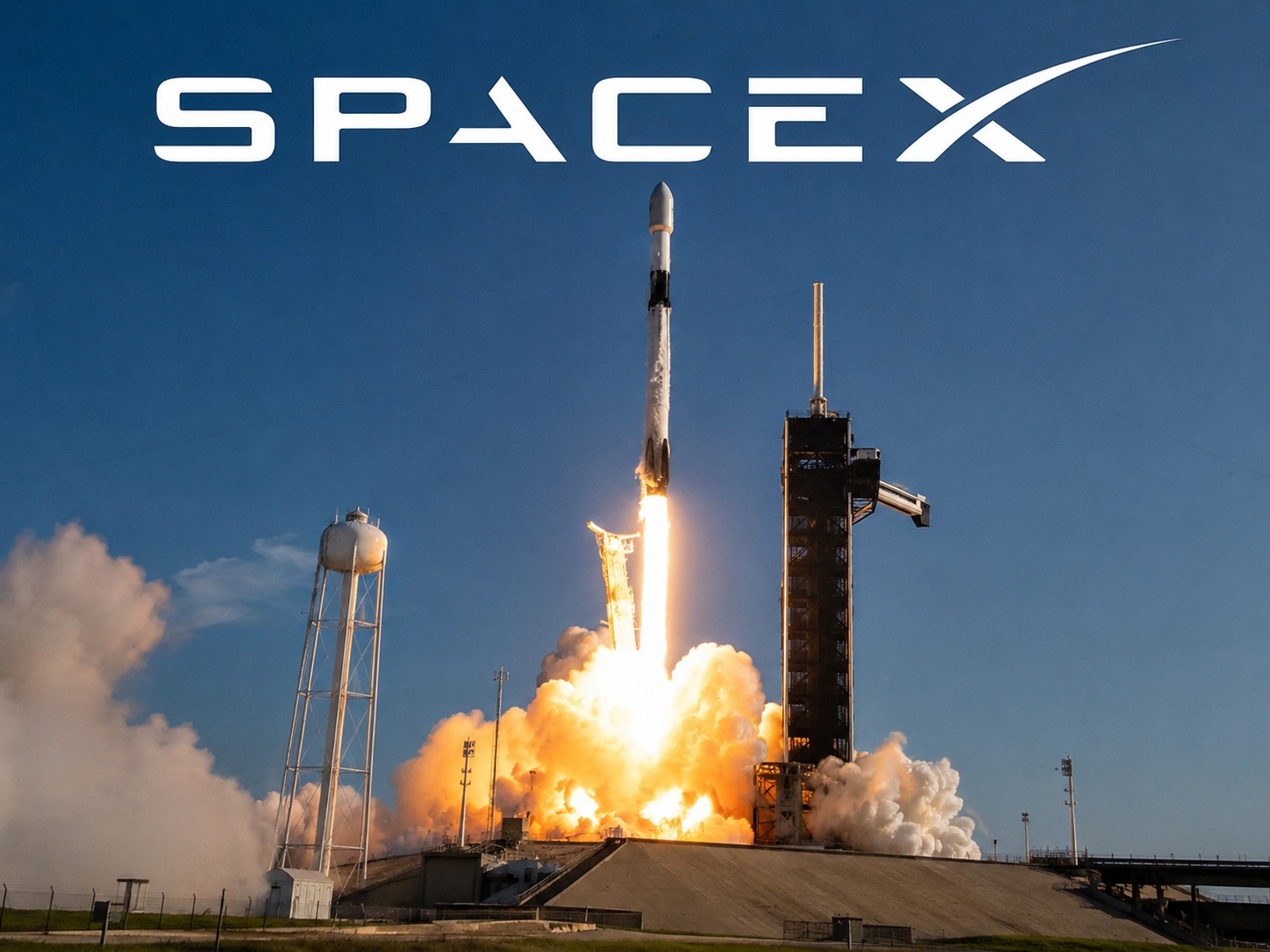
SpaceX filed its S-1 prospectus on May 20 and will list on Nasdaq on June 12 under the ticker SPCX. With a target valuation of $1.75 trillion to $2 trillion, it ranks as the largest initial public offering in nearly a decade. For Taiwan-based investors, four main compliance channels exist—from pre-IPO exposure to buying on listing day.
Key IPO Metrics: 95x Revenue and Deep Losses
The prospectus reveals three business segments: Starlink (satellite communications) generated $11.4 billion in 2025 revenue with an adjusted EBITDA margin of 63%, the only profitable unit; xAI/Grok/X (AI and social) brought in $3.2 billion; and the launch business roughly $4 billion. Total 2025 revenue reached $18.7 billion. Losses are equally striking: a net loss of $4.27 billion in Q1 2026 and cumulative losses of $41.3 billion, largely due to xAI's compute infrastructure burn. Anthropic pays SpaceX $1.25 billion monthly to rent data center capacity at the Memphis COLOSSUS facility, with a contract through May 2029.
At the $1.75 trillion valuation, the price-to-sales ratio is approximately 95x. Scottish Mortgage Investment Trust internally values SpaceX at $1.25 trillion—$500 billion below the IPO target. Elon Musk holds 85.1% voting power (10 votes per Class B share), giving public shareholders virtually no say.
Pre-IPO Routes: Four Compliant Pathways
Route 1: Publicly traded ETFs and funds. The lowest barrier. ERShares Crossover ETF (XOVR) trades on Nasdaq with about 23% SpaceX exposure; investors can buy a single share via local broker. Baron Partners Fund (BPTRX) has 33% exposure but is a mutual fund requiring an overseas brokerage account. Destiny Tech100 (DXYZ) allocates 16.2% but is a closed-end fund prone to wide premium/discount swings. ARK Venture Fund (ARKVX) holds 17% but is available only on Titan or SoFi. Tema Space Innovators ETF (NASA) gains exposure through a Forge SPV.
Route 2: Private secondary market platforms. Restricted to accredited investors (net worth over $1 million or annual income above $200,000). Forge Global offers a minimum of $10,000 (fund) or $100,000 (direct trading), with a quoted price of $650.77 per share on May 21. EquityZen typically starts at $10,000 but hot names like SpaceX may require $50,000+. Hiive quotes $926.40 per share. The more than 40% price gap highlights opaque private market pricing, and SpaceX holds a right of first refusal to block transfers.
Route 3: Tokenized synthetic products. High risk and legally gray. Platforms such as Hyperliquid, Binance, and OKX offer synthetic perpetual contracts (e.g., SPCX-USDC), but these are not actual equity—no voting or dividend rights. SpaceX has not issued any cryptocurrency. Taiwan's financial regulator has not clarified the status of such instruments.
Route 4: Indirect exposure via public companies. Alphabet (GOOGL) invested $900 million in 2015 and still held roughly 6.1% of SpaceX as of end-2025. Scottish Mortgage Investment Trust (SMT.L) allocates 19.3% of its portfolio to SpaceX and lists in London. However, the exposure is diluted—buying Alphabet is mostly a bet on Google itself.
Listing Day: Local Broker vs. Overseas Account
After the opening bell on June 12, Taiwan investors can buy SPCX on the open market through local brokers (e.g., Cathay, Fubon, Yuanta) or overseas brokerages (Firstrade, Interactive Brokers, Charles Schwab). Retail allocation platforms include Robinhood, Fidelity, Charles Schwab, but even with 30% of shares reserved for retail, demand will far exceed supply. For most, the surest path is simply buying on the open market after listing.
FX, Tax and Estate Duty Considerations
Since November 2024, Taiwan's central bank raised the annual individual foreign exchange settlement limit to $10 million; single transactions above $500,000 require supporting documents. On the U.S. side, non-residents owe no federal capital gains tax, though dividends are subject to 30% withholding. SpaceX is unlikely to pay dividends soon. A W-8BEN form must be filed. Domestically, overseas investment gains above NT$1 million must be reported; the first NT$7.5 million are exempt under the 2026 alternative minimum tax regime, with excess amounts taxed at 20%. U.S. withholding taxes can be credited against Taiwan's AMT.
Estate tax is often overlooked: if assets in a U.S. brokerage account exceed $60,000, heirs may face up to 40% U.S. estate tax. Using a local broker avoids this because assets are held under the Taiwanese intermediary.
The original guide also flags six core risks: frothy valuation, Musk's unilateral control, a staggered lock-up (20% sellable after first quarterly report, then 7% every 7–15 days, full unlock in 180 days), poor pre-IPO liquidity, regulatory uncertainty around tokenized products, and TWD/USD exchange rate risk. Each factor merits careful assessment.