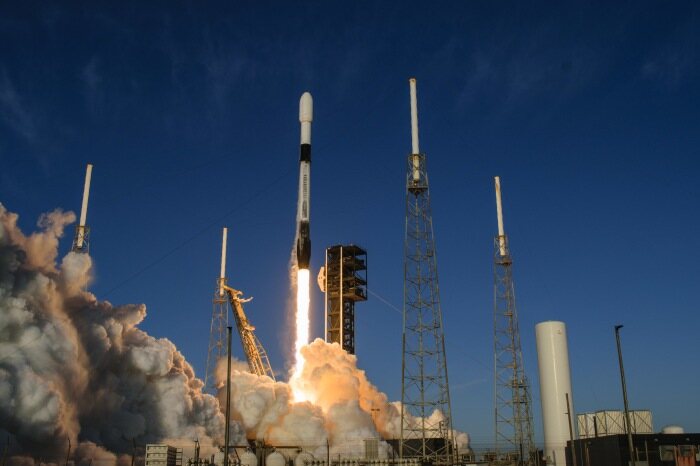
As SpaceX ($SPCX) prepares to be officially announced for inclusion in the Russell US Index on June 26 and subsequently join the Nasdaq 100 on July 6, the narrative of 'hundreds of billions in passive capital about to pump the stock' has captured retail traders' imagination. But the actual mechanism through which index funds execute these trades is far more nuanced—and often counterintuitive. Rather than a dramatic, coordinated buying spree on the effective date, the process is a meticulously choreographed, multi-layered liquidity dance where most of the action happens in plain sight but is rarely understood by the average investor.
The Real Playbook: It's Not a Single 'Hero Buy'
The typical retail fantasy: On the morning of July 6, a 'whale' at some trillion-dollar index fund slams a single massive buy order, sending $SPCX soaring 20%. In reality, the hundreds of billions are fragmented across hundreds of fund families—BlackRock, Vanguard, State Street, and many more. They do not coordinate; their only mandate is to minimize tracking error. Passive funds are measured not by profit but by how closely their performance matches the index's closing price. Buying cheaper is okay; buying more expensive is a cardinal sin. Therefore, each fund manager wants to execute as close to the closing price as possible, ideally in the closing auction itself. They are invisible operators, not heroic marchers.

Two Indexes, Two Completely Different Execution Timelines
SpaceX is being added to two indexes with starkly different rules, leading to vastly different buying patterns. The Russell US Index follows a 'announce-and-implement' model: changes announced on June 26 take effect at the close that same day. All Russell-tracking funds must complete their rebalancing by the closing bell, using MOC (Market-On-Close) orders. The final minutes see an explosion in volume as billions execute simultaneously. In contrast, the Nasdaq 100 provides a 10-day window: announcement on June 26, effective date on July 6. This interim period becomes the true battleground. Three distinct waves emerge: arbitrageurs buy immediately after the announcement, betting that passive demand will push prices higher, then sell into the MOC flood on July 6; front-runners (some mutual funds) quietly accumulate a day or two before, using algorithms to hide their footprint; and the strictest passive funds wait until the closing auction on July 6 to execute the bulk of their trades via MOC. The net result on effective date: massive volume but often a relatively flat price, as arb funds and index funds execute a precise cross in the final seconds.

Free-Float Crunch and the Invisible Solution
SpaceX went public on June 12, less than two weeks before its index inclusion announcements. The vast majority of shares are locked up under a 180-day IPO lockup, leaving a free float of perhaps 15% of the total 2-trillion-dollar market cap—roughly $300 billion. The Nasdaq 100 passive inflow alone is estimated at $10.2 to $12.7 billion, representing over 4% of the free float that must be absorbed in a single day. A direct assault on the open market would cause a catastrophic price spike. To avoid this, institutions deploy two hidden channels: off-exchange block trades—fund managers call bank sales desks to negotiate large blocks directly with major holders, settling billions at a negotiated price outside the public tape; and derivative workarounds—engaging total return swaps with locked-up shareholders, transferring the economic exposure of the stock without transferring legal title. These trades never appear on the candlestick chart; the true liquidity event is invisible to retail traders watching the order book.

Strategic Implications for Retail: From Being the Exit to Earning from Volatility
Armed with slower data, inferior tools, and no access to dark pools, retail traders face a steep uphill battle in short-term arbitrage. Three approaches emerge: Lower strategy (chasing the news)—buying immediately after the announcement or on effective date, often with high leverage. This risks being the exit liquidity for arbitrageurs who have already priced in the flow. Medium strategy (long-term hold)—index inclusion creates structural, long-term demand. Wait 1-2 weeks after the effective date for the arbitrage froth to settle, then build a position gradually. Some decentralized RWA platforms like SoDEX offer up to 20x leverage on $SPCX, but leverage must be used with extreme caution. Upper strategy (volatility selling)—the one near-certainty is a spike in implied volatility (IV) around the event. Selling a strangle (out-of-the-money call and put) when IV is elevated allows capturing premium from the market's overestimation of price moves. As long as the stock stays within the strike range at expiry, the seller profits from time decay. The key risk: an extreme black swan (e.g., unexpected early unlock of lockup shares) could cause unlimited losses. Strict position sizing and stop-losses are essential.

This approach exploits a structural pricing error: arbitrageurs and passive funds ultimately settle most volume via off-exchange cross trades, so the actual market impact on the close is often less dramatic than the option market prices in. The retail trader collects the 'pricing mistake' premium.

Conclusion: The Battle Is Over Before the Bell Rings
The SpaceX index inclusion saga is not a single, climactic battle on July 6. It is a series of skirmishes played out in dark pools, derivatives, and pre-arranged block trades over the preceding 10 days. By the time retail traders see the headline volume and price action, the smart money has already completed its mission. The most profitable role for individual investors is not to guess the direction but to capitalize on the volatility mispricing—or to invest on a time horizon that outlasts the noise. Understanding the hidden rules of the index game is the only way to avoid being the last one holding the bag when the music stops.