
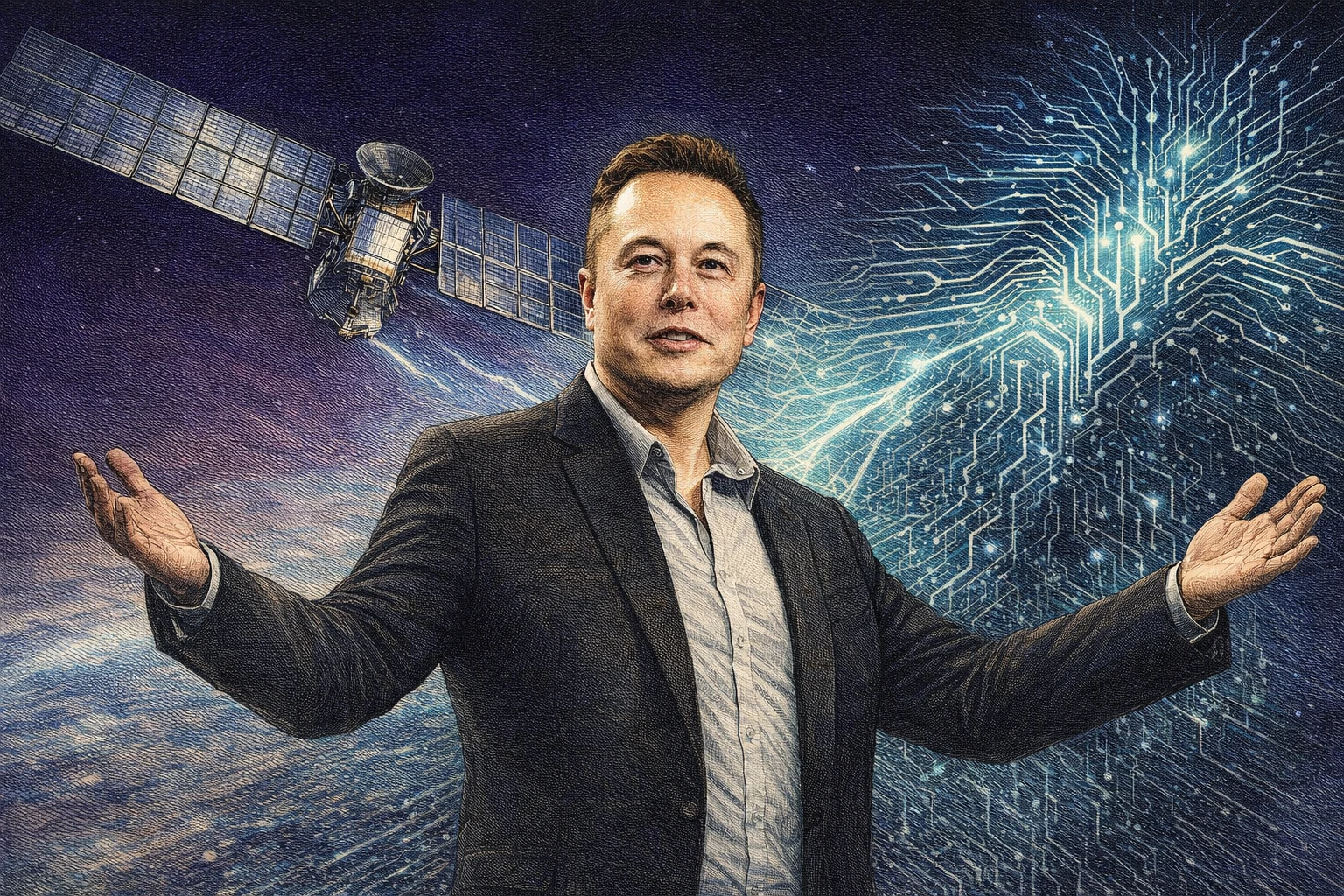
SpaceX has started operating under the SpaceXAI name after absorbing xAI into the company. The source says SpaceX acquired xAI in an all-stock deal in February 2026, and the new @SpaceXAI account together with a redesigned logo went live on July 6. The updated branding places the xAI identity directly inside the SpaceX mark.
That choice breaks from the usual post-acquisition model where the acquired company keeps its own brand and continues as a separate subsidiary. According to the source, Musk wrote on X in May that xAI would no longer exist as an independent company and would instead become SpaceXAI, an AI product under SpaceX. The branding shift shows that the integration is not cosmetic. It places xAI inside the parent company rather than beside it.
Valuation is being driven by the orbital computing thesis
On its own, xAI generated about $3.2 billion in AI revenue in 2025, based on the figures cited in the source. In a sector where valuations often run into the trillion-dollar range, that revenue number does not stand out by itself. Yet the market is valuing the combined SpaceXAI entity at $1.25 trillion.
The gap points to a very different pricing logic. The source argues that investors are not buying xAI for what it earns today. They are buying into the idea that Musk may be able to move computing power into orbit, turning space infrastructure into part of the AI stack.
Rockets, Starlink, Grok and X are now part of one structure
The source lays out the integrated model in simple terms: rockets send satellites into orbit, Starlink brings data back, Grok turns compute output into products, and X distributes those products to users. These businesses were once priced separately. Now they sit on the same balance sheet.
That consolidation is framed as a form of leverage. If the orbital data center narrative gains traction, even the idea around an AI1 satellite could support a valuation far above a business generating $3.2 billion in annual revenue. The source also notes that the real chips in this bet are not limited to cash. Launch approvals and orbital positions matter just as much.
There is still a basic question hanging over the whole concept: whether solar panels in orbit can actually support the computing demand of a large-scale AI operation. For now, the source makes clear that the answer cannot be verified from the ground.