
SpaceX filed its S-1 with the SEC on May 20, 2026, planning to list on Nasdaq on June 12 under ticker SPCX, aiming to raise $75-80 billion at a valuation between $1.5 and $2 trillion. If successful, it would be the largest IPO in history, surpassing Saudi Aramco.
Muskonomy: A One-Man Ecosystem, All the Risk for Shareholders
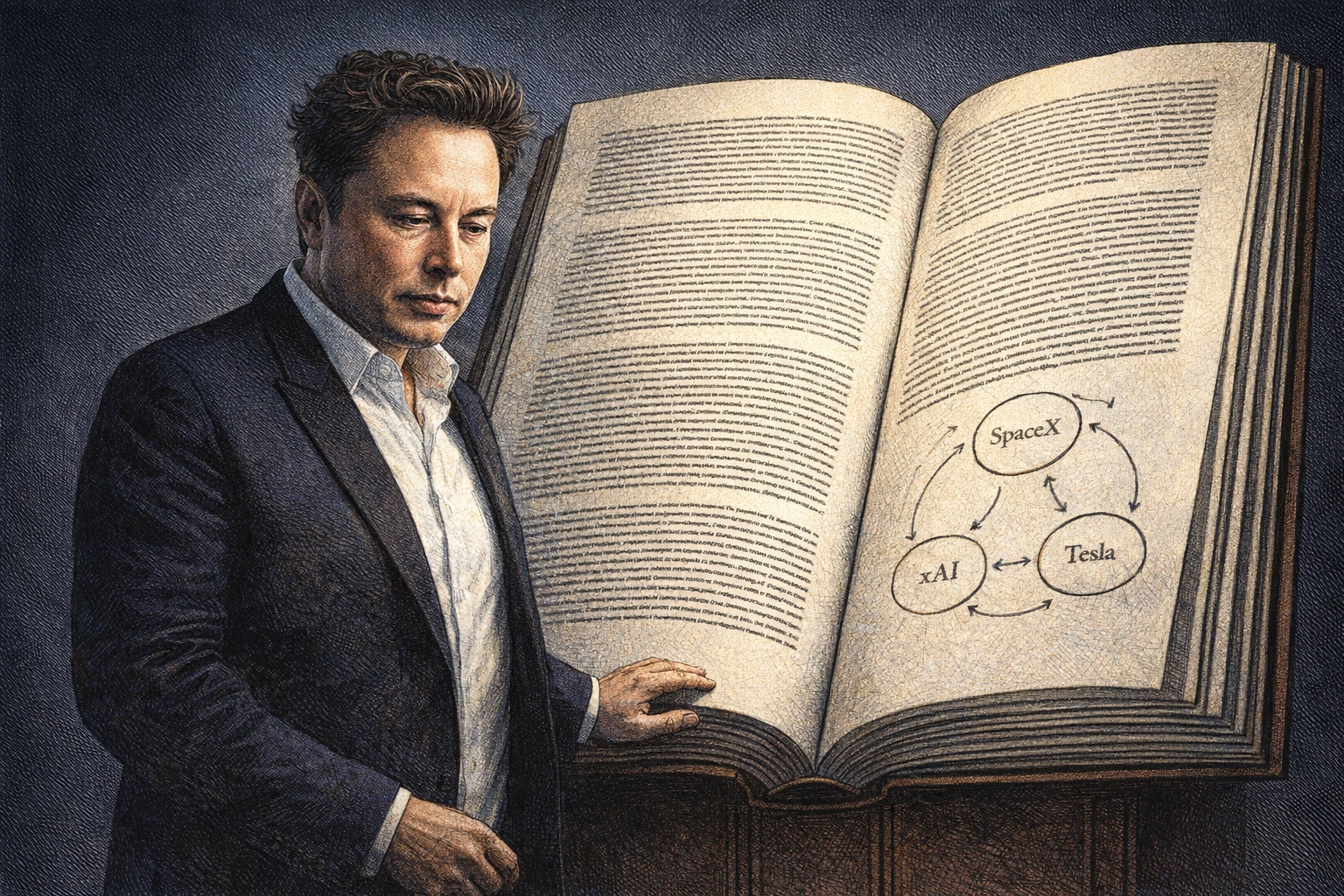
The prospectus quantifies for the first time the so-called "Muskonomy"—a web of Musk-controlled companies that act as each other's customers and suppliers. SpaceX purchased $131 million in Cybertrucks and $506 million in Megapack energy storage from Tesla; xAI bought $731 million in computing power from Tesla. Money flows within the empire, while shareholders of each entity bear the consequences of decisions they cannot influence.
For retail investors, buying SpaceX means accepting the risk that Musk may prioritize resources for xAI, Tesla, or other affiliates. The S-1 lists this explicitly under "Risk Factors"—acknowledging the problem while embedding it in the corporate structure.
Astronomical Compensation, KPI That Reads Like Sci-Fi
In January 2026, SpaceX's board approved 1 billion Class B shares for Musk, contingent on establishing a permanent Mars settlement with at least 1 million inhabitants and a company valuation of $7.5 trillion. A second award in March added 302.1 million shares, requiring an extraterrestrial data center with 100 petawatts of computing power (equivalent to 100,000 1GW nuclear plants) plus 12 market-cap milestones, culminating in a $6.6 trillion target. Musk's 2025 base salary was just $54,000—a stark contrast to the all-or-nothing bet on Mars and beyond.
Costliest IPO Ever, Yet Still Loss-Making
SpaceX reported Q1 2026 revenue of $4.694 billion, an operating loss of $1.943 billion, and adjusted EBITDA of $1.127 billion. Under GAAP, the company remains in the red. Musk holds 12.3% of Class A shares and 93.6% of Class B shares, each with 10 votes, giving him 85% voting power—near-absolute veto over any shareholder decision.
At a $2 trillion valuation, the market is pricing ambition for the cosmos. Yet the prospectus's conflict-of-interest warnings are almost a dare. The question: are you willing to bet on the man behind the empire?