
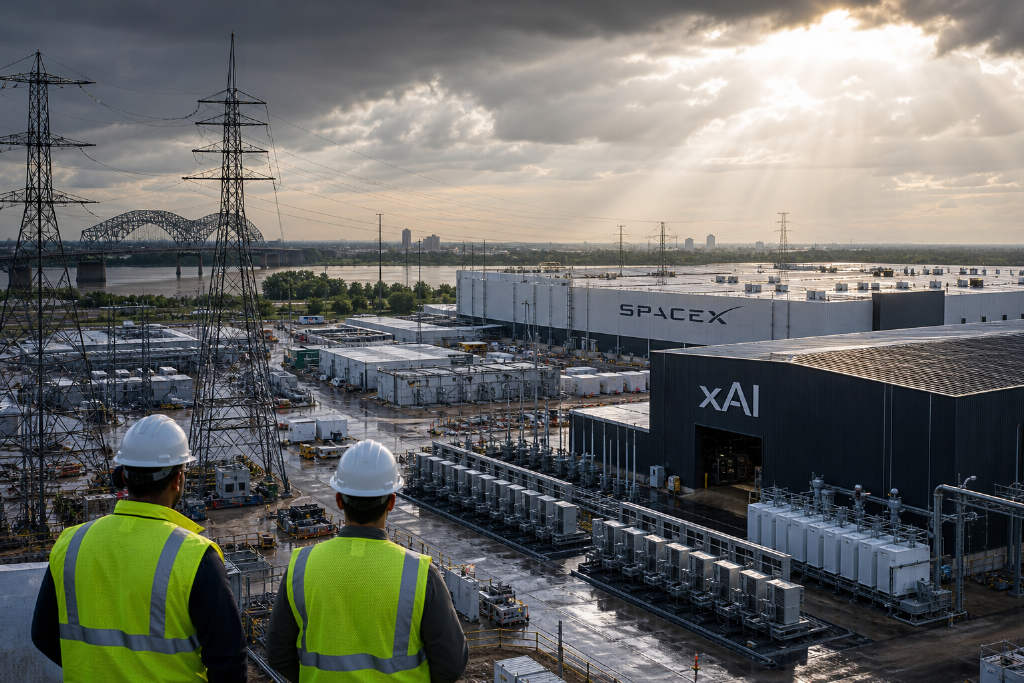
SemiAnalysis said in its latest report, SpaceX 10GW in 2027 – Why It’s Real, that the AI race is being judged by a new standard: not who can buy more GPUs, but who can build out power supply and data center capacity the fastest. The report said that after SpaceX completed its merger with xAI, Elon Musk’s first-principles approach is being translated into large-scale compute infrastructure through aggressive engineering and on-site power generation.

A new model for valuing compute infrastructure
According to the report, the GPU rental market over the past two years largely followed a cost-plus framework, with fixed rental pricing based on hardware depreciation and electricity costs. That model is now being challenged as agentic AI and code generation tools push workloads away from one-time responses and toward 24-hour continuous computing.
In that setting, market attention is shifting to revenue per megawatt, or Revenue / MW. SemiAnalysis said that under specific conditions, if advanced chip architectures are fully deployed into high-end inference services, 1GW of compute capacity carries the theoretical potential to generate very large annual revenue. That is why access to reliable power on a faster timeline is becoming a central business concern for technology companies.
SpaceX is selling time, not just chips
The report, as cited by ABMedia, said major technology companies such as Microsoft, Google, and Meta do not lack the money to buy GPUs. The harder constraint is physical infrastructure: land acquisition, grid interconnection review, and substation upgrades. SemiAnalysis said those steps through the traditional public grid often take two to three years.
Its view is that SpaceX and xAI are trying to break that bottleneck by building at extreme speed. What they appear to sell is compute capacity. What they are really selling, the report argued, is faster infrastructure delivery that saves customers time.
SemiAnalysis said SpaceX is deploying natural gas turbine generators directly at data center sites, which allows it to bypass the normal grid interconnection process and sharply reduce time-to-power. It cited the Colossus 1 compute cluster in Memphis as an example, saying the facility went from construction to launch in about four months.
2GW by the end of 2026, 10GW by the end of 2027
SemiAnalysis projected that SpaceX’s compute capacity could reach 2GW by the end of 2026, with plans to expand that figure to 10GW by the end of 2027. The report said that if rivals have to wait until 2028 for grid availability before they can move ahead, while SpaceX can deliver ready-to-use power and data center capacity in 2026 and 2027, large technology companies may be willing to pay a substantial premium to go live earlier.
$300 billion ARR estimate for late 2027
SemiAnalysis estimated that if SpaceX reaches 10GW of installed capacity in 2027, its annual recurring revenue could rise to $300 billion by the end of that year. The estimate assumes that only 50% of the new compute capacity added in 2027 is monetized, while the rest is used for training by the Grok and Cursor teams. The model also does not include inference revenue.
The article also said SpaceX’s stock fell as low as $108 after the company completed its initial public offering in mid-June. After the lock-up period, however, the shares recovered. Morgan Stanley said in an earlier report that the current share price reflects a very low valuation for SpaceX’s AI business, xAI, and reiterated a $300 price target.