

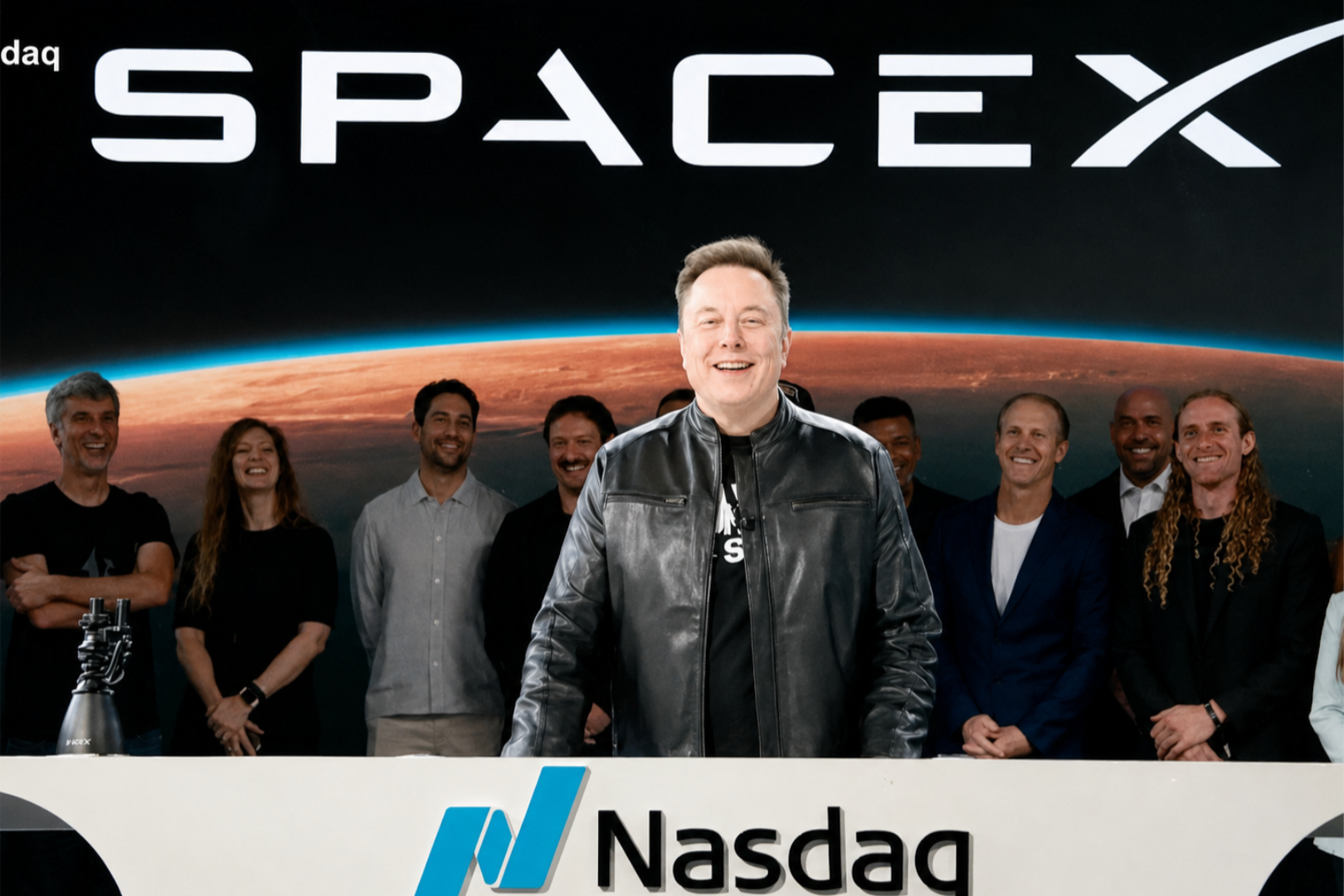
SpaceX ended its first day as a listed company last Friday at $160.95, fixing its market value at $2.1 trillion. That was still the largest IPO in U.S. stock market history, yet the close did not fully match the enthusiasm built up before the debut. Research firm CFRA even assigned SPCX a “sell” rating, a sign that Elon Musk’s “Mars story” received attention but did not immediately translate into unanimous support in the share price.
Monday’s rally changed the tone
By Monday’s U.S. session, the tone around SPCX shifted sharply. According to Gate U.S. stock market data, SPCX rose steadily after the open and finished at $192.5, up 19.6%. The closing price was also the intraday high. At that level, SpaceX’s market capitalization climbed to $2.519 trillion, making it the world’s eighth-largest company by market value.

The momentum did not stop at the close. Hyperliquid data showed SPCX trading above $214 in pre-market activity. As a result, the discussion moved from whether the IPO had been priced too aggressively to whether SPCX would continue Monday’s advance after the Tuesday U.S. open and overtake Amazon, the company ranked seventh globally by market capitalization.
U.S.-Iran agreement lifted broader risk appetite
The macro backdrop also turned favorable for U.S. equities. This week, the United States and Iran reached a memorandum of understanding, providing a positive signal for the stock market. On June 15, Donald Trump announced that an agreement with Iran had been reached and that the Strait of Hormuz would remain open. Unlike earlier rounds of unilateral rhetoric, the agreement was also acknowledged by Iran. On the same day, Iranian Deputy Foreign Minister Gharibabadi said the text of the U.S.-Iran memorandum of understanding had been finalized and would be formally signed in Switzerland on Friday, June 19.

The agreement was also confirmed again by the Iranian president. U.S. Vice President Vance said the deal reached by the United States and Iran had been electronically signed over the weekend, indicating that the terms had taken effect. After the news spread, U.S. stocks rose broadly at the open. The Dow closed up 0.92%, the S&P 500 gained 1.65%, and the Nasdaq advanced 3.07%.
Morgan Stanley said a long-term agreement between the United States and Iran, along with lower oil prices, would ease inflation pressure. The bank also said U.S. equities were moving from a “single-leader market” toward a healthier, broader rally. In that view, upside momentum in U.S. stocks was no longer confined to the technology sector and was gradually spreading into a wider range of cyclical industries. SpaceX was one of the beneficiaries of that environment.
Retail demand met a constrained float
On the market-flow side, SpaceX remained the stock most heavily chased by retail investors. Vanda Track data showed that on June 16, U.S. local time, SpaceX received about $93.8 million in net retail buying in a single day. That represented roughly 73% of total U.S. single-stock retail net inflows for the day. In other words, for nearly every $4 of incremental retail money entering the U.S. stock market, around $3 went into SpaceX.
Against that strong demand, SpaceX’s underwriters exercised the IPO over-allotment option, also known as the green-shoe mechanism, and purchased an additional 83.33 million shares. That lifted the total IPO issuance to 638,888,888 shares of Class A common stock and increased the total fundraising size to $85.7 billion. The scale exceeded almost all recorded over-allotment arrangements for technology company IPOs.
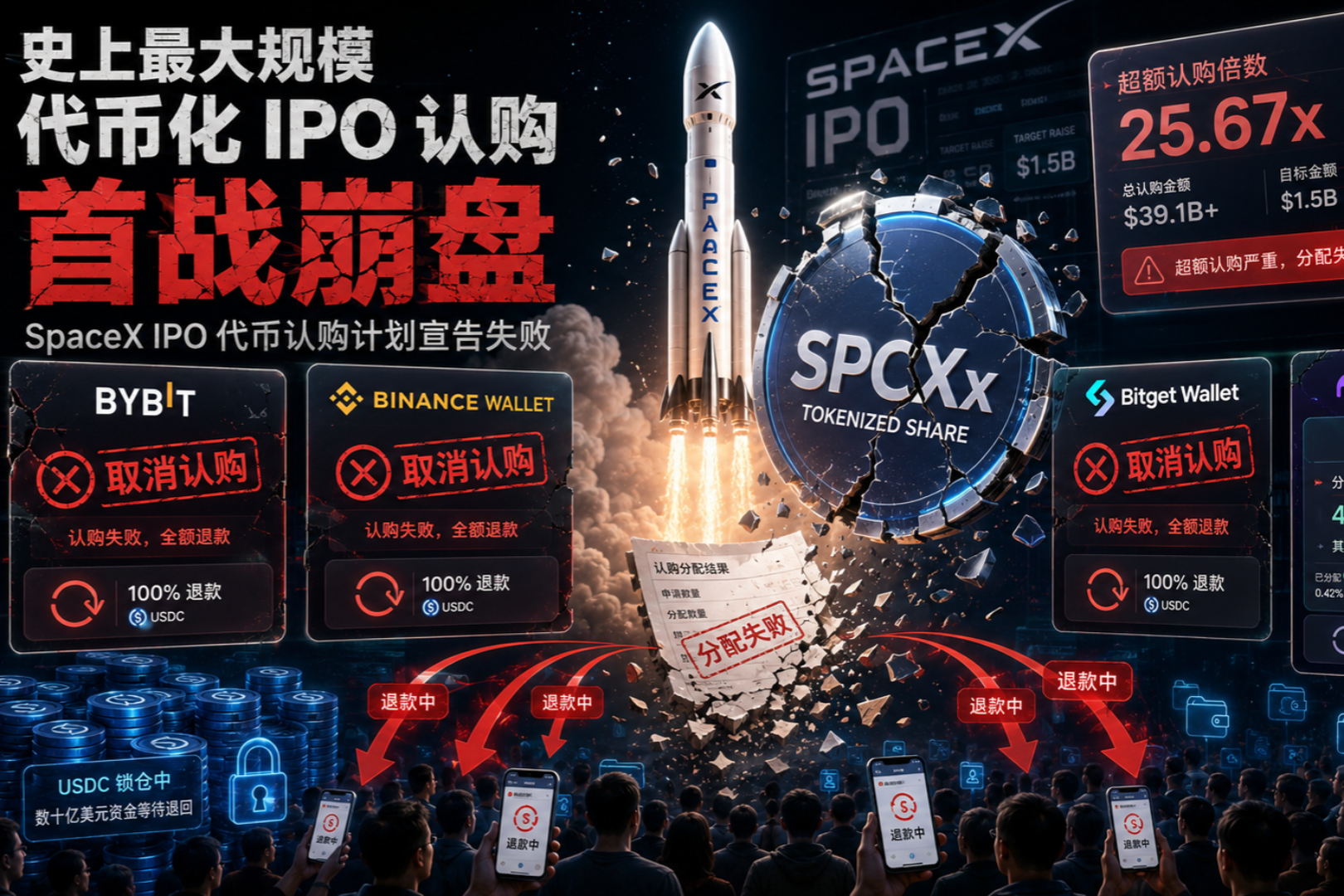
Even with the extra allocation, reports said most eligible U.S. retail investors received only about one share in the SpaceX IPO subscription process. With such a limited tradable float and extreme demand, concentrated retail buying was able to exert a significant effect on the stock price.
Gamma squeeze debate and institutional voices
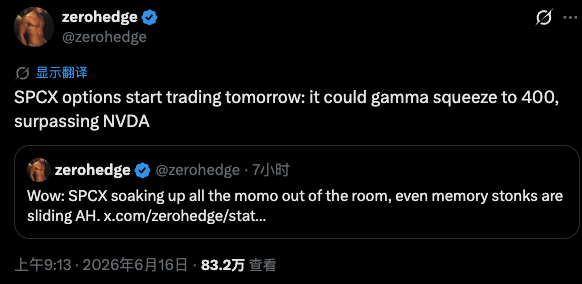
On June 16, financial media outlet zerohedge wrote that once SPCX options begin trading, the stock could rise to $400 and surpass Nvidia due to a gamma squeeze. A gamma squeeze is an upward spiral caused when options market makers are forced to buy the underlying stock as prices rise in order to hedge risk. SpaceX has a very low float of 4.2%, while retail enthusiasm is high. Retail investors who have not obtained SPCX shares could instead buy cheaper call options. If a large amount of capital rushes into call contracts, market makers would need to keep buying SPCX spot shares to hedge, pushing the share price higher and creating a positive feedback loop. The 2021 surge in GameStop, or GME, was cited as one of the classic examples of the same effect.
New institutional pricing also appeared around the stock. Before the U.S. market opened on June 15, Oppenheimer analyst Timothy Horan initiated coverage of SpaceX with an “outperform” rating and set a short-term target price of $190. After Monday’s trading session, SPCX closed at $192.5, broadly in line with Oppenheimer’s target.
On June 14, Peter H. Diamandis, the founder of XPRIZE and an early SpaceX investor, described SpaceX as the “railroad in orbit.” He said it would open a multi-planet civilization for humanity and create enormous wealth in the same way that railroads opened the American West in the 19th century. He also predicted that within the next year SpaceX would merge with Tesla and become the first $100 trillion company.
Diamandis also said that over the past decade, whenever he freed up capital from other transactions, he put that money into Bitcoin. Now, whenever he has idle capital, he invests in SpaceX. He acknowledged that the share price would fall when locked-up shareholders are able to sell shares and some investors cash out, but said he was not investing in SpaceX to pursue quarterly share-price gains. His stated goal was to support the development of an off-Earth economy. On June 16, Silicon Valley investor Brad Gerstner said on the latest episode of the BG2 podcast that SpaceX was an asset institutional investors must buy and hold, because the company sits on two major themes at once: the space economy and the expansion of artificial intelligence computing power.