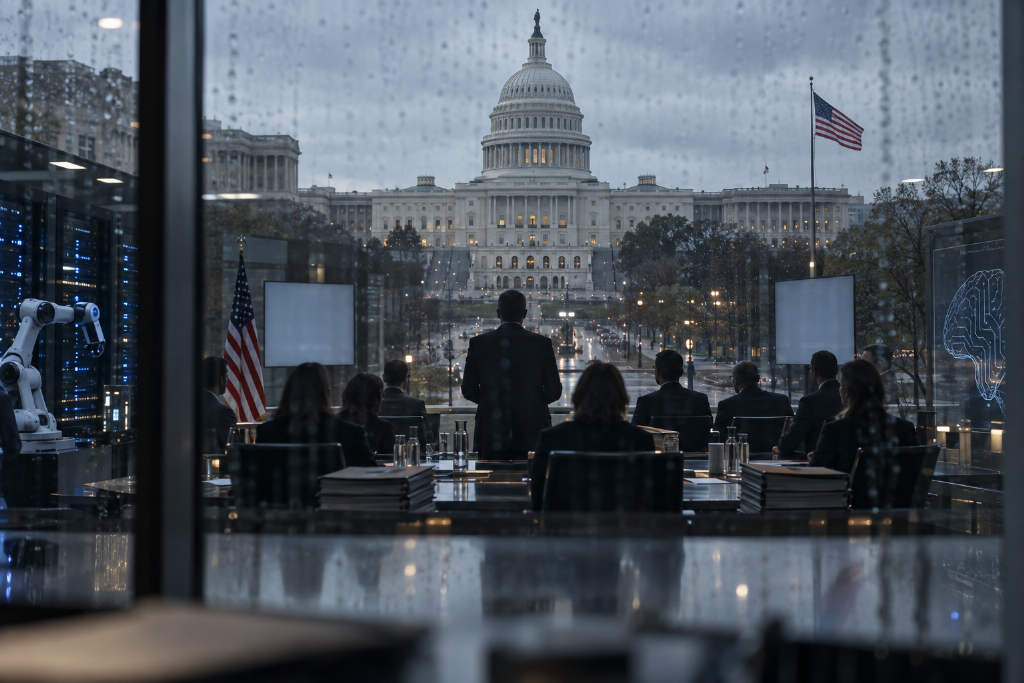
U.S. House Speaker Mike Johnson is moving to open discussions on artificial intelligence regulation, setting him apart from President Donald Trump’s recent opposition to stronger AI rules. Johnson said he wants to put "guardrails" in place to limit potential harms from AI while preserving U.S. innovation leadership and national security interests. He also described AI oversight as a complicated issue that will require substantial work and a bipartisan approach.
Johnson plans to convene AI company executives and experts either later this weekend or early next week to discuss the risks tied to AI development and possible legislative paths. The report said Republicans are facing political pressure linked to data centers, power costs, and potential AI safety risks.
At the same time, prospects for near-term legislation remain limited. With the House heading toward its pre-election recess, Congress is unlikely to advance AI regulation quickly. Both the Senate and the House already have several AI safety proposals on the table, including measures that would require safety testing for advanced models, reporting of safety incidents, and government intervention mechanisms. The report also noted that figures such as Anthropic CEO Amodei, OpenAI CEO Sam Altman, and Elon Musk have recently called for slowing AI development.
U.S. House Speaker Mike Johnson is pushing discussions on artificial intelligence regulation, a position that differs from President Donald Trump’s recent opposition to tighter AI rules.
Johnson said he wants to create "guardrails" to prevent harm from AI while preserving U.S. innovation advantages and national security interests. He also said AI regulation is a complicated issue that will require extensive work and a bipartisan solution.
Johnson plans meeting with AI executives and experts
Johnson said he plans to gather AI company executives and experts later this weekend or early next week to discuss the risks tied to AI development and possible legislative directions.
The report said Republicans are facing political pressure related to data centers, electricity costs, and potential AI safety risks.
Near-term action in Congress looks limited
Recent calls to slow AI development have come from several tech figures, including Anthropic CEO Amodei, OpenAI CEO Sam Altman, and Elon Musk. Even so, the House is about to enter its pre-election recess, which limits the chances of Congress moving AI regulation legislation in the short term.
Both the Senate and the House already have multiple AI safety proposals under consideration. Those proposals include requirements for safety testing of advanced models, reporting safety incidents, and establishing mechanisms for government intervention.
This article was originally published by Bit.Fan. For more cryptocurrency news and market insights, visit www.bit.fan. Disclaimer:
The market information, project data, and third-party content displayed on this platform are for industry information sharing only and do not constitute any form of investment advice or return commitment.
Cryptocurrency trading carries high risks. Users should fully assess their risk tolerance and make independent decisions. All profits, losses, and legal responsibilities are borne by the users themselves.