
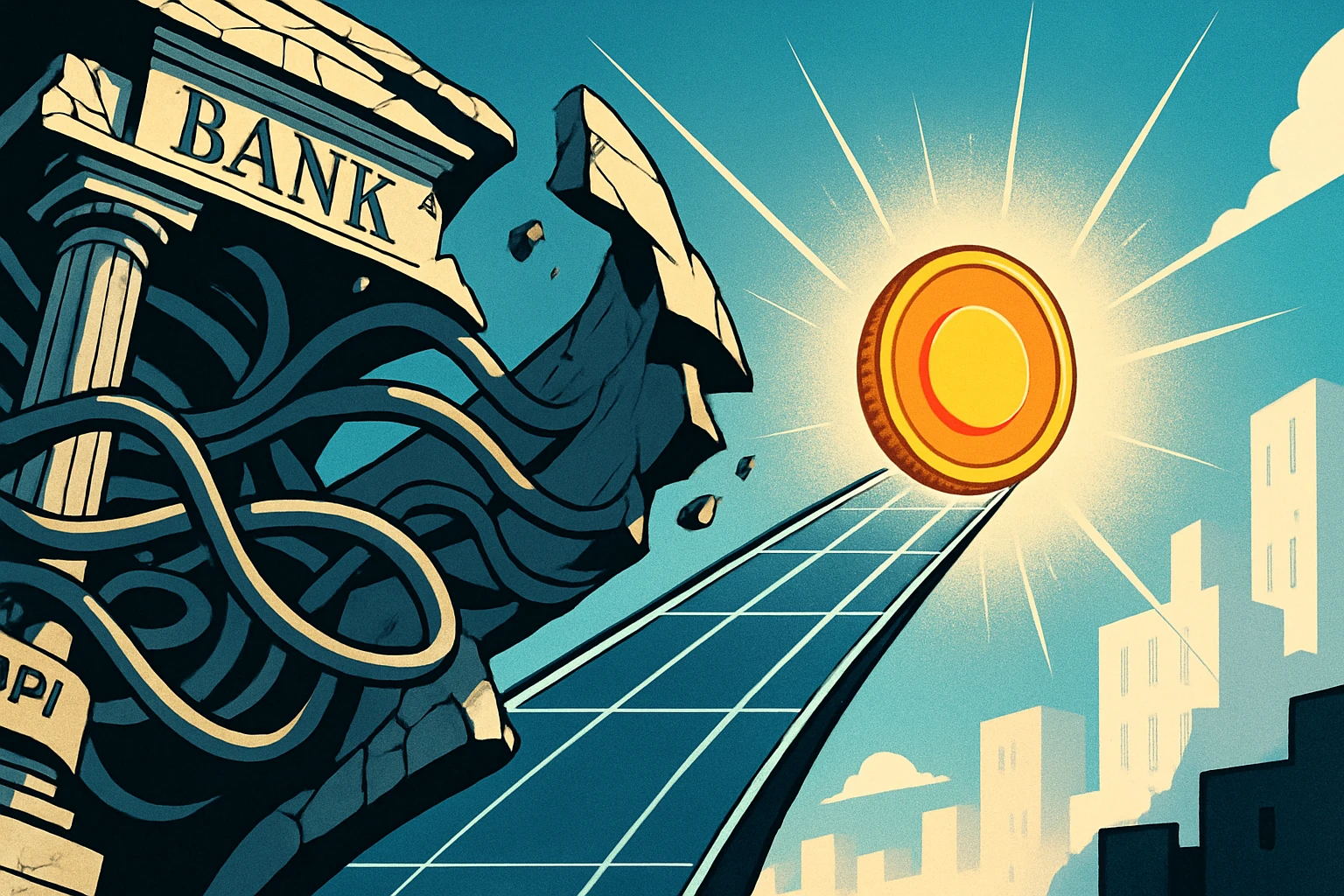
For two decades, fintech innovation has largely focused on better interfaces and distribution—not on moving money differently. Stablecoins are now changing that by turning core banking functions like custody, settlement, credit, and compliance into open, on-chain primitives. This shift marks what many call FinTech 4.0, where companies no longer rent bank APIs but own their own financial infrastructure.
FinTech 1.0 to 3.0: Wrapping Old Rails
The first wave (2000—2010) digitized distribution via PayPal, E*TRADE, and Mint, but settlements still depended on ACH, SWIFT, and card networks. The second wave (2010—2020) used smartphones to reach underserved users—Chime, SoFi, Revolut—yet all sold the same checking accounts and debit cards running on legacy sponsor banks. The third wave (2020—2024) embedded finance via APIs like Marqeta and Synapse, but the underlying rails remained identical, with banks controlling access and economics.
Every stage forced fintechs to be tenants: paying sponsor banks for compliance, card networks for settlement, and middlemen for access. Launching a fintech required millions in capital, most of which went to coordinating infrastructure instead of building products.
How Stablecoins Break the Pattern
Stablecoins now handle real economic transaction volumes surpassing PayPal and Visa. By removing the need to call bank APIs, developers interact directly with open networks. Settlement is instant; fees flow to protocols, not intermediaries. Deploying a smart contract costs a few thousand dollars—compared to millions via banks or hundreds of thousands via BaaS. That order-of-magnitude drop unlocks an entirely new model: specialized, stablecoin-native fintechs.
Take adult content creators, often blacklisted by card networks and forced to pay 10–20% fees. Stablecoins enable instant, irreversible settlements with programmable compliance. Professional athletes with concentrated, short careers can use multi-sig wallets to automatically split income among agents, coaches, and tax authorities. Luxury watch dealers, whose inventory ties up liquidity, can tokenize stock as collateral for short-term credit. Each of these niches was previously too small or too high-risk for traditional fintech to serve profitably.
From Acquiring Users to Understanding Them
As infrastructure costs collapse, the competitive edge shifts from scale to insight. Z‑gen, digital nomads, Sharia-compliant finance, international aid, and cryptocurrency degens each have unique cash-flow patterns and risks. A stablecoin-native fintech can design products around how these groups actually earn, spend, and manage money—not abstract personas. Word-of-mouth replaces paid acquisition; customer acquisition cost drops; unit economics improve.
History offers a parallel: SoFi, Chime, and Brex each started by serving a specific segment, but were later forced to broaden or die. With stablecoins, focus becomes sustainable. The next generation of fintech success won't come from trying to serve everyone, but from deeply understanding how money moves for a particular community—and serving that movement better than anyone else.