
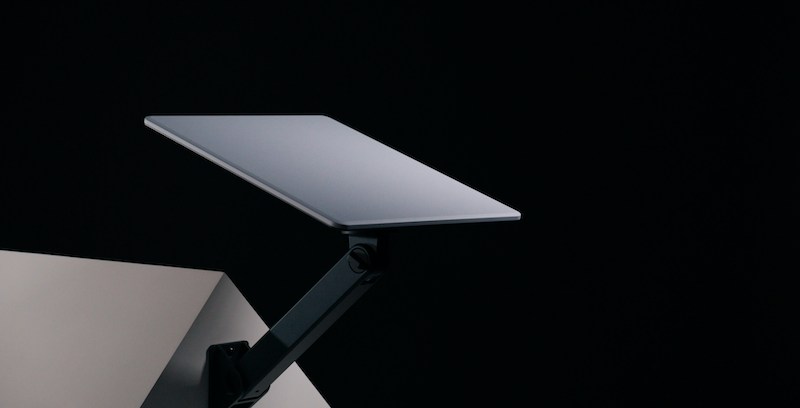
SpaceX’s satellite internet service Starlink has introduced its new V5 user terminal, positioning it as a lighter and more power-efficient home broadband option. The company said the latest kit is built to deliver reliable high-speed internet, with download speeds of more than 375 Mbps, while making deployment easier in remote and off-grid locations.
In a social media post dated July 14, Starlink said, “The next generation Starlink Kit is designed to deliver reliable, high-speed home internet.” The company added that Starlink V5 has a smaller form factor, a lighter design, and better power efficiency than Starlink V4, with speeds of up to 375+ Mbps.
New kit targets home internet use
According to ABMedia, the Starlink V5 terminal is aimed at home broadband use cases such as video streaming, video calls, and remote work. The full Starlink V5 Kit is described as a package that can get users online within minutes after unboxing. It includes a Router Mini and pipe adapter accessories.
The report said V5 is currently on sale only in selected regions, and that supply coverage is expected to expand as production capacity improves.
Weight falls to 1.1 kg, average power use drops by about half
Compared with the previous V4 model, Starlink V5 cuts weight from 2.9 kg to 1.1 kg, a reduction of more than 60%. Average power consumption falls from 75–100 watts to 35–50 watts, about half the level of the earlier generation. The physical footprint has also been reduced by nearly half.
ABMedia said those changes make the terminal easier to install, reduce electricity costs, and improve suitability for battery or solar-powered setups in mountain areas and off-grid sites.
Report cites hardware trackers on internal specification changes
ABMedia cited industry sources who track Starlink hardware and said the new terminal carries the internal code name rev5. It is said to use a new front-end module, or FEM, chip code-named “Pez,” replacing the “Panda” chip used in the earlier generation.
The same report said the terminal has 2 beamformers and 820 antenna elements, placing it between V4, which had 1,536 elements, and Mini, which had 571. The panel is said to measure about 274 × 350 mm.
According to the report, V5 is also said to be the first Starlink terminal without a built-in GPS receiver. It lists an input voltage of 54V and a maximum power rating of 111W.
Smaller ground hardware becomes a focus in satellite internet competition
ABMedia said Starlink is already the world’s largest satellite internet constellation by scale. The report said the company’s strategy is no longer focused only on adding satellites, but also on shrinking and simplifying ground hardware so satellite internet can move beyond niche demand into ordinary household and mobile use cases.
The report added that, for users in Taiwan, satellite communications have drawn more attention in recent years because of repeated incidents involving damaged submarine cables and the need for disaster-response communications. In that context, lighter terminals and lower power consumption have drawn interest for emergency backup, mountain regions, and offshore island deployments.