
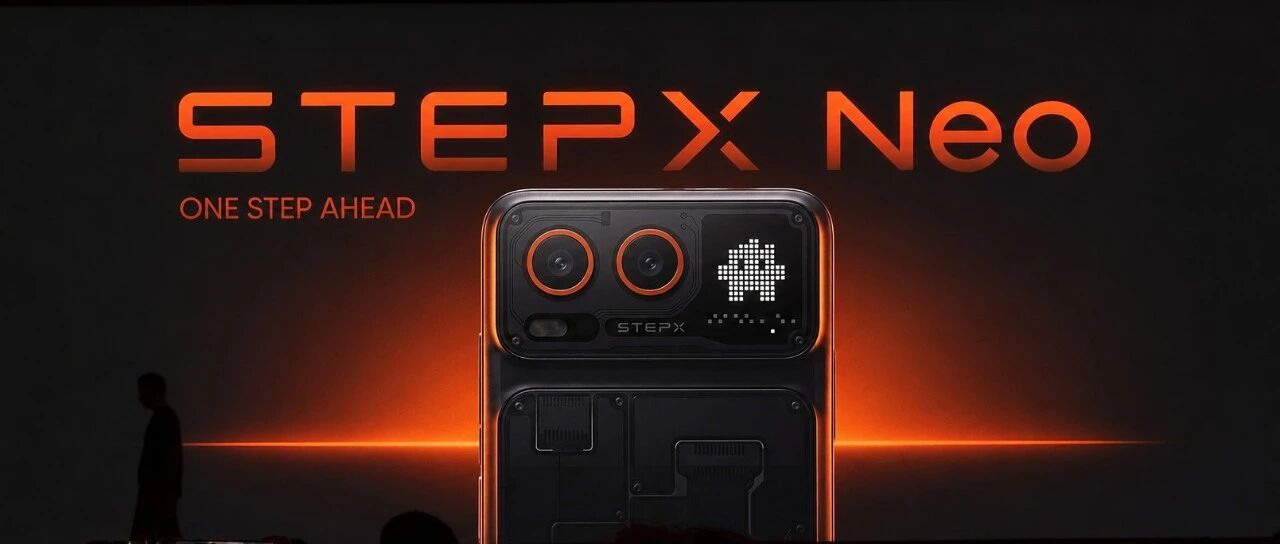
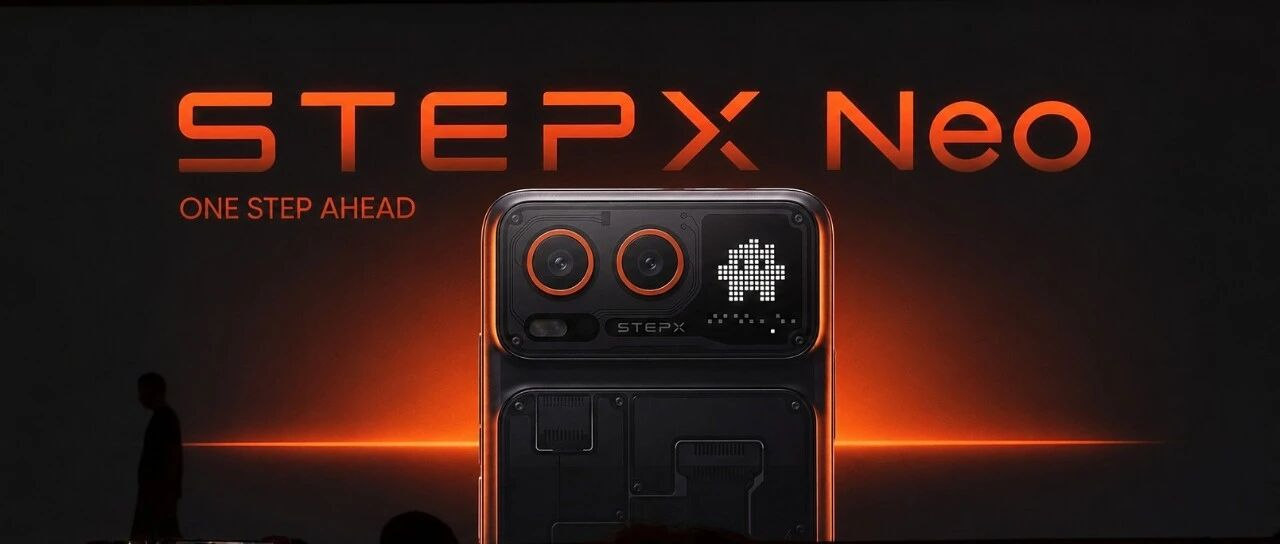
StepFun unveiled STEPX Neo on July 13, calling it the world’s first native large-model agent smartphone. Rather than relying on accessibility-driven simulated taps to move across apps, the product is built around a protocol and system-layer approach, combining Step AOS, the built-in Amoo agent, the Step Edge on-device model, and the GUI-MCP protocol.
At the launch event, StepFun chairman Yin Qi said he had asked many people in the device industry for advice and was repeatedly told not to get into hardware, but the company decided to do it anyway. In the source article’s framing, that decision reflects a deeper pressure facing large-model companies: monetization in the cloud is difficult, and control over a device-side entry point is increasingly valuable.
Why build a phone at all
According to PEdaily, StepFun completed a B+ round of more than 5 billion yuan in January 2026, setting the largest single financing record in the large-model sector over the previous 12 months. The company, founded in April 2023 and led by Jiang Daxin, has built up capabilities in multimodal models.
The issue is not just model performance. Most large-model products still live as standalone apps or mini programs, which leaves them dependent on the permission structure and traffic rules of existing mobile operating systems. In that setup, an agent remains confined inside an app rather than becoming the center of a user workflow.
STEPX Neo runs Step AOS and comes with the Amoo agent. According to Cailianshe, the phone is manufactured by Huaqin Technology, includes a secondary interactive display on the back, and will make its first public appearance at the World Artificial Intelligence Conference on July 17. Its hardware specs and price have not been disclosed.
The secondary display is presented as part of the phone’s “native agent” positioning, intended to keep agent status and quick interactions readily available. StepFun is effectively trying to show that a large model can serve not only as a cloud brain, but also as a device-side control layer.
The Doubao lesson
The source article compares this approach with ByteDance’s Doubao phone assistant. In December 2025, ByteDance launched that product, which media reports at the time said debuted on the ZTE Nubia M153 at a price of 3,499 yuan. Its main pitch was system-level cross-app automation through simulated clicks. Users could issue a command, and the assistant would open other apps, bypass splash ads, and jump to feeds or transaction pages.
The demos were striking. But the path ran into resistance quickly. In early December 2025, many users reported that Doubao’s interactions with WeChat triggered security risk controls, causing abnormal exits or failed logins. The capability was later removed.
The article argues this was more than a technical glitch. Simulated tapping depends on reading screen pixels and imitating human touch behavior, which makes it look like an external automation layer to app risk-control systems. It also cuts through traffic distribution and ad exposure, putting it in direct conflict with the business interests of large apps. Once app operators adjust UI layouts or add verification steps, the route becomes easy to disrupt.
The source article also says legal experts have warned that forcing cross-app actions through accessibility services carries unfair-competition risk, making an adversarial model hard to sustain.
GUI-MCP as a cooperative route
StepFun’s answer is the Step Edge on-device model and GUI-MCP. Based on the company’s open-source documentation, the protocol uses a layered dual-stack architecture and supports a high-privacy mode in which raw screenshots stay on the device while only semantic summaries are sent to the cloud.
StepFun’s open GUI-specific model has 4 billion parameters and is described as supporting local recognition and operation across more than 200 apps. In this architecture, the on-device model handles visual screenshots and local actions, while the cloud model takes on high-level planning and more complex reasoning.
That is the core difference from an overlay-style automation path. Instead of taking over the user interface by force, GUI-MCP is meant to standardize interfaces so app operators can expose capabilities directly. In other words, the app is supposed to become a skill provider for the agent rather than a target to be bypassed.
If that works in practice, the agent would call app functions through defined interfaces instead of hunting for buttons on the screen. The source article says that should improve efficiency and stability, especially for longer multi-step tasks. Keeping raw screenshots local is also presented as a privacy measure that could make app-side adoption easier.
Partners are in place, but the walls remain
StepFun’s first batch of ecosystem partners includes Meituan, WPS, CapCut, Trip.com, Amap, Alipay, Baidu, Didi, and JD.com, spanning food delivery, office software, travel, transport, and payments. That list shows the company is trying to build an open protocol standard, not just launch another handset.
Still, the article says the real bottleneck is commercial alignment. One of the main promises of AI agents is to let users reach task completion directly instead of moving through app layers. That can cut into the traffic and monetization interests of super apps. Without a workable revenue-sharing model, app operators may still respond with code changes, CAPTCHA upgrades, or other barriers.
The article points to another possible route: apps could proactively package their capabilities as Skills or MCP interfaces for agents to use. That reduces conflict, but only if operators believe the gains from openness outweigh the value of a closed moat. StepFun’s initial partners are described as businesses that need orders and traffic and may be more willing to test new entry points. There is still no clear official response, the article notes, on whether more closed ecosystems such as Tencent’s would support such a standardized protocol.
Without support from mass-market apps such as WeChat or Taobao, STEPX Neo’s cross-app promise would be materially weaker. In the source article’s view, dual-authorization structures and a sensible benefit-sharing framework are likely necessary if AI phones are to move through those ecosystem barriers.
Launch day is not proof of real-world performance
The article frames STEPX Neo less as a hardware-spec story and more as a workflow story. Citing OmniTools, it argues that the real test of utility is whether an agent can fit naturally into daily workflows and complete cross-app tasks without constant switching.
One example in the article is a user asking the agent to book a flight to Beijing for the next day and call a ride to the office. In theory, the agent could use Trip.com and Didi interfaces to complete both steps. If that experience holds up, phone interaction could change in a meaningful way.
For now, though, STEPX Neo has only appeared on stage. The source article says there is still no real-device test data from complex live scenarios. Pop-up windows, CAPTCHAs, and payment risk controls remain obvious stress points, and the stability of GUI-MCP still has to be tested at the phone’s WAIC debut on July 17. Hardware supply-chain management, offline distribution, and after-sales service are also described as weak spots for large-model companies entering the handset market.
STEPX Neo puts the issue into the open: large-model companies no longer want to remain cloud-only capability providers. They are pushing toward the device side and deeper into the operating-system layer. Whether this protocol-based path can really open the app ecosystem now depends not only on the technology, but on how much access ecosystem partners are willing to give up.