
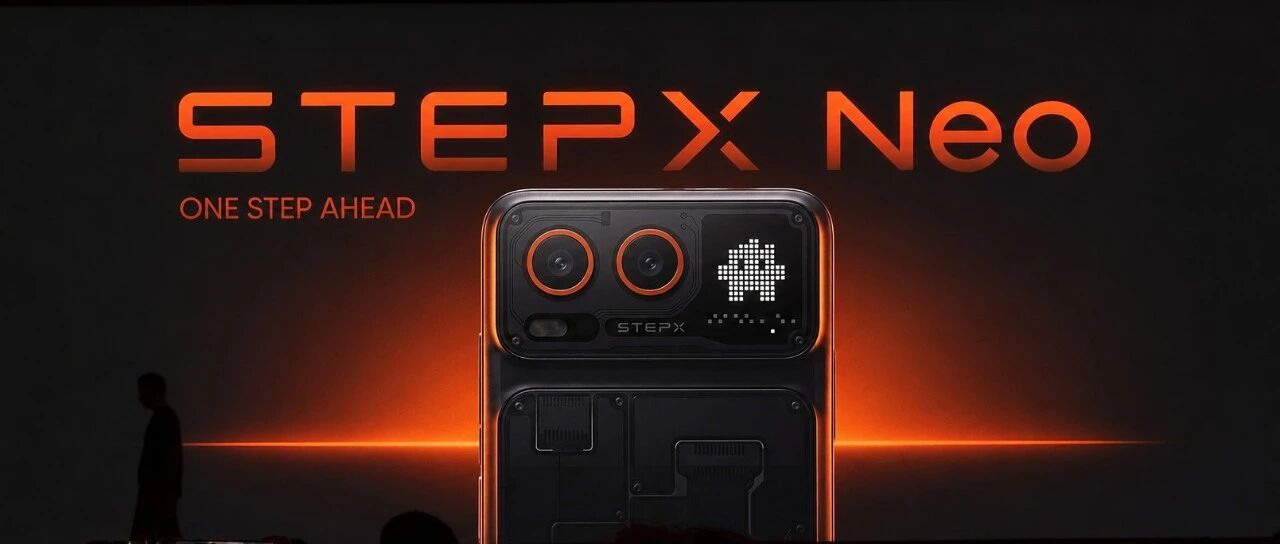
StepFun on July 13 introduced STEPX Neo, which it described as the world’s first native large-model agent smartphone, taking its AI ambitions from the app layer into the operating system itself.
At the launch event, StepFun chairman Yin Qi said the company had asked many people in the device industry for advice and was repeatedly told not to get into hardware, but chose to proceed anyway. In the article’s framing, that decision reflects a deeper pressure facing large-model companies: cloud monetization remains difficult, and control over the device-side entry point matters.
Why StepFun moved into hardware
The article ties the move to both funding and distribution. According to Touzijie, StepFun completed a B+ round of more than 5 billion yuan in January 2026, the largest single financing in the large-model sector over the previous 12 months. Founded in April 2023 and led by founder Jiang Daxin, the company has built up its multimodal model capabilities, but that does not solve the problem of access.
Most large-model products still live as standalone apps or mini programs. As long as they depend on existing mobile operating systems, they remain subject to the platform owner’s permission structure and traffic rules. The article argues that without a system-level gateway, an agent remains confined inside an app rather than becoming the center of a user workflow.
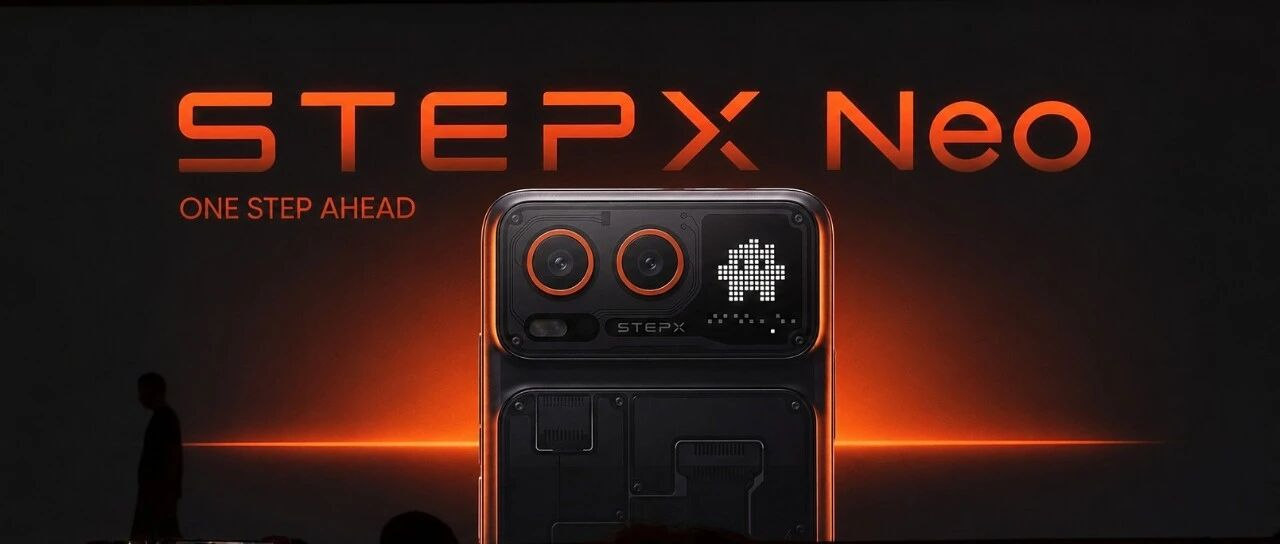
STEPX Neo runs Step AOS and comes with the built-in agent Amoo. According to Cailianshe, the phone is manufactured by Huaqin Technology, has an interactive secondary display on the back, and will make its first public appearance at the World Artificial Intelligence Conference on July 17. Detailed hardware specifications and pricing have not been disclosed.
The secondary display is presented in the article as part of the device’s agent-first identity, potentially serving as a persistent status and interaction window for the assistant. StepFun’s broader point is that a large model should not only act as a cloud brain but also as a native device-side coordinator.
Doubao showed the limits of brute-force cross-app automation
To explain why StepFun chose a different approach, the article revisits ByteDance’s Doubao phone assistant. ByteDance released the product in December 2025, and media reports at the time said it debuted on the ZTE Nubia M153 at a price of 3,499 yuan. Its selling point was system-level permission-based simulated tapping, allowing users to give a command and have the assistant open other apps, skip splash ads, and jump straight to information feeds or transaction pages.
The demos were striking at first. The friction came quickly. In early December 2025, many users reported that Doubao triggered WeChat security risk controls during operation, causing the app to exit abnormally or block login. The feature was later removed.
The article argues this was not just a technical glitch. It was a direct clash with the incentives of large app ecosystems, where traffic allocation and ad exposure are core assets. Simulated tapping, as described in the piece, depends on reading screen pixels and imitating finger actions. That makes it easier for app operators to treat the behavior as abnormal, and relatively small interface or verification changes can disrupt it.
The article also says legal experts have warned that forcing cross-app actions through accessibility services can carry unfair competition risk, making an adversarial path hard to sustain.
GUI-MCP turns the problem from confrontation to integration
StepFun’s answer is the Step Edge on-device model and the GUI-MCP protocol. Based on the company’s open-source documentation, the protocol uses a layered dual-stack architecture and supports a high-privacy mode in which raw screenshots stay local while only semantic summaries are sent to the cloud. StepFun’s open-sourced GUI-specific model has 4 billion parameters and is said to support local recognition and operation across more than 200 apps.
That is a different model from simulated tapping. Instead of taking over the user interface from the outside, GUI-MCP tries to establish standardized interfaces that let app developers expose capabilities directly. In that setup, apps become skill providers for the agent rather than targets to be bypassed.
Under the architecture described in the article, the device-side model handles visual screenshots and local execution, while the cloud model takes on higher-level planning and more complex reasoning. The design is meant to preserve response speed and reduce cloud compute costs. Keeping raw screenshots on the device also addresses privacy concerns and may give app partners a safer basis for opening interfaces.
If that integration works, the article says, protocol-based access should be more stable and efficient than blind screen interaction, especially for multi-step tasks. But the condition is obvious: app makers have to opt in.
Partner lists help, but the real issue is incentives
StepFun named an initial batch of ecosystem partners that includes Meituan, WPS, CapCut, Ctrip, Amap, Alipay, Baidu, Didi, and JD.com. The list spans food delivery, office software, travel, mobility, and payments. The company’s strategy, as presented in the article, is to use those partnerships to seed a standardized open protocol.
The harder question is commercial. The article argues that breaking app walls is less about technical elegance than about who keeps the value when an AI agent sends users straight to a task result or payment page. That can weaken the role of super apps as traffic gateways and ad surfaces.
Without a workable revenue-sharing model, large apps may still resist by changing code, adding verification steps, or tightening controls. The piece points to another possible route: apps voluntarily package their capabilities as Skills or MCP endpoints for agents. That lowers friction, but only if the gains from openness outweigh the value of a closed moat.
So far, the first partners are mostly business-driven apps that want orders and traffic and may be more willing to test a new entrance point. Whether ecosystem-heavy players such as those in Tencent’s orbit will adopt a standardized protocol remains unanswered, and the article notes there has been no clear official response.
Workflow change is the promise, real-world testing is still ahead
The article frames STEPX Neo as a workflow product more than a hardware spec play. Citing OmniTools, it says the real test for an AI phone is whether its agent can move across app silos and complete complex tasks rather than simply adding more parameters or features.
One example given is a user saying, “Book me a flight to Beijing for tomorrow and call a car to the office,” with the agent then using Ctrip and Didi interfaces to complete both actions. If that works reliably, the interaction model with a smartphone would change in a meaningful way.
For now, though, STEPX Neo has only appeared on stage. The article notes there is still no real-device test data from complex live environments. Pop-ups, verification codes, and payment risk controls remain practical stress points, and the stability of GUI-MCP will need to be tested when the phone makes its WAIC debut on July 17.
There is also the hardware execution question. Huaqin can support manufacturing, but StepFun does not have the offline channel coverage or after-sales infrastructure of established smartphone brands.
STEPX Neo shows how large-model companies are pushing from cloud services toward device-side control, and from the application layer toward the system layer. Whether that can actually bridge app silos will depend not only on the protocol itself, but also on partner adoption, authorization rules, and how value is shared across the ecosystem.