

Strategy’s larger cash pile failed to stabilize STRC. On Monday morning, Michael Saylor promoted the company’s added cash as support for dividend payments, but the market barely reacted. The source article says the issue is not funding capacity. It is investor confidence.
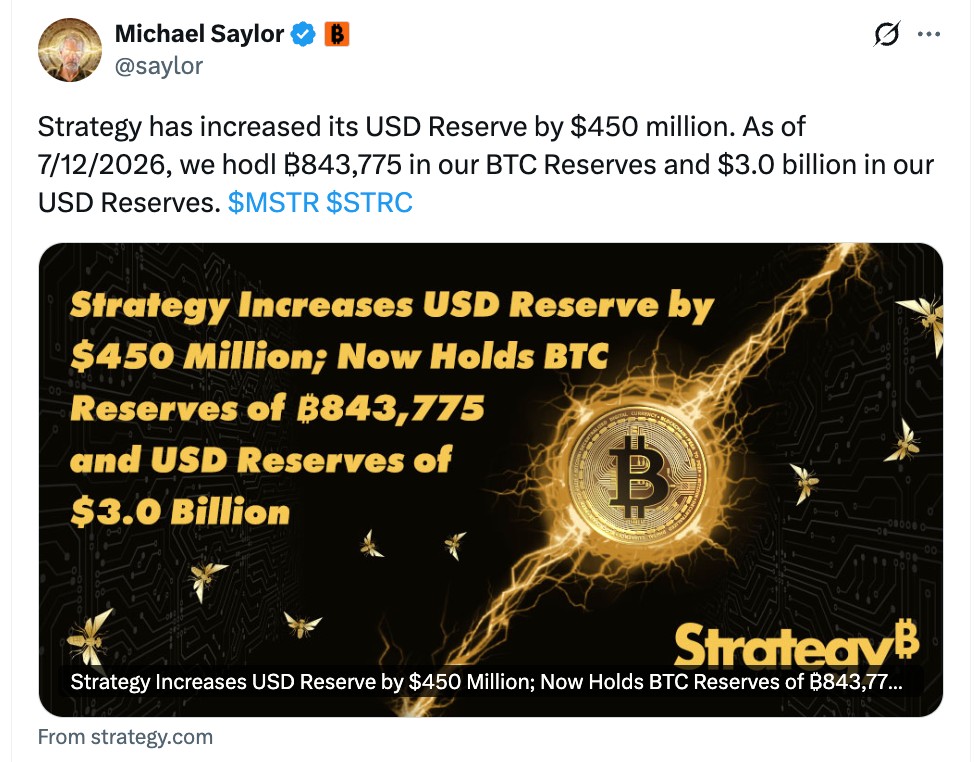
Strategy, described in the article as the world’s largest public holder of bitcoin, added $450 million in cash last week by diluting common shareholders. That brought total cash to $3 billion, up from the $2.55 billion disclosed on July 5, a 17% increase.
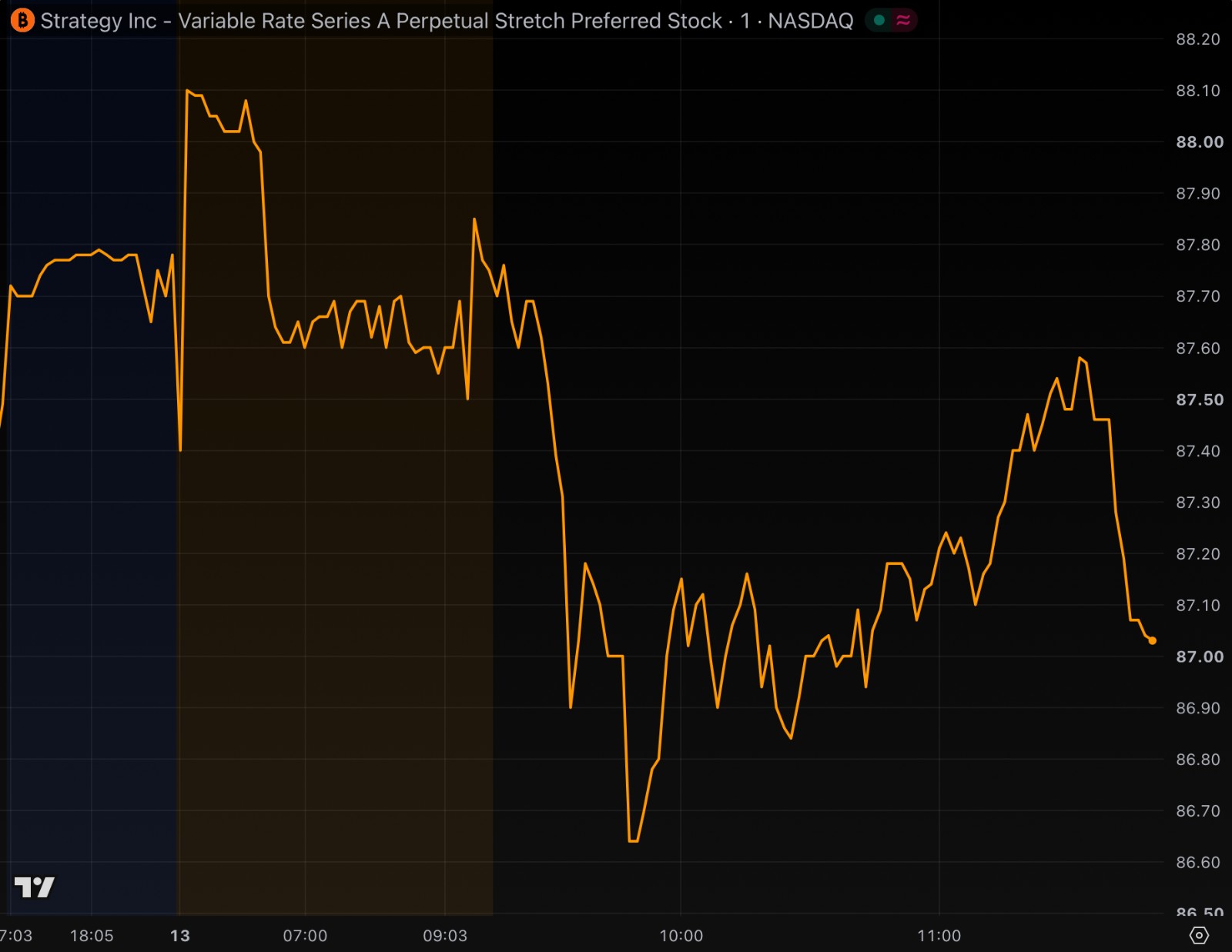
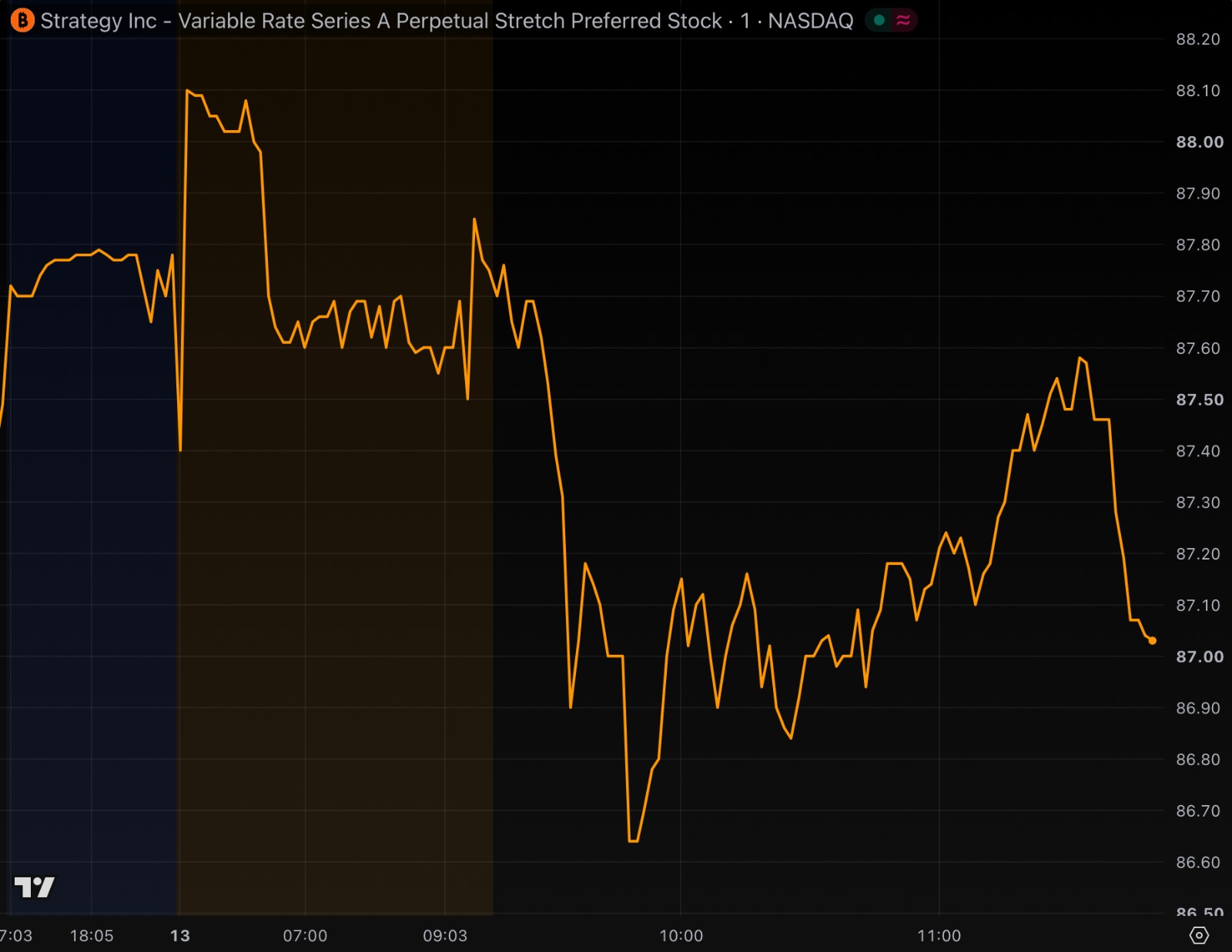
In theory, more cash should have reassured investors, especially holders of STRC preferred shares, whose dividends are paid in cash every two weeks. It did not. By early Monday trading, STRC had fallen to $86.60, down 1% from Friday’s close.
More cash did not lift the preferred stock
The article says the expanded cash balance should allow Strategy to fund STRC dividends for a longer period. In most financial products, that kind of development would support sentiment. Instead, STRC fell again, suggesting the pressure goes beyond the size of the company’s reserves.
According to the piece, STRC was built to trade in a relatively stable range over time. The result has been the opposite. Sharp price swings have repeatedly pushed it into financial headlines. Strategy has said it adjusts the dividend rate with the goal of keeping STRC near its $99 to $100 par range, but that target has not been achieved.
When the price drops, the company raises the dividend to attract buyers and pull the stock back toward $100. When the price rises too much, it issues more shares to cap the move. Since launch, the dividend rate has been raised from 9% to 12%, yet STRC has continued to move lower.
The article adds that Strategy now holds enough cash to cover 20 months of dividend payments. Even so, and even with a yield it says is above most junk bonds, STRC is still trading at a 13% discount to par. It also notes that after the company increased its cash reserves by 17%, STRC traded below the level seen before that increase.
The article frames the problem as a trust issue
Its argument is straightforward: the deeper problem is a lack of trust in management. With bitcoin not in a rising market, Strategy’s large bitcoin treasury has not been repriced higher in a way that would help sentiment. In that setting, the report says the main reason investors would buy STRC back toward par is confidence that management intends to keep paying the dividend over time.
That confidence has weakened. The article describes preferred stock as a contractual promise: pay dividends on time, follow the issuance terms, and honor the prospectus. Investors also rely heavily on management guidance and forward-looking statements. In that reading, the market is not doubting whether the $3 billion in cash exists, and it is not struggling to calculate how long that cash can support dividends. It is doubting the person making the promise, Michael Saylor.
Examples cited to show shifting commitments
The article lists several instances in which Saylor, in its view, reversed earlier commitments and damaged market trust.
One example dates to last summer. Strategy told investors it would not issue MSTR common stock below a 2.5x multiple of net asset value, or mNAV, unless the proceeds were used to pay interest and preferred dividends. Days later, the company revised that commitment and added an exception allowing issuance whenever management considered it beneficial. It then sold hundreds of millions of dollars in stock below the 2.5x mNAV threshold.
Another example involves bitcoin sales. The article says Saylor had repeatedly stated over the years that the company would never sell bitcoin, with those remarks documented in interviews and social media posts. Yet from late June to early July, Strategy sold a total of 3,588 BTC and also obtained approval for more than $1 billion in additional capacity for future sales.
The report points to another statement from early 2026. At that time, it says, Saylor told the market that even in a bitcoin bear market the company would rely on debt financing rather than sell BTC. In a CNBC interview, he said existing debt could simply be rolled over and refinanced during a downturn. A few months later, the article says, Strategy did not pursue debt restructuring and instead sold bitcoin to raise funds for dividend payments.
It also cites a change in earnings expectations. In December last year, Strategy cut its guidance for 2025 earnings per share from $80 to less than $19, removing 76% of the projected profit. The article argues that such revisions have made investors less willing to rely on later forecasts.
Why the article rejects comparisons to deposits and money funds
Saylor has compared STRC to a high-yield savings account and to money market products. The article pushes back on that description. In June, STRC fell to an all-time low of $71.25, leaving holders with paper losses of more than one-third. It says that performance makes the comparison with insured bank deposits or money market funds untenable.
The report also points to earlier statements from Saylor that STRC would stay stable at $100. In practice, the stock dropped to $71.25, producing broad investor losses. That gap between the stated expectation and the actual price action, the article says, has made the market less willing to trust his projections about product stability.
It goes further. STRC is not a deposit and not a money market fund, the article says. It does not have ring-fenced bitcoin assets pledged as collateral, and it does not offer free redemption at par. Investors who want to sell at $100 must find another buyer in the market. The company itself is not required to step in and repurchase shares.
An older case the article brings back into view
The piece says management reversals did not begin in the bitcoin era. It recalls that in 2000, the U.S. Securities and Exchange Commission sued Saylor and two other executives, accusing the company of inflating revenue and profit and violating accounting rules. Saylor later paid more than $8 million to settle the civil case.
The article closes on the same point it makes at the start. Strategy increased its cash reserves by 17% in an effort to support STRC around its $100 par value, yet by Monday morning the stock was still trading at a 13% discount and was slightly below Friday’s level. In the view presented by the source, more cash cannot repair trust that has already been spent.