
Strategy (formerly MicroStrategy) perpetual preferred stock STRC has experienced a deepening de-peg event, with its price falling to $75.69 as of the latest close — a nearly 25% discount from its $100 par value. This development has intensified concerns about Strategy's funding capabilities and, by extension, the sustainability of the Bitcoin bull market.
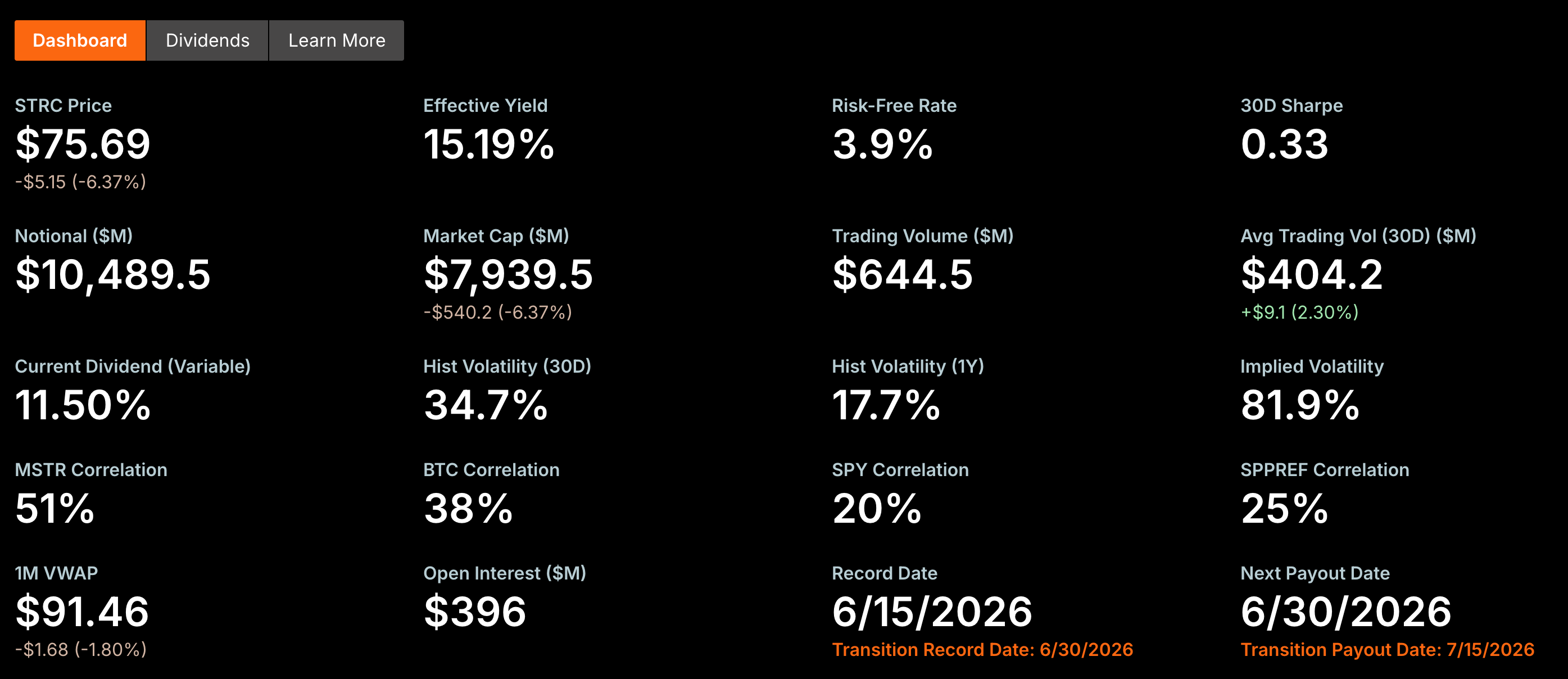
STRC De-peg Worsens: Funding Channel Effectively Blocked
STRC was designed as Strategy's cheapest and most efficient perpetual funding vehicle. As a perpetual preferred stock, it has no maturity date, does not dilute common shareholders, and requires only fixed dividend payments. Strategy's plan was to dynamically adjust the dividend rate to keep STRC trading near $100, allowing the company to continuously issue new shares at par value and use proceeds to buy Bitcoin. However, with the secondary market price now at $75, no rational investor would participate in primary issuance near $100. STRC's funding channel is effectively dead.
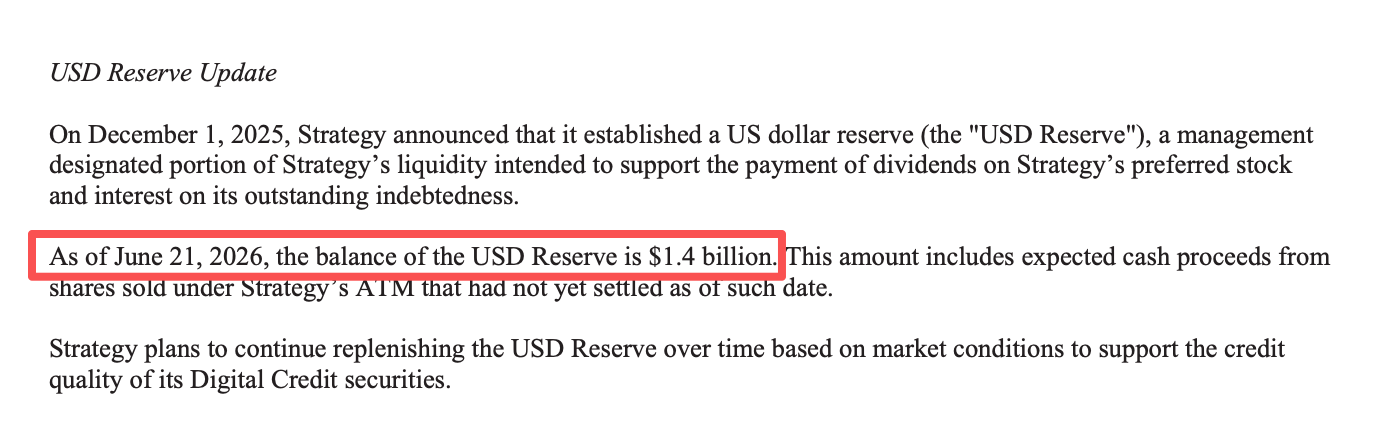
According to the latest official disclosure, STRC issuance has reached approximately $10.49 billion with a current dividend rate of 11.5%. This implies annual cash dividend obligations exceeding $1.2 billion for STRC alone. Including other preferred stocks (STRD, STRK, STRF), total dividend payout commitments approach $1.7 billion per year. As of June 21, Strategy reported cash reserves of only ~$1.4 billion — sufficient to cover less than one year's preferred dividends. Without new funding sources, the company faces imminent risk of dividend payment default.
Three Funding Avenues and Their Costs
With STRC disabled, Strategy has only three viable paths to raise cash: common stock issuance, debt issuance, or selling Bitcoin. Each carries significant downsides.
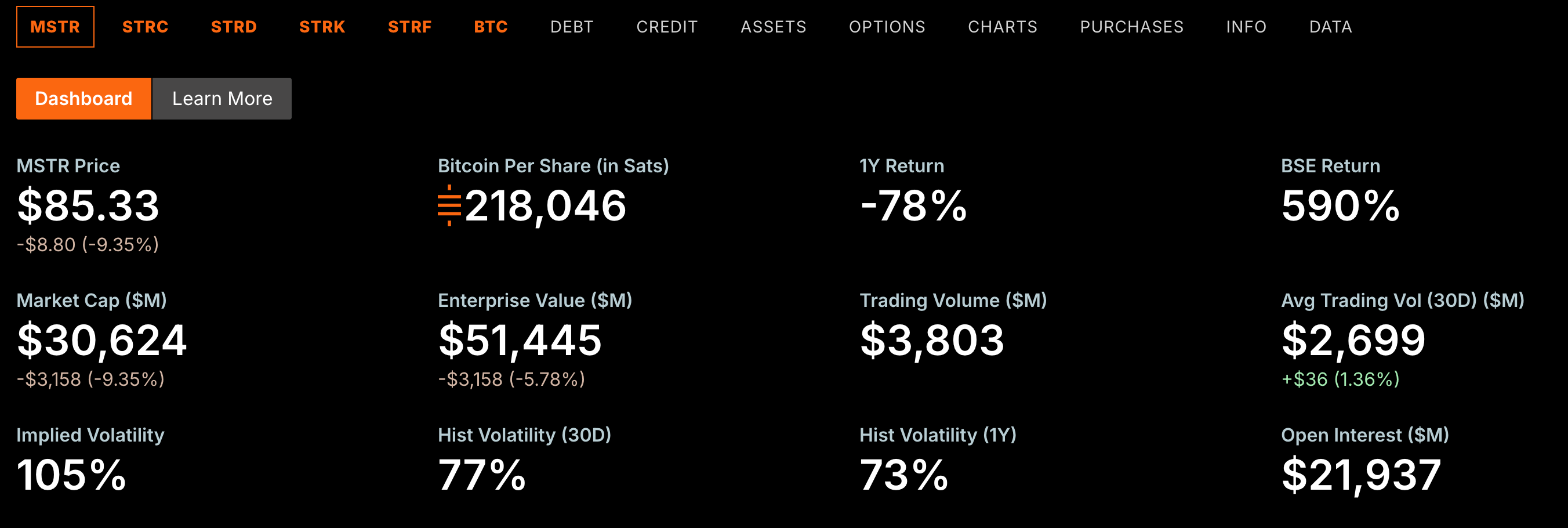
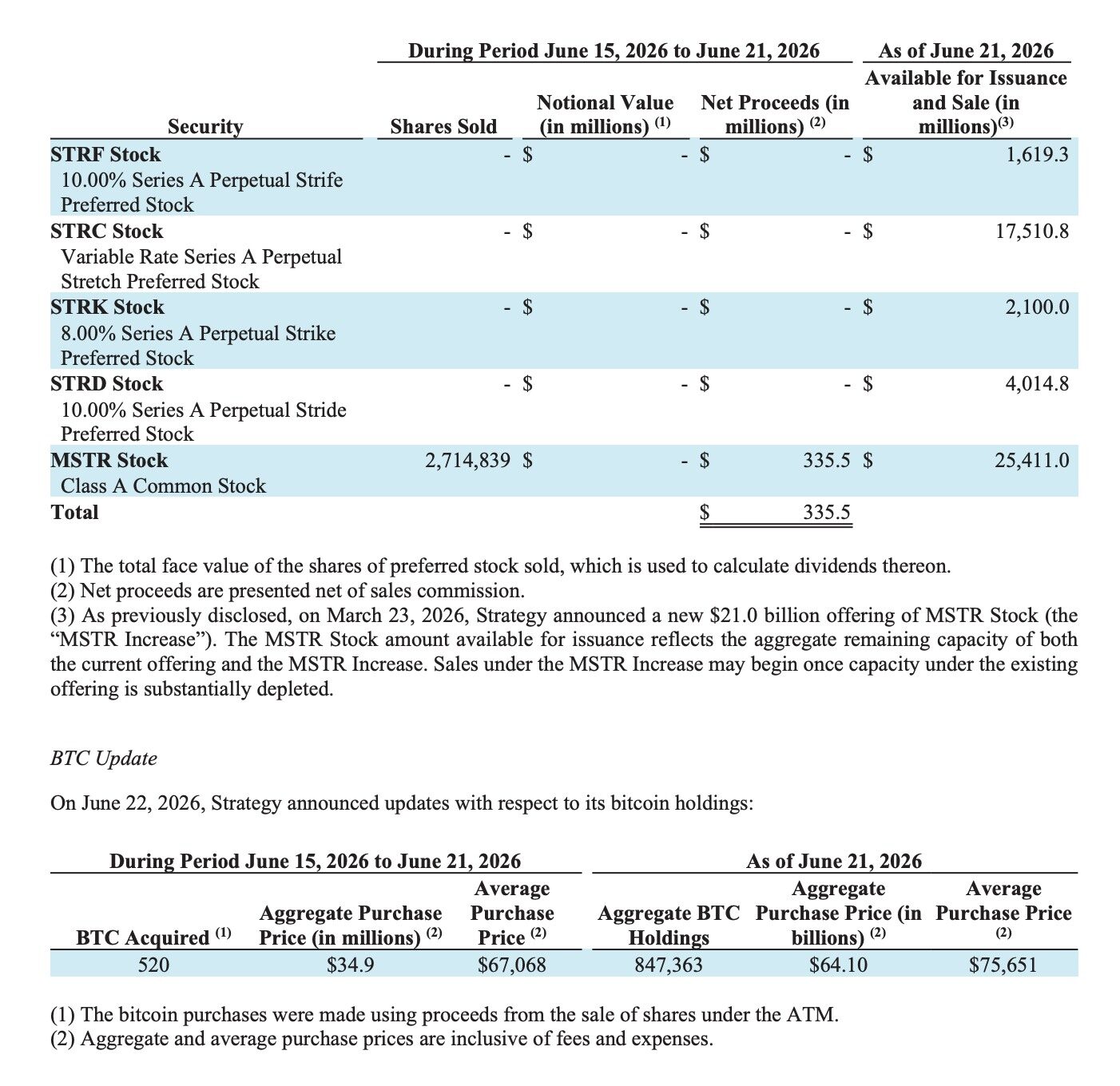
- Common stock issuance (ATM): Currently being utilized. Strategy sold 2.7 million MSTR shares in the week ending June 22, raising $335.5 million. However, only $34.9 million (10%) went to buying 520 BTC; the rest replenished cash. This continued dilution has reduced BTC per share from a peak of 220,900 Sats to 218,046 Sats — the first decline in history.
- Debt issuance: Convertible bonds or other debt would add fixed interest and principal repayment obligations. With cash declining and dividend expenses rising, further debt would strain the balance sheet and reduce future financing flexibility.
- Selling Bitcoin: The fastest way to raise cash, but extremely dangerous. Earlier this month, Strategy sold 32 BTC (its first-ever sale), labeled as a 'de-sensitization test,' which triggered a sharp short-term price drop. As the largest single Bitcoin holder with 847,363 BTC (~4% of circulating supply), any substantial sale could trigger a cascading sell-off and accelerate Bitcoin price declines.
Current Strategy: ATM Proceeds Go to Cash, Not Bitcoin
Since June, Strategy has relied on weekly common stock ATM offerings. In the latest tranche (June 22), proceeds of $335.5 million were raised, yet only 520 BTC were bought. The rest boosted cash reserves from ~$1.1 billion to ~$1.4 billion. This marks a fundamental shift in Strategy's flywheel: from 'raise → buy BTC → strengthen expectations → raise more' to 'raise → replenish cash → maintain dividends → raise more.' Net new Bitcoin buying has collapsed.

Strategy's public claim that its Bitcoin hoard could cover 32 years of dividends is contingent on Bitcoin price stability and no forced sales. If Bitcoin declines, the reserve value shrinks rapidly.

Impact on Bitcoin Market: From Largest Marginal Buyer to Potential Seller
Over the past years, Strategy has been Bitcoin's most important marginal buyer, executing weekly large purchases without fail. That era is ending. With STRC funding dead and common stock issuance mostly diverted to cash needs, Strategy's net BTC acquisition has plummeted. If continued dilution erodes the MSTR premium further, the company may be forced to sell Bitcoin to meet obligations. The once-bullish giant would become the single largest overhang on Bitcoin's price. Whether STRC can re-peg is not just a Strategy problem — it determines the viability of the Bitcoin bull cycle.