

STRC Depeg Accelerates: A Funding Channel Nearly Blocked
Strategy's preferred stock STRC has deepened its depeg from the $100 target face value. On June 26, during U.S. trading hours, STRC broke below $80 for the first time, hitting a low of $73.62 before closing at $75.69 — a discount of nearly 25%. This marks a significant escalation from the ~11% depeg analyzed just a week ago. The sustained depeg is not merely a technical pricing anomaly; it threatens the very foundation of Strategy's capital-raising engine.
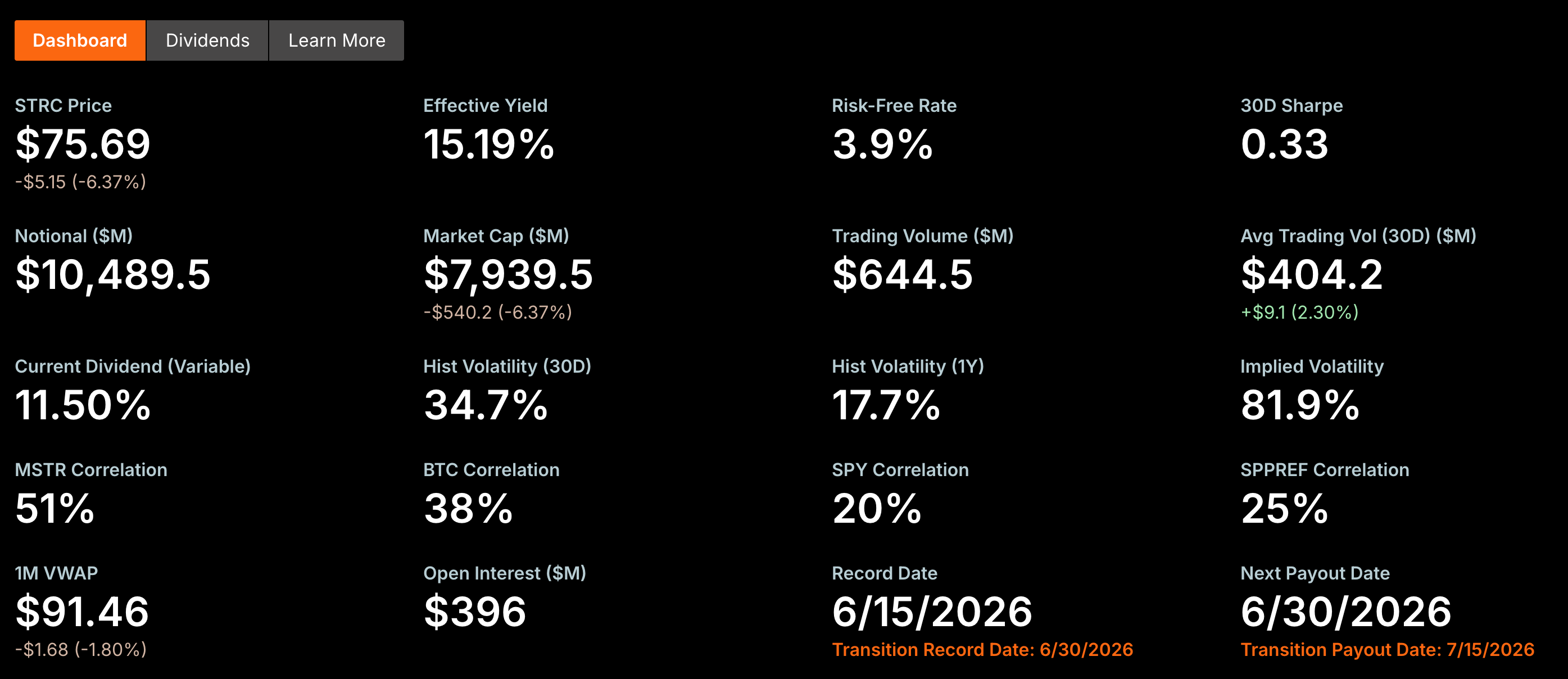
STRC was designed as a perpetual preferred stock with a $100 par value, maintained through dynamic dividend rate adjustments. When the secondary market price holds near parity, Strategy can continuously issue new STRC at or close to face value, funneling the proceeds into Bitcoin purchases. However, with the market price now at $75, no rational investor would subscribe to a new issuance at $100. This cheapest and most efficient funding channel has been effectively choked off.
Why STRC Was Called the 'Perfect' Funding Tool
Strategy's business model relies on a flywheel: raise capital → buy BTC → boost market expectations → raise more capital. STRC was the most ingenious component of this flywheel. Unlike common equity, it does not dilute existing shareholders; unlike convertible bonds, it has no maturity date and only requires fixed dividend payments. Michael Saylor famously claimed that 'STRC was designed by AI, not by humans.' Between 2024 and early 2025, STRC functioned smoothly, with total issuance reaching approximately $10.49 billion.
The Achilles' heel: STRC's fundraising capability is entirely contingent on the secondary market price remaining near $100. Once depeg occurs, new issuance at face value becomes impossible. Strategy has two options: raise the dividend rate to attract buyers (already increased from ~7% to 11.5%, but insufficient to halt the slide), or accept discounted issuance (effectively abandoning the par value anchor). Either option degrades funding efficiency dramatically.
Cash Crunch: Dividend Obligations vs. Reserves
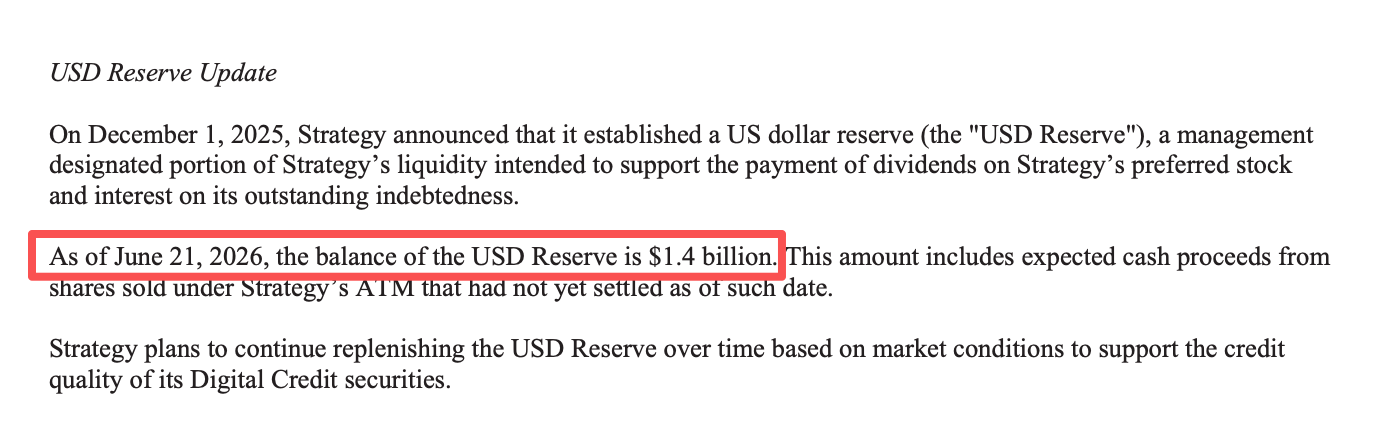
STRC's depeg not only blocks funding but also imposes massive cash outflows. As of the latest disclosure, the outstanding STRC principal stands at ~$10.49 billion, with a current dividend rate of 11.5%, translating to an annual cash dividend obligation of over $1.2 billion. Including other preferred issues (STRD, STRK, STRF), total annual preferred dividend payments reach approximately $1.7 billion. Yet Strategy revealed in its June 21 common stock offering filing that its cash reserves were only ~$1.4 billion — barely enough to cover less than one year's worth of preferred dividends.
This creates a dual squeeze: Strategy must both fund its flywheel (buy BTC to maintain market confidence) and avoid a dividend default. The immediate priority is cash. Three potential lifelines remain.
Three Paths to Raise Cash: Common Stock, Debt, or Selling Bitcoin
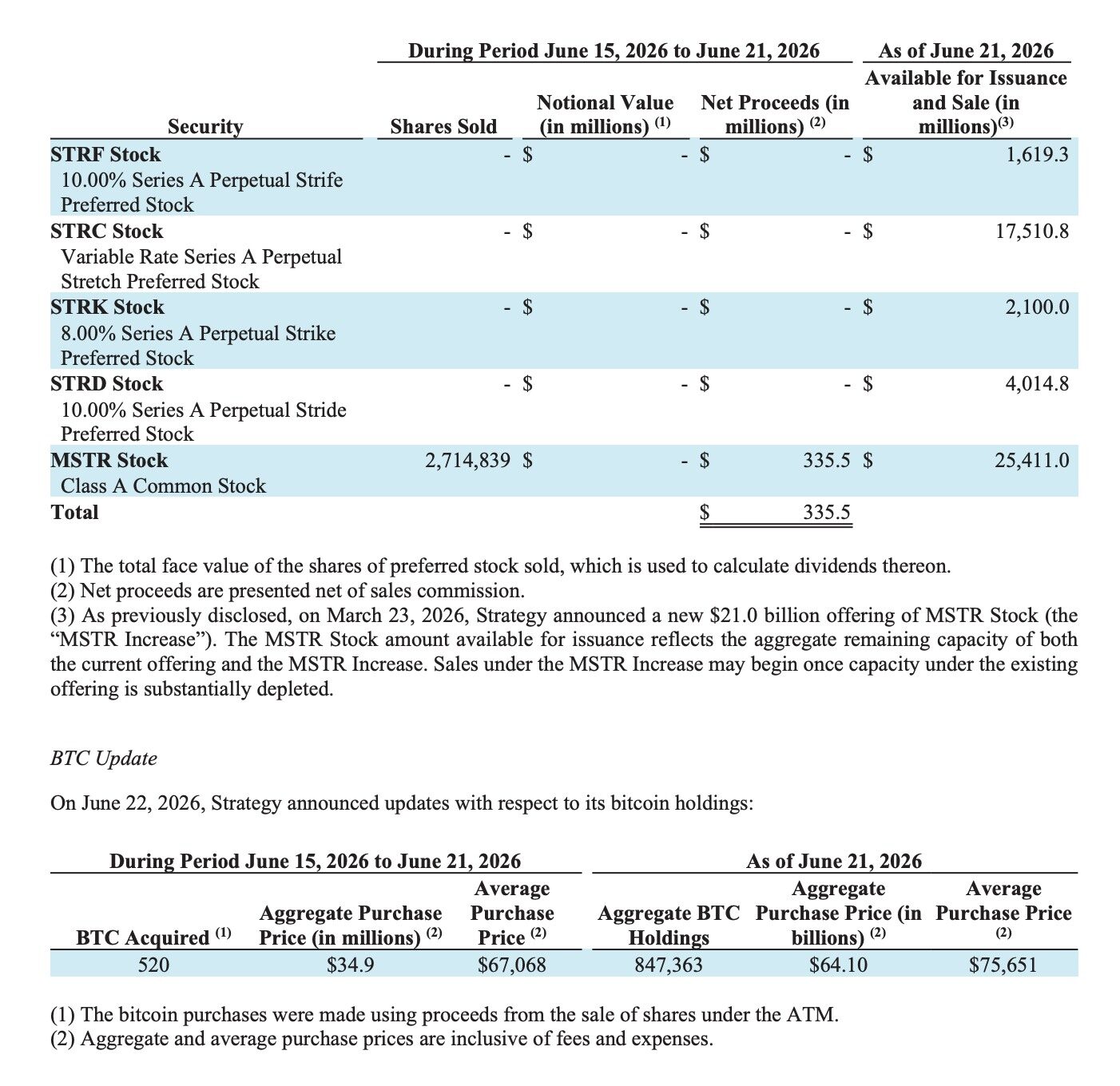
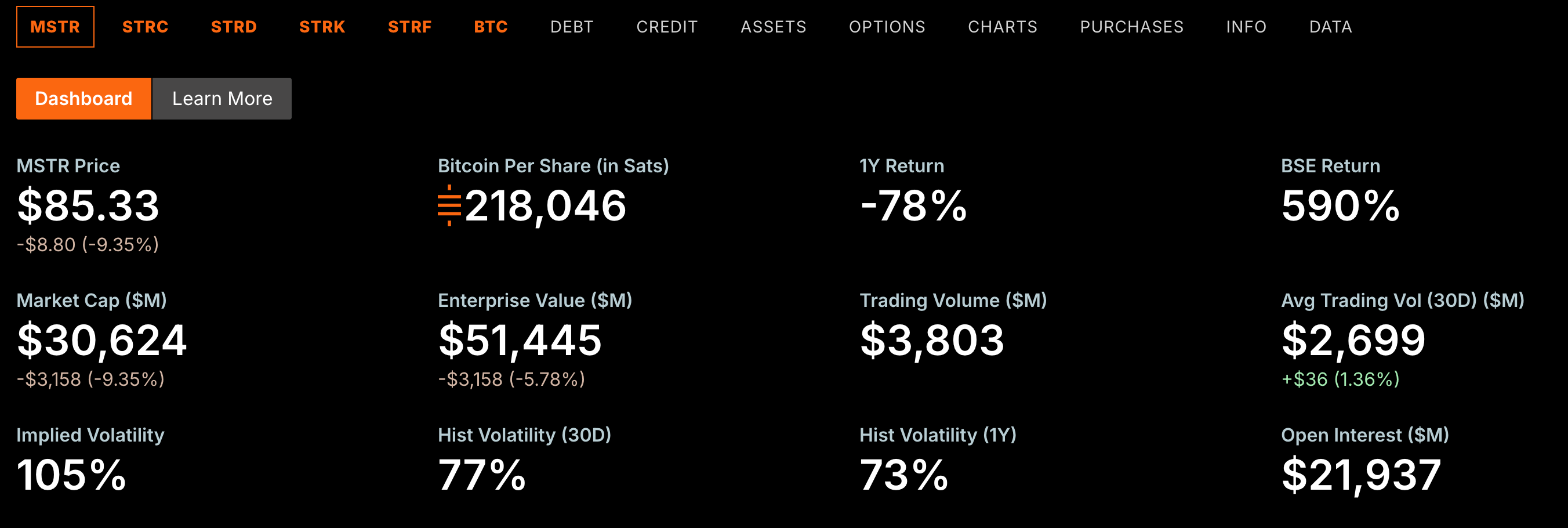
1. Common Stock (ATM Offerings): This is currently Strategy's go-to method. In its latest June 22 ATM filing, the company sold 2,714,839 shares of MSTR common stock, raising $335.5 million. However, only $34.9 million (about 10%) was used to purchase 520 BTC at an average price of $67,068. The remaining ~90% went to replenish cash reserves, boosting them from ~$1.1 billion to ~$1.4 billion. While this provides short-term liquidity, it dilutes common shareholders. MSTR's BTC per share has already dropped from a peak of 220,900 Sats to 218,046 Sats — a worrying trend.

2. Debt Issuance: Strategy has historically used convertible bonds to raise capital, but debt carries rigid interest and principal repayment obligations. With declining cash reserves and rising dividend costs, adding more debt would further strain the balance sheet and limit future financing flexibility.

3. Selling Bitcoin: This is the fastest way to raise cash. Strategy's official X account noted that 'taking into account its massive Bitcoin holdings, it could cover 32 years of dividends.' But the risk is severe. Earlier this month, Strategy sold 32 BTC for the first time — a 'market desensitization test' according to the company — and the market promptly sold off. As the largest single holder of Bitcoin (847,363 BTC, ~4% of circulating supply, worth over $50.7 billion), any significant liquidation could devastate BTC price. If BTC's price falls, the value of Strategy's 'reserve' shrinks, creating a vicious cycle.
Dilution Trap: The Flywheel Breaks
Strategy appears to have chosen the common stock path, but with a critical twist: the flywheel logic is breaking. The market's core expectation for MSTR has been that Strategy can continuously increase BTC per share, justifying its premium valuation. Yet now, the majority of ATM proceeds are going to cash reserves rather than BTC purchases, causing BTC per share to decline. If this continues, investors will lose faith in the premium, and MSTR's valuation could collapse.

More dangerously, once common stock dilution can no longer sustain BTC per share growth, Strategy may be forced to sell Bitcoin outright. The transition from 'largest marginal buyer' to 'potential seller' is seismic. For years, the market has relied on Saylor's weekly relentless buying. That reliable demand is fading, and a looming supply overhang is forming. The recovery of STRC's peg is thus not just a technical matter for Strategy's balance sheet — it is a critical barometer for Bitcoin's bull market. If STRC remains deeply depegged, the structural demand from Strategy disappears, and the risk of supply increases. That is the most dangerous implication for crypto markets today.