
STRC Depegs Further, Breaks Below $80
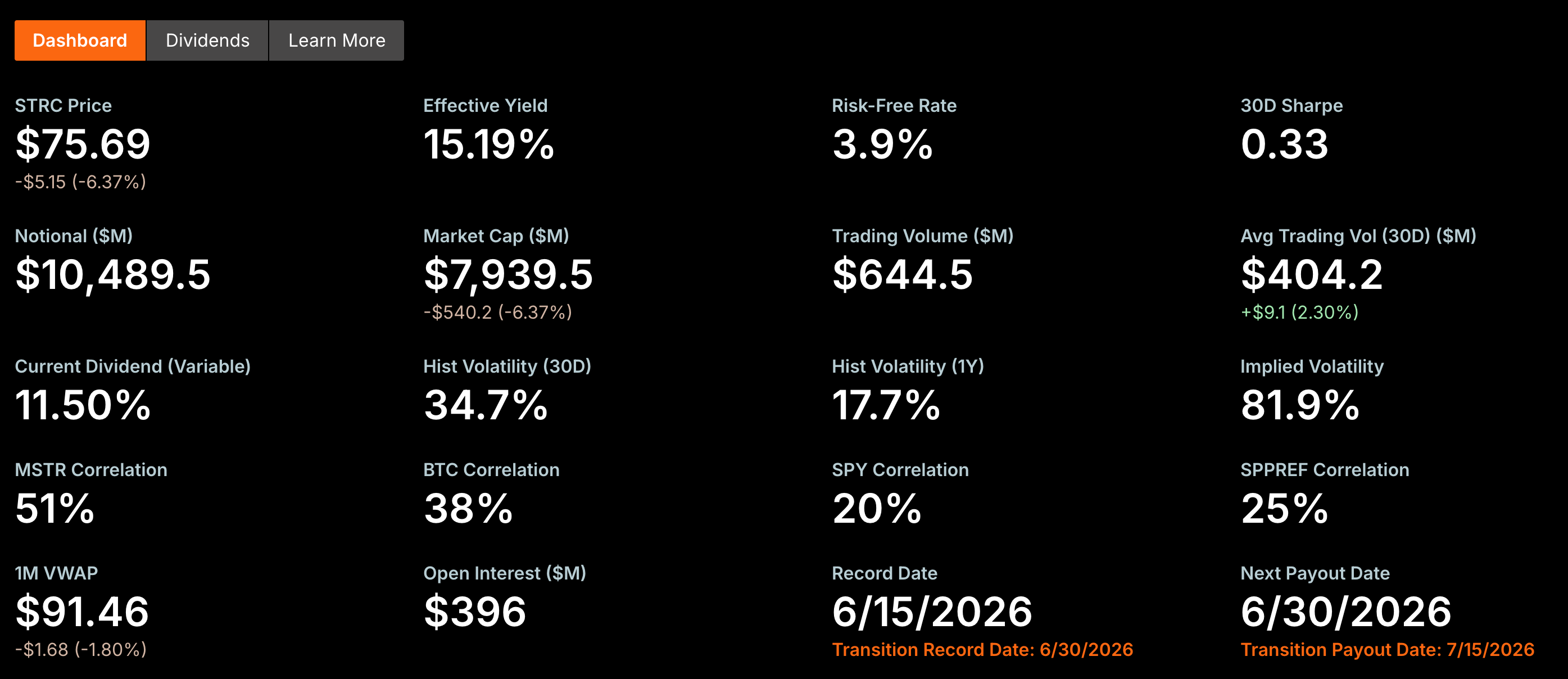
Strategy's preferred stock STRC continued its depeg, falling below $80 for the first time during US trading hours on June 26. The token hit a low of $73.62 before closing at $75.69, representing a 25% depeg from its $100 target par value. Just a week earlier, STRC had already depegged 11%, and the situation has worsened rapidly.
STRC: Strategy's Cheapest Funding Channel
STRC is a perpetual preferred stock designed to provide Strategy with low-cost, non-dilutive financing. Strategy's business model relies on a flywheel: raise capital, buy Bitcoin, boost market expectations, then raise more capital. STRC was engineered to trade around $100 via dynamic dividend adjustments, allowing Strategy to issue new shares at near-par value continuously. However, with STRC now trading at $75, investors would never participate in a new issuance priced near $100, effectively shutting down this funding channel.
Consequences: Dividend Burden and Cash Crisis
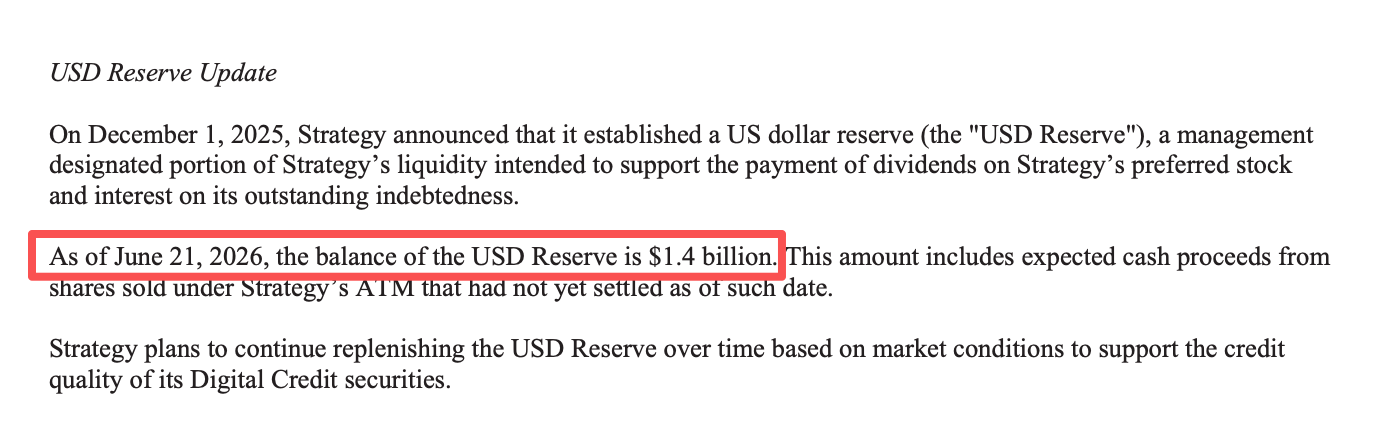
According to Strategy's latest filings, the outstanding STRC issuance totals approximately $10.49 billion, carrying an 11.5% dividend rate. This implies annual dividend obligations of over $1.2 billion for STRC alone, and around $1.7 billion when including other preferred stock series (STRD, STRK, STRF). As of June 21, Strategy's cash reserves stood at roughly $1.4 billion—barely enough to cover one year of preferred dividend payments. The company faces an urgent need to raise fresh capital to avoid a dividend default.
Three Possible Funding Routes
Common Stock Issuance
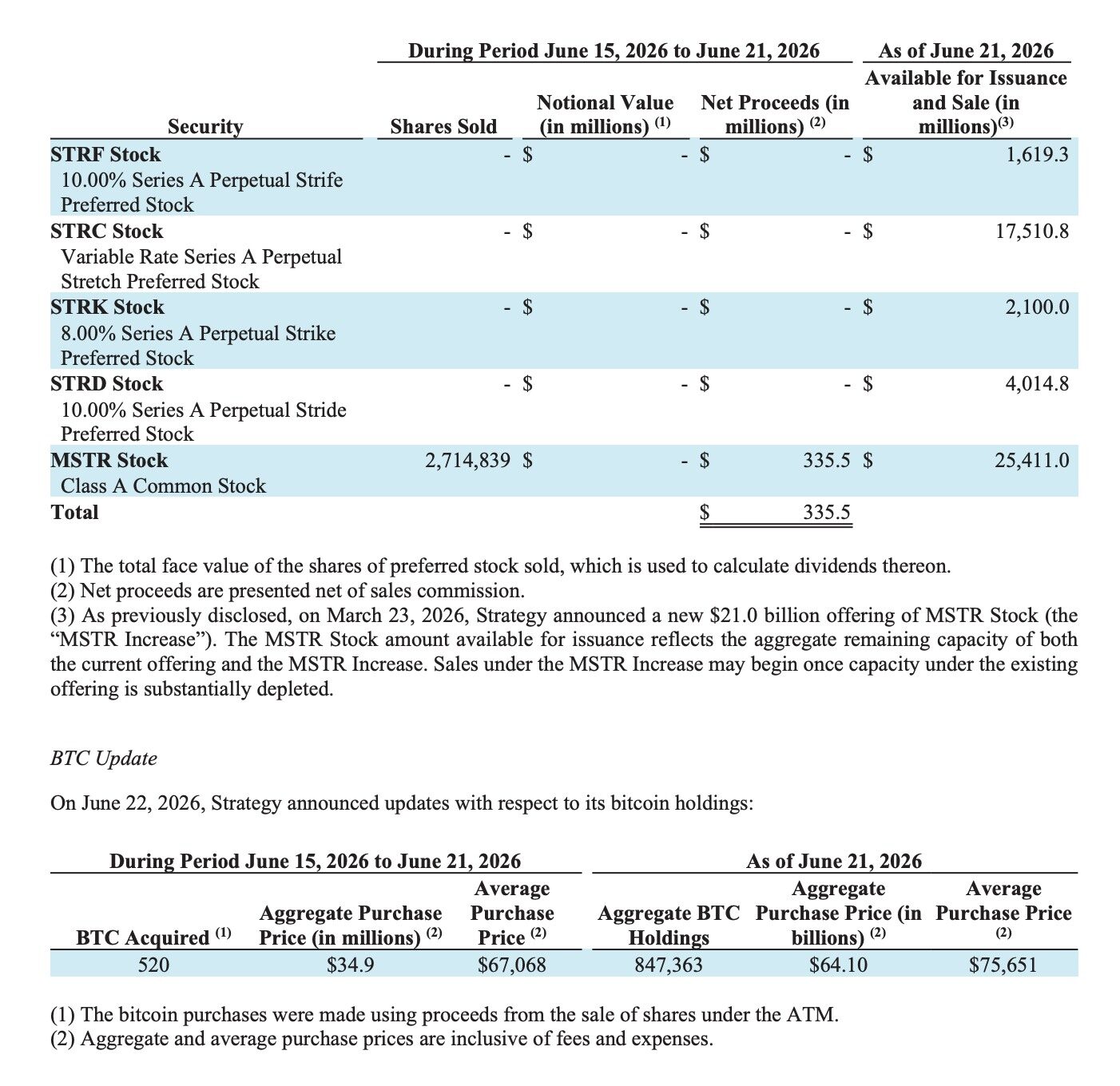
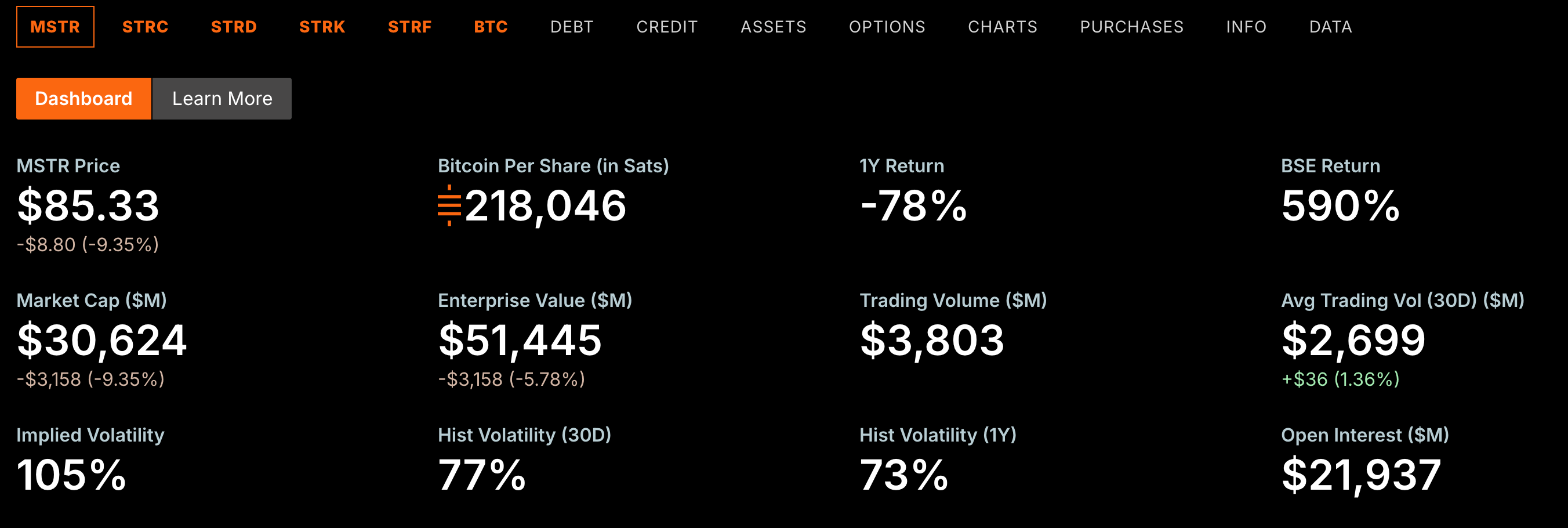
Strategy has already pivoted to common stock ATM (At-the-Market) offerings. In the latest week (ending June 22), it sold 2,714,839 MSTR shares for $335.5 million, but used only $34.9 million (10%) to purchase 520 BTC at ~$67,068 per coin. The rest replenished cash reserves. This comes at the cost of diluting BTC per share, which has dropped from a peak of 220,900 sats to 218,046 sats. Persistent dilution could undermine the premium MSTR commands, threatening the entire business model.
Debt Issuance
Strategy has historically used convertible bonds, but interest payments are rigid. With dwindling cash and rising dividends, additional debt would strain the balance sheet and reduce future flexibility.

Selling Bitcoin
Earlier this month, Strategy sold 32 BTC for the first time, framing it as a 'market desensitization test.' The sale triggered a sharp intraday drop. As the largest single Bitcoin holder (847,363 BTC, 4% of circulating supply, worth ~$50.7 billion), any significant selling could crush Bitcoin's price.

Impact on Bitcoin: From Marginal Buyer to Sword of Damocles
Strategy has been the most consistent institutional buyer of Bitcoin. But now, its financing is increasingly diverted to cash reserves rather than BTC purchases. If STRC remains depegged, Strategy may be forced to rely on common stock issuance long-term, further reducing buy pressure. In the worst-case scenario, excessive dilution could push the company to sell Bitcoin. This means the market is losing its most reliable buyer while facing potential seller pressure. Whether STRC can re-peg may determine the trajectory of Bitcoin's bull market.