

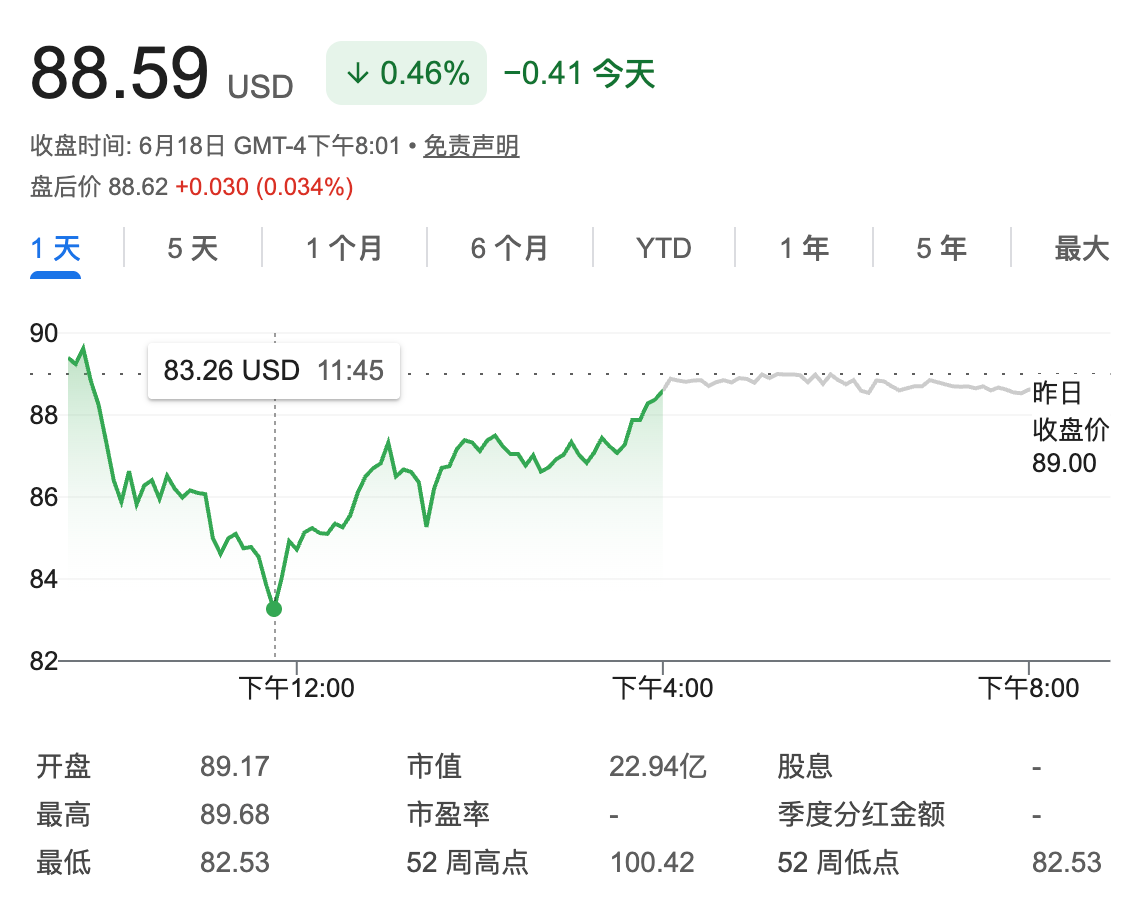
Strategy's preferred stock STRC is facing a persistent "depeg" crisis. US stock market data shows that since May 15, STRC has gradually diverged from its $100 target par value, with the discount intensifying recently. During yesterday's session, it hit a low of $83.26 before closing at $88.59, representing a depeg of over 11% from the target par value. For a preferred stock designed to deliver stable income, this deviation has raised questions about its core design objectives.

STRC is a perpetual preferred stock launched by Strategy in 2025, featuring a fixed target par value of $100 and relatively stable dividend yield, resembling fixed-income securities. Its core utility lies in creating a seemingly infinite capital flywheel through the cycle: issuing STRC → raising fiat → buying BTC → increasing net asset value → boosting STRC confidence. However, the smooth operation of this flywheel depends on STRC staying near the $100 par value. If the market price falls significantly below par, Strategy cannot effectively raise capital through discounted preferred shares, effectively halting its capital magic.
Why Dividend Adjustments Failed to Fix the Depeg
To ensure STRC's market price tracks the par value, Strategy implemented a monthly dynamic dividend adjustment mechanism: raising dividends when the price is below $100 to attract investors, and lowering when above. However, despite increasing the dividend yield to 11.5% and switching to semi-monthly payments, the depeg persists. Market discussions point to two risk layers:
First, technical factors—a concentrated deleveraging of arbitrage funds. STRC traded near $100 for a long time, attracting leveraged arbitrage capital. After breaking below $100, continued weakness triggered margin calls, forcing liquidations and creating a cascade of selling pressure that reinforced itself.

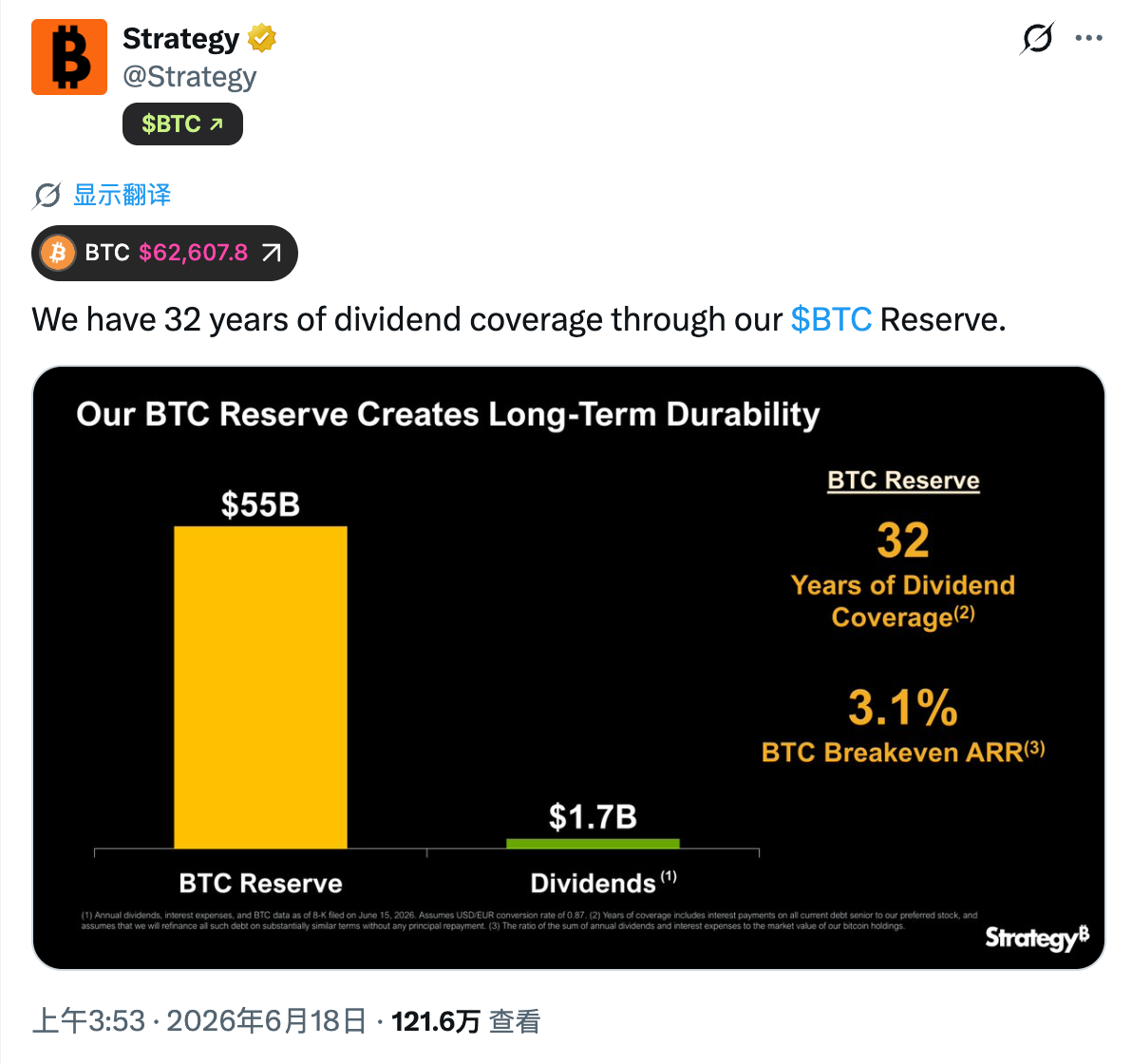
A deeper concern is Strategy's liquidity reserve. JPMorgan recently reported that Strategy has an annual dividend obligation of approximately $1.7 billion, and its cash on hand can only cover about 6.3 months of preferred stock dividend payments. In response, Strategy's official account emphasized that including its vast Bitcoin holdings, the company could cover 32 years of dividends.

First Bitcoin Sale Sparks Trust Crisis
Earlier this month, Strategy sold 32 Bitcoins for the first time. While the company framed it as a "market desensitization test" and stated it would buy back more, the move shocked the market. For years, Strategy and Michael Saylor had promoted the narrative that Bitcoin is a long-term strategic reserve asset and that the company would raise operating funds through capital markets, not by selling Bitcoin. The first-ever sale raised fears: if financing conditions tighten, might Strategy need to sell more Bitcoin to meet dividend obligations? This forced investors to reassess the risk profile of related securities.

Behind the sustained depeg lies a market reassessment of the robustness of Strategy's capital structure. The biggest impact for Strategy is the weakening of its financing function. In recent years, Strategy has raised capital through issuing stock, convertible bonds, and preferred shares to buy Bitcoin, with STRC being the most important tool. When STRC trades persistently below par, the market demands higher risk compensation, effectively putting Strategy's financing ability on hold.

Going forward, STRC's re-pegging will be a key indicator of Strategy's risk profile. If the discount persists, leading to constrained financing and dwindling cash reserves, concerns that Strategy may need to sell more Bitcoin to pay dividends will intensify. Once such expectations strengthen, the impact goes beyond STRC. As one of the most important marginal buyers of Bitcoin in recent years, Strategy's financing ability and accumulation pace deeply influence market supply-demand expectations. If buying turns into selling, it could exert unimaginable downward pressure on Bitcoin.