

STRC De-pegs Nearly 25%, Strategy's Core Funding Channel on the Brink
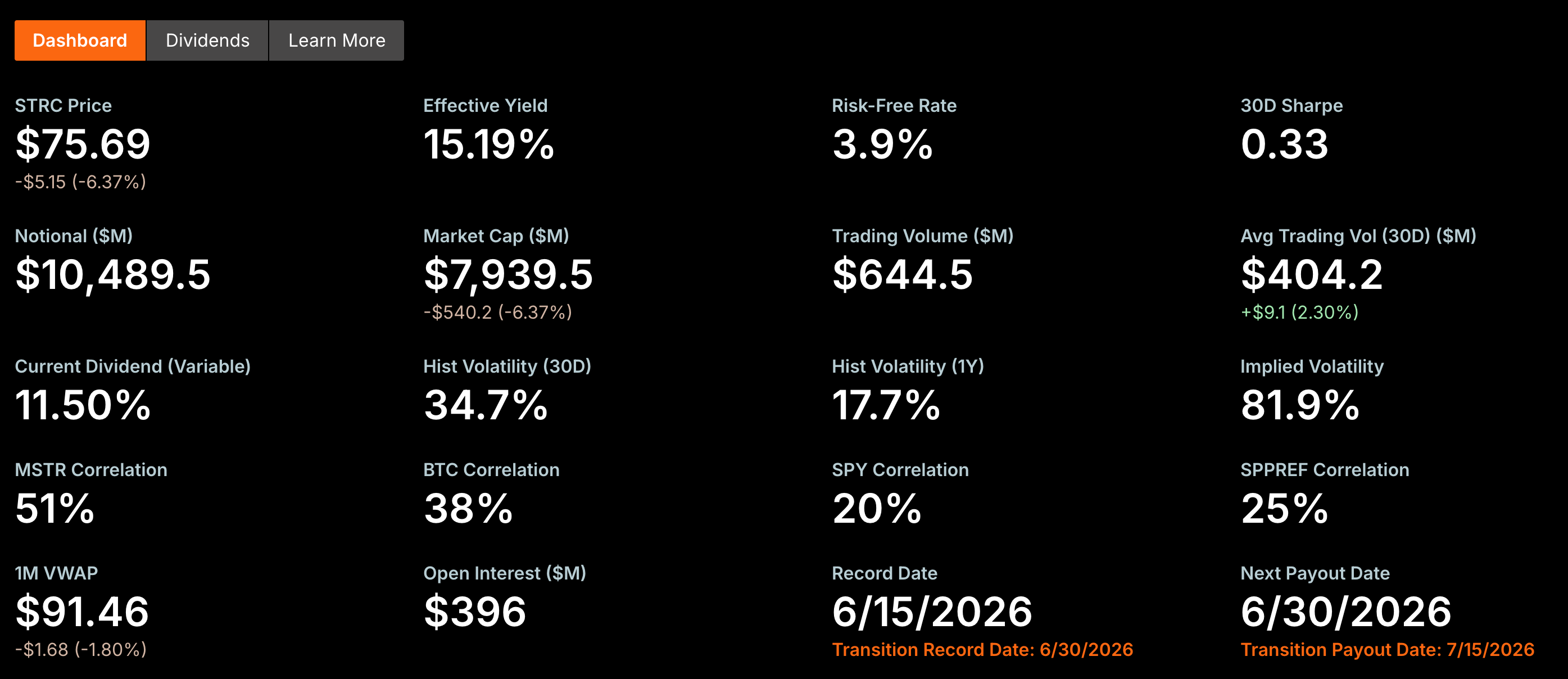
During US trading hours yesterday, STRC broke below the $80 mark for the first time, hitting a low of $73.62 before closing at $75.69—a de-pegging of nearly 25% from its $100 par value. This far exceeds the previous 11% de-pegging level, signaling a rapid loss of market confidence in the preferred stock's pricing.
STRC is essentially Strategy's (formerly MicroStrategy) cheapest and most efficient fundraising tool. Strategy's business model revolves around a continuous cycle: raise capital through common stock, convertible bonds, or preferred stock, then invest every dollar into Bitcoin (BTC) to boost its share price and reinforce market expectations of its future fundraising ability. STRC, as a perpetual preferred stock with no maturity and no dilution of common shareholders, requires only fixed dividend payments. Michael Saylor once touted it as "a product designed by AI."
How De-pegging Blocks Funding: Dividend Payments Become a Cash Black Hole
STRC was designed to trade around a $100 par value, with Strategy dynamically adjusting the dividend rate to keep it stable in the secondary market, enabling the company to issue new STRC shares at near par value at any time. However, with the de-pegging, no investor would pay $100 for new issuance when the same stock can be bought for $75 on the open market. Although Strategy has tried raising the dividend rate to attract buyers, the effect has been limited, drastically reducing the efficiency of this funding channel.
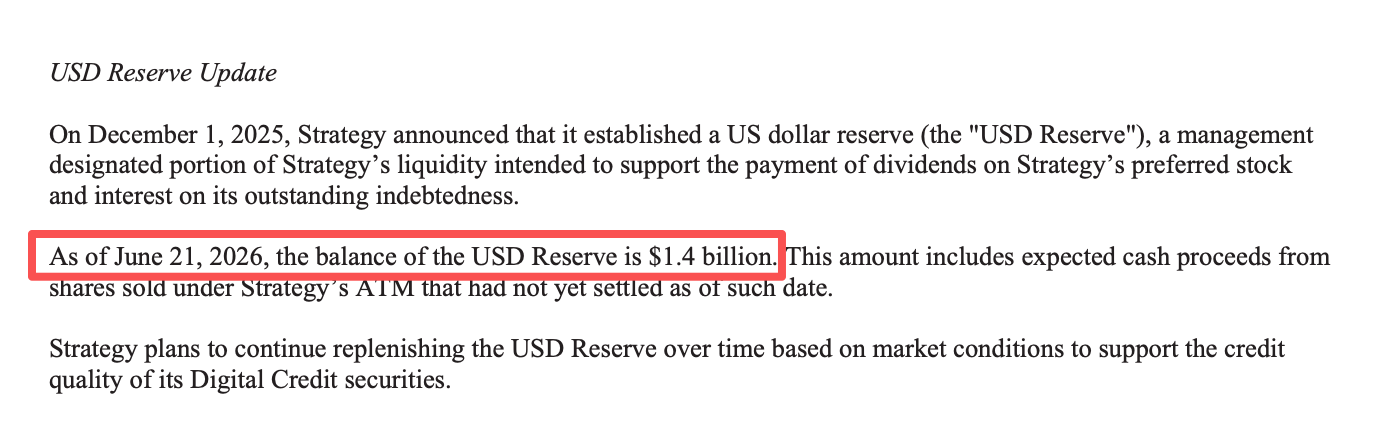
The bigger problem is the cash dividend burden. According to official data, STRC's issuance size has reached approximately $10.49 billion with a current dividend rate of 11.5%, leading to annual dividend payments exceeding $1.2 billion. Combined with other preferred stocks such as STRD, STRK, and STRF, total annual preferred dividend obligations amount to about $1.7 billion. Strategy's latest cash reserves, disclosed in its June 21 common stock offering filing, stand at only ~$1.4 billion—less than one year's worth of preferred dividends.
Three Roads Left for Strategy, All Costly
Facing mounting cash pressures, Strategy theoretically has three options: issue common stock, issue more debt, or sell Bitcoin.
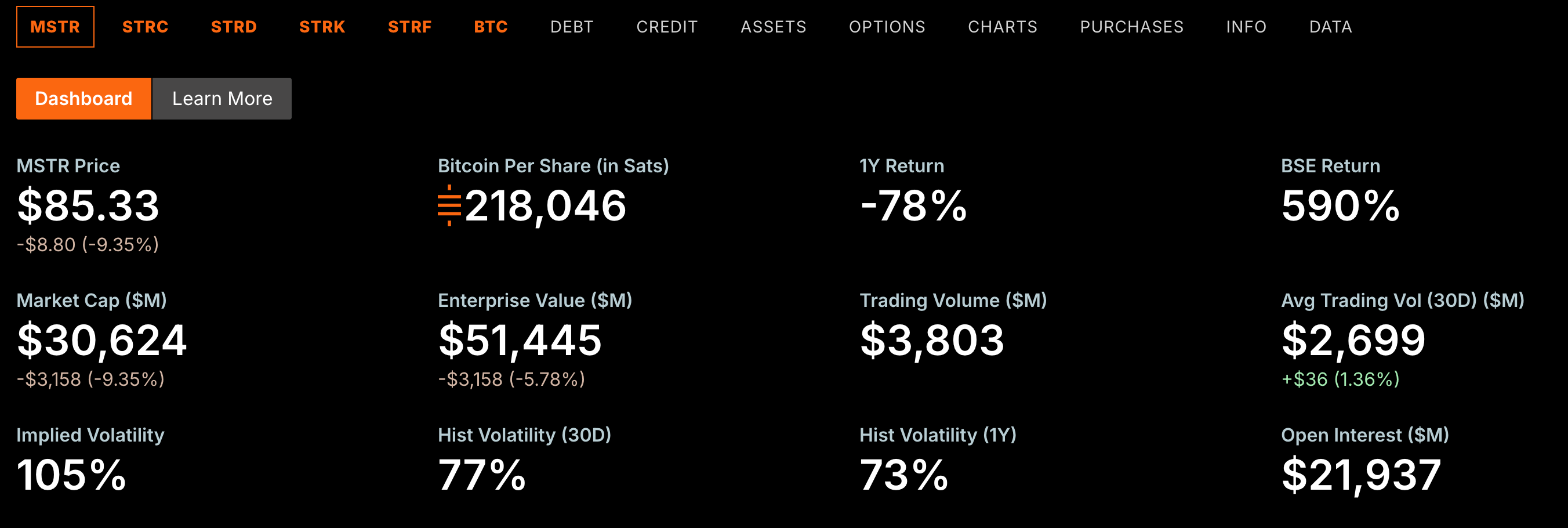
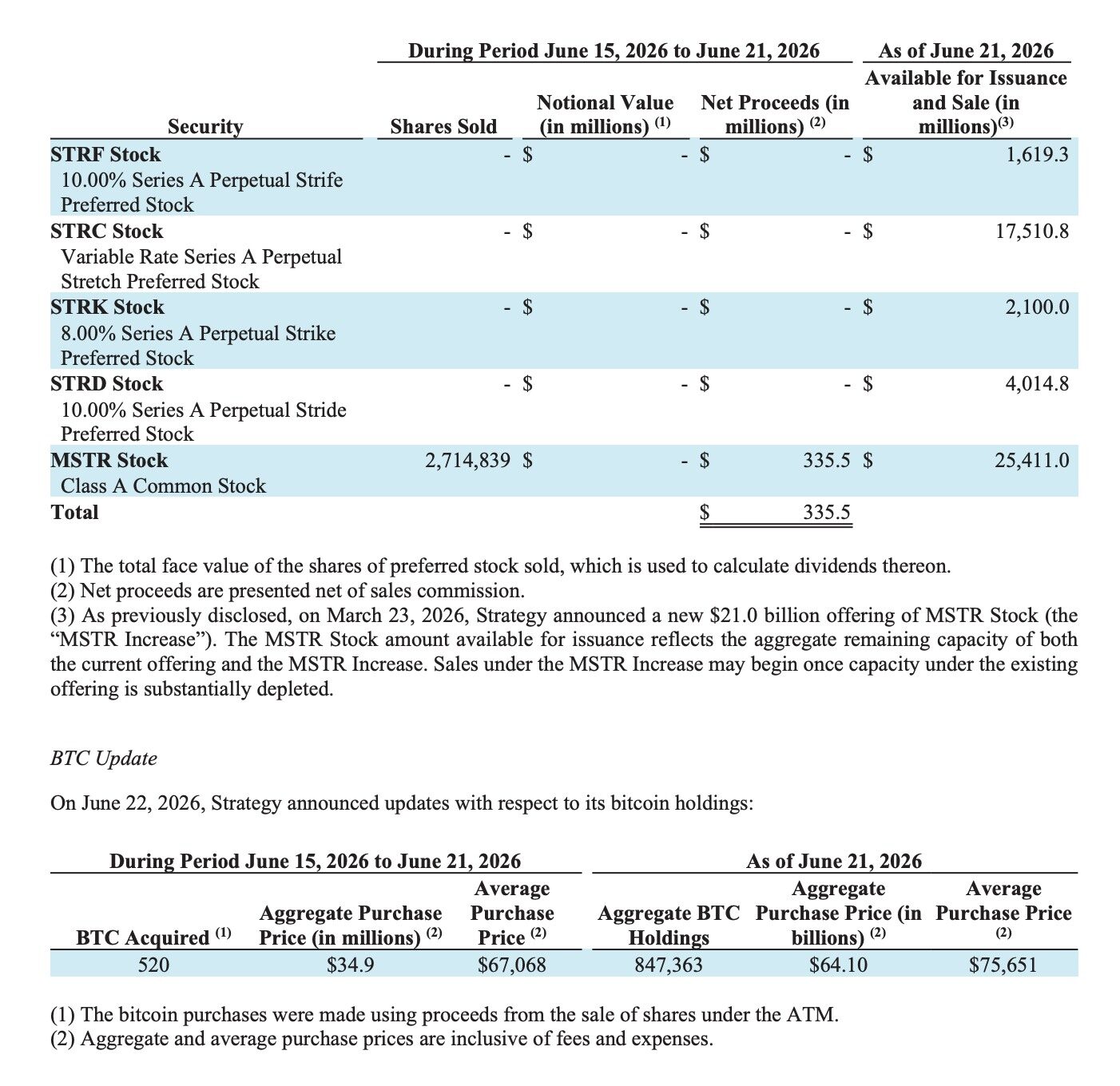
Issuing common stock is the most straightforward. According to the June 22 8-K filing, Strategy sold 2,714,839 shares of MSTR common stock in one week, raising $335.5 million. Of that, only 520 BTC were purchased ($34.9 million at ~$67,068 per BTC). The rest was used to replenish cash reserves. This means common stock issuance is diluting shareholder equity—MSTR's BTC per share has fallen from a peak of 220,900 Sats to 218,046 Sats. Continued dilution could erode the premium that MSTR enjoys, which is the very foundation of Strategy's business model.

Issuing more debt comes with rigid interest and principal repayment obligations, which would compound the already heavy dividend burden.
Selling Bitcoin can quickly raise cash, but as the world's largest single BTC holder (847,363 BTC, ~4% of circulating supply), any sell-off could trigger market turmoil. Earlier this month, a trial sale of just 32 BTC caused a sharp short-term price drop.

The Funding Flywheel Is Slowing: From Marginal Buyer to Potential Seller
For years, Strategy has been the most important marginal buyer of Bitcoin, consistently making large purchases week after week. But now, the capital raised from common stock ATM is mostly used to replenish cash, not to buy BTC. With the same fundraising scale, the net inflow into Bitcoin is shrinking. If STRC fails to re-peg for an extended period, Strategy will have to rely on common stock ATM indefinitely, further compressing its BTC purchase allocation. This means the most stable institutional buying force may stop growing.

More alarmingly, if common stock dilution becomes excessive and undermines MSTR shareholder value, Strategy might be forced to sell Bitcoin. The shift from diminishing buy-side to potential sell-side transforms Strategy from Bitcoin's largest marginal supporter into a sword hanging over the market. Whether STRC can re-peg is not just about Strategy's survival—it could determine the next direction for Bitcoin.