
STRC Depeg Accelerates: From $100 to $75
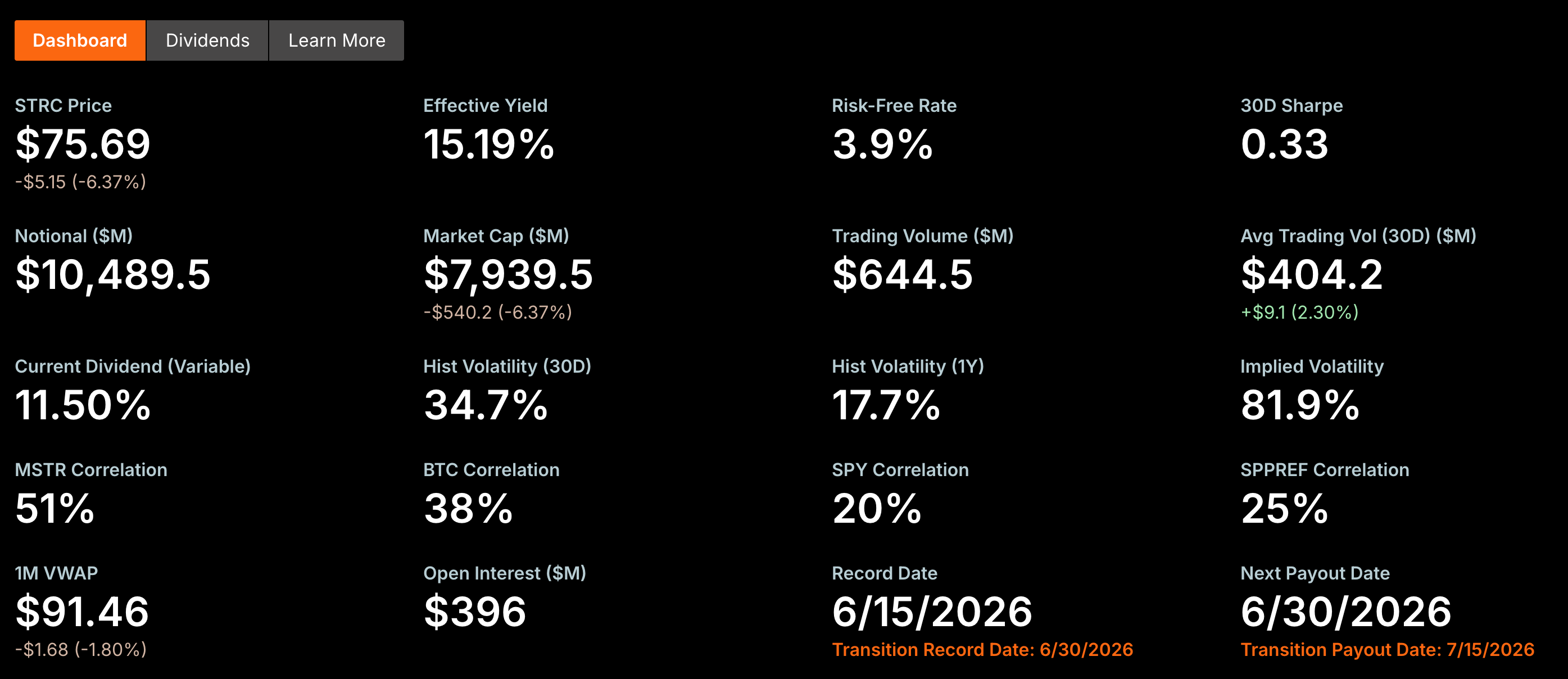
Strategy's perpetual preferred stock STRC has seen its depeg worsen sharply. On June 26, during U.S. trading hours, STRC broke below $80 for the first time, touching a low of $73.62 before closing at $75.69 — a ~25% discount to its $100 par value. This follows a previous 11% depeg reported last week, signaling a severe loss of confidence in the instrument's secondary market pricing.
STRC: Strategy's Cheapest Funding Tool
STRC is designed as Strategy's most cost-efficient funding channel. The company's business model relies on a perpetual flywheel: raise capital → buy Bitcoin → reinforce market expectations → raise more capital → buy more Bitcoin. STRC, as a perpetual preferred share, has no maturity, does not dilute common stockholders, and only requires fixed dividend payments. It was engineered to trade around $100 by dynamically adjusting the dividend rate. As long as the secondary market price stays near par, Strategy can continuously issue new STRC at ~$100 to raise funds and purchase Bitcoin.
With STRC trading below $80, this funding channel is effectively blocked — no rational investor would subscribe to new issuance at $100 when the same shares can be bought for $75 on the open market. Strategy must either hike the dividend rate (which has proven insufficient to attract demand) or accept discounted issuance (which breaks the par target). Either way, the funding machine encounters significantly higher friction.
Over $1.2 Billion Annual Dividend: Cash Reserve Crunch
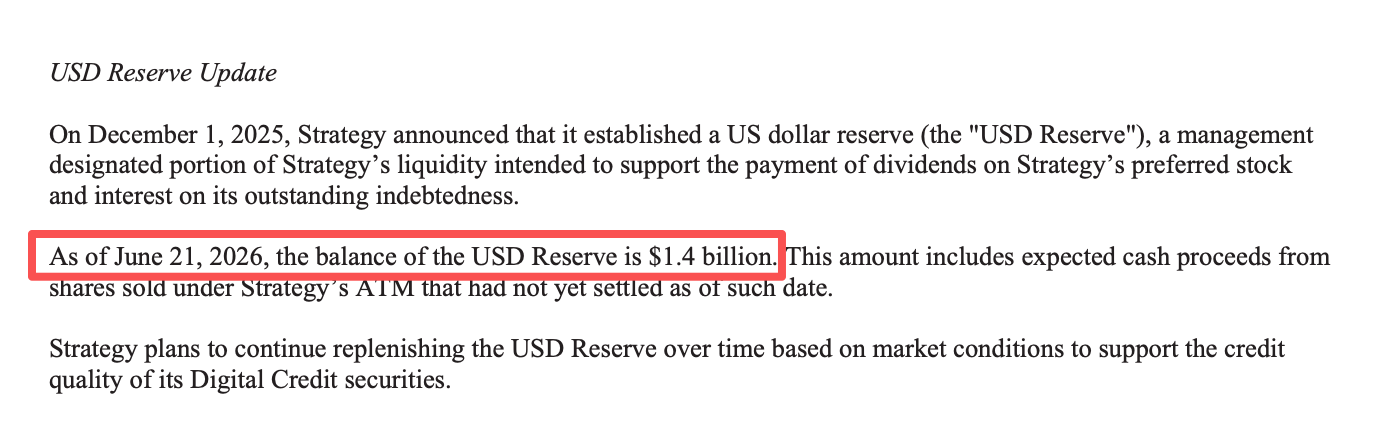
Beyond the funding freeze, STRC imposes a heavy cash burden. As of the latest filing, STRC outstanding totals approximately $10.49 billion with a current dividend rate of 11.5%, translating to over $1.2 billion in annual cash dividend obligations. Including other preferred shares (STRD, STRK, STRF), total annual preferred dividends climb to about $1.7 billion. Strategy disclosed cash reserves of roughly $1.4 billion in its June 21 common stock offering filing — enough to cover less than one year of preferred dividends.
Three Funding Paths: None Without Pain
Facing a cash crunch, Strategy has three theoretical options. First, issue common stock via its ATM program. This is the most direct route but dilutes BTC per share, undermining the core value proposition for MSTR holders. Second, issue more debt (convertible bonds, etc.). However, debt carries rigid interest and principal payments, adding financial strain as cash reserves dwindle. Third, sell Bitcoin. This is the fastest way to raise cash, but with 847,363 BTC (ca. 4% of circulating supply), any significant sale could trigger cascading market drops. The recent sale of 32 BTC (framed as a 'de-sensitization test') already caused a sharp intraday dip.

The Common Stock Trap: Flywheel Reversing
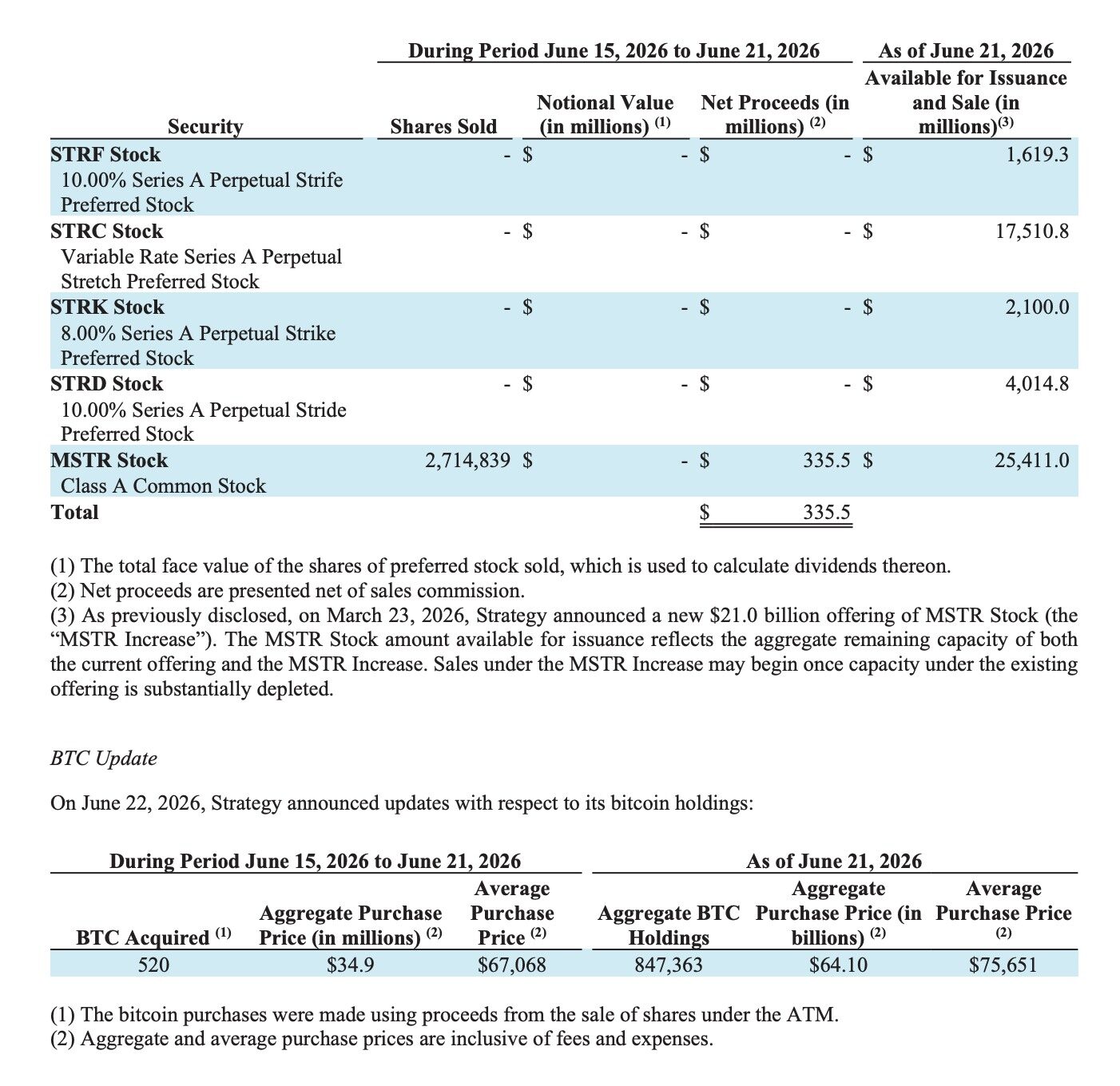
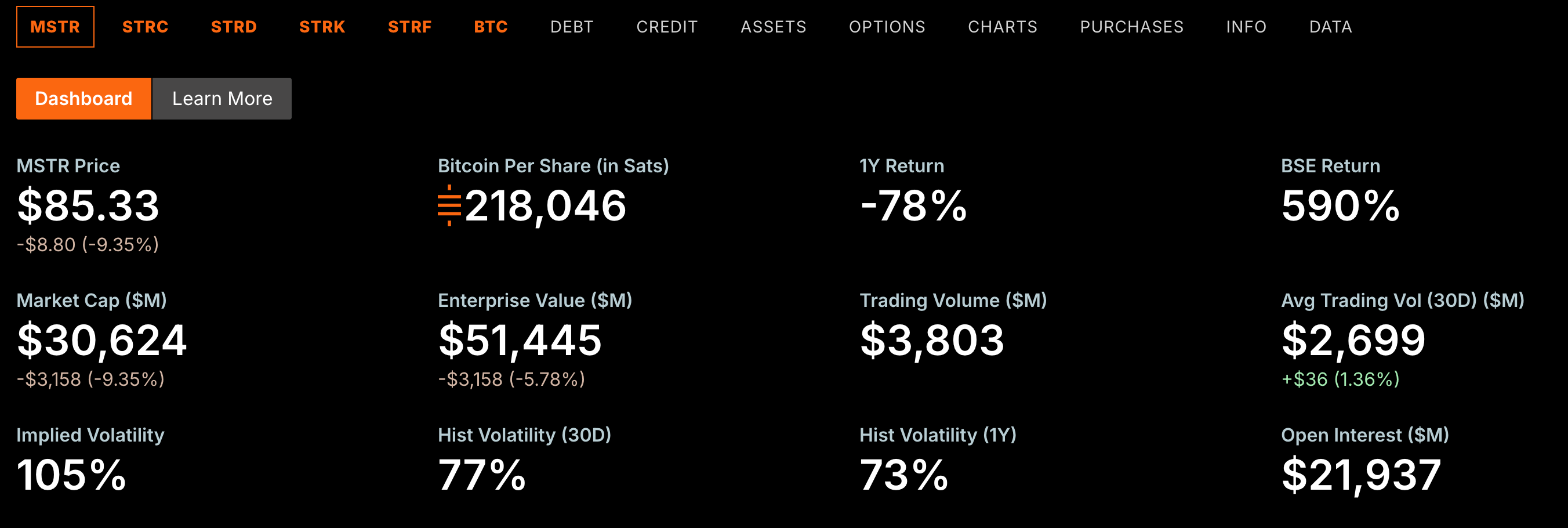
Strategy has already pivoted to common stock ATM for three consecutive weeks. The latest week (June 22) saw 2,714,839 MSTR shares sold, raising $335.5 million, but only 520 BTC were purchased (cost $34.9 million). The remainder went to replenish cash reserves. Consequently, BTC per share dropped from a peak of 220,900 sats to 218,046 sats. Historically, Strategy's flywheel worked because new capital was deployed into BTC, increasing BTC per share and justifying MSTR's premium. Now, capital is diverted to cash, breaking the flywheel. If BTC per share stagnates or declines, MSTR's premium may collapse, further impairing future common stock funding.

Conclusion: From Largest Buyer to Sword of Damocles
For years, Strategy was Bitcoin's most significant marginal buyer. But STRC's persistent depeg has disabled preferred-share funding, while common stock funding cannot fully replace it without damaging shareholder equity. If the depeg persists, Strategy may eventually be forced to sell BTC, transforming from the largest institutional accumulator into a potential supplier. The bottom line: without STRC returning to par, Strategy's funding flywheel cannot resume, and Bitcoin's market loses its most reliable institutional buyer while gaining a massive overhang risk.