


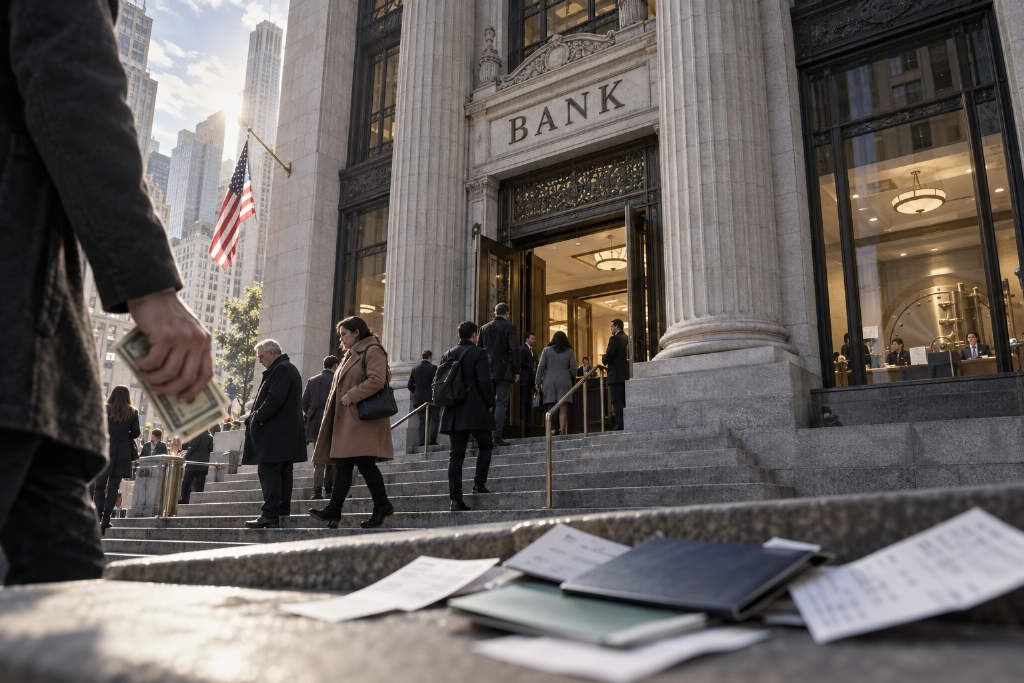
A new study takes a swing at one of crypto’s favorite banking arguments: that fractional-reserve banks are so shaky that once confidence cracks, even a sound bank should go down. Writing for Blockworks, Byron Gilliam says history tells a different story. Looking across a broad set of bank-run episodes, he found that runs ending without failure were actually more common than runs that ended with the bank collapsing.
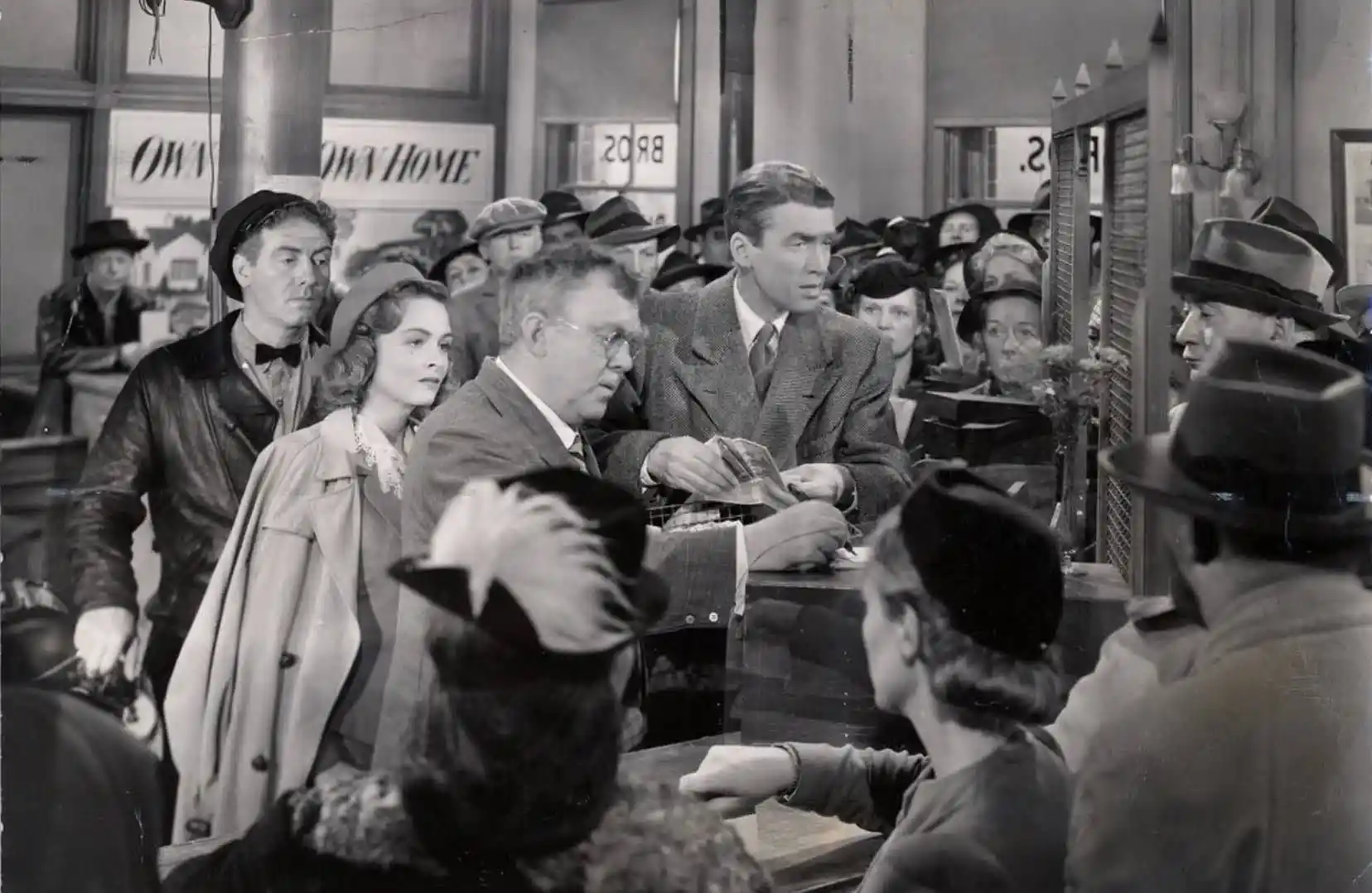
Gilliam starts with George Bailey from It’s a Wonderful Life. Banking’s basic promise, he says, is simple: everyone can get their money back whenever they want, provided not everyone asks at once. In the movie, Bailey says this to the frightened customers crowding Bailey Brothers Building & Loan: "You're thinking about this all wrong, as if I had the money locked away in a safe. The money isn't here. Your money is in Joe's house, right next to yours. And in the Kennedy house, and Mrs. Macklin's house, and hundreds of other homes."
He tells them their deposits were lent out to build houses, and that the borrowers will try their hardest to pay the money back. That does not calm people right away. Bailey still has to put up his own $2,000 to stop the run, and the institution is not really saved until the movie’s ending, when friends and customers chip in enough to fill an $8,000 hole on the balance sheet.
Why fractional-reserve banking has long been treated as inherently unstable
Then Gilliam shifts to Austrian School economist Murray Rothbard, who called fractional-reserve banking “a scam, a Ponzi scheme, a fraud.” Rothbard’s point was that bankers like George Bailey were not being straight about how they managed to make so many loans.
As Gilliam tells it, Rothbard argued in a speech that people usually imagine banks just take deposits and lend them out. That habit of thinking, he said, keeps them from seeing what he regarded as a legalized kind of counterfeiting. In that view, once people really grasp how fractional-reserve banking works and how banks create money “out of thin air,” everyone rushes to get their money back at once. Even the strongest banks fail.
That dark view also seemed to get academic support from the classic Douglas Diamond and Philip Dybvig paper, Bank Runs, Deposit Insurance, and Liquidity. Their model put formal structure around the idea that banks using demand deposits to fund long-term loans can be exposed to runs even if the assets on their books are sound.
In Gilliam’s summary, Diamond and Dybvig said depositors run because they expect the bank to fail. Fast withdrawals like that can force a bank to sell assets at a loss and then collapse. And that result, they argued, does not have to come from bad fundamentals. Anything that makes depositors expect a run can set one off, and even a “healthy” bank can fail.
The new research says the strongest version of that theory does not match reality
Gilliam says the Diamond-Dybvig result leans mostly on math and game theory. But a new study, he writes, says that picture does not fit most real episodes.
According to the column, each bank-run event was pulled from newspaper coverage by a large language model and uploaded into a website that tracks why the run began and how it ended.
The big finding is pretty stark. Most runs fizzled before they became a death blow to the bank. The authors found that “runs that do not lead to bank failure outnumber those that do.”
That is not what readers would expect from the self-fulfilling Diamond-Dybvig story. Even among banks with “very weak” fundamentals, just 59% failed after a run. Banks with the strongest fundamentals, on the other hand, “rarely fail” even when a run hits them.
Gilliam quotes the paper’s conclusion this way: “this pattern casts doubt on a strong view that liquidity problems alone can trigger severe financial distress.” He reads that as a polite academic way of saying Diamond, Dybvig, Rothbard, gold bugs and Bitcoin believers are wrong about the hardest-line case against fractional-reserve banking.
Historical runs often began for arbitrary reasons
Still, Gilliam says Diamond and Dybvig did get one thing right: expectations can turn on almost anything. He pulls a few striking cases from the bank-run database.
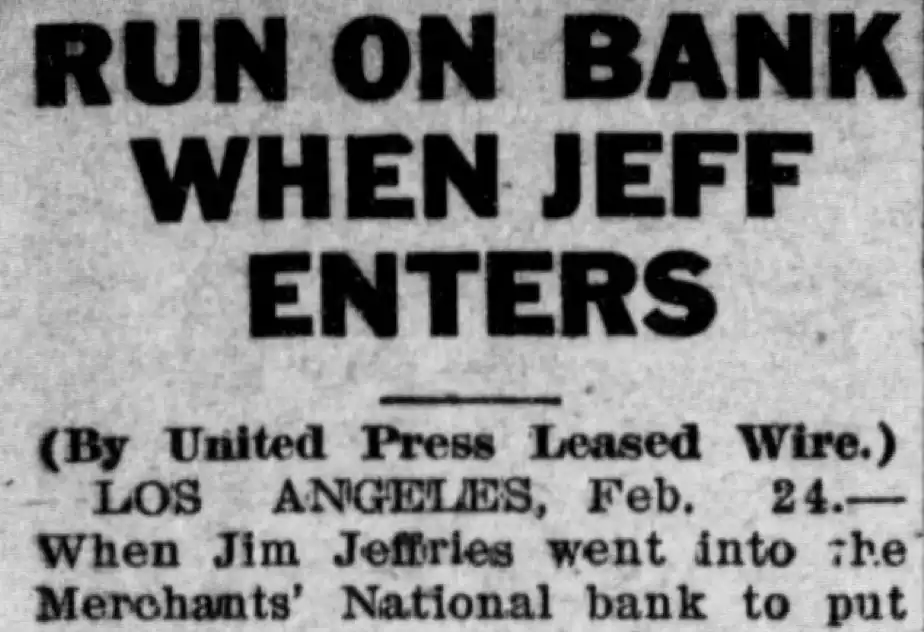
In 1910, Merchants National Bank in Los Angeles got hit by a run because boxer Jim Jeffries showed up at the bank and attracted a crowd of fight fans. A newspaper report said dozens of depositors assumed something was wrong and started withdrawing cash. The panic died down only after Jeffries left. In reality, he was there to open an account and deposit part of his championship winnings.
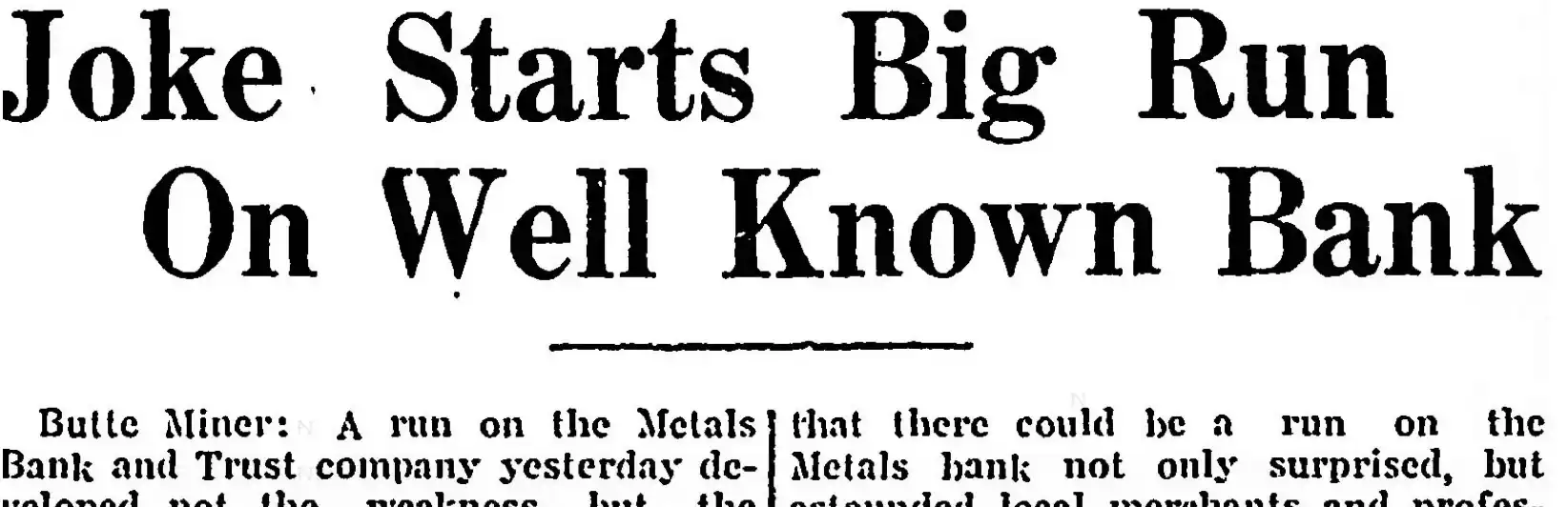
In 1924, Metals Bank & Trust Company in Butte, Montana, faced a run after someone overheard a joking bet that the bank would not open the next day. The bank remained open for another four hours past normal closing time to handle withdrawals, and stopped only when it became too dark to keep paying depositors safely. The joke worked because the bank really would not open the next day. It was Lincoln’s Birthday.
In 1929, Bay Ridge Savings Bank in Brooklyn, New York, ran into trouble after a rumor spread that its president had died. Gilliam says the bank heard the false rumor ahead of time and managed to line up $14 million in cash for withdrawals. What had actually happened was much less dramatic: the president had gone to Connecticut to have a boil removed from his neck, and he survived the surgery.
Some runs did become destructive, but visible cash often stopped them
Gilliam is not saying self-fulfilling runs never happen. They do, he says. Sometimes.
In 1930, Independence State Bank in Chicago was hit by a run after a fight broke out two doors down. A police patrol wagon pulled up in front of the bank building after a call from a restaurant, and that set off a rumor that the bank itself was in trouble. More than $1.6 million was withdrawn from the bank’s $5.6 million in deposits, and state officials decided the bank had to close.
The Bank Runs website does not say whether Independence State Bank was fundamentally sound. But Gilliam says the study implies that if it was, it probably would have survived.
In lots of other cases, getting through a run took little more than putting a huge stack of cash where depositors could see it. One run in 1907 was stopped by “displaying a large amount of bills and cash on the counter” in full view.
Back in 1857, an “unprofitable run” on an Alabama bank ended after depositors saw what Gilliam calls a towering “gold Malakoff and silver Redan” on the cashier’s desk, a nod to famous Russian fortresses.
And in 1924, a Brooklyn bank manager stopped a run the same basic way, stacking bills as large as $1,000 in the front window so everyone walking past could see them clearly.
Gilliam closes with a blunt question. Did bank customers understand that no matter how high the cash was piled, it still would not be enough if everybody demanded their money at once? His answer: he guesses they did.