
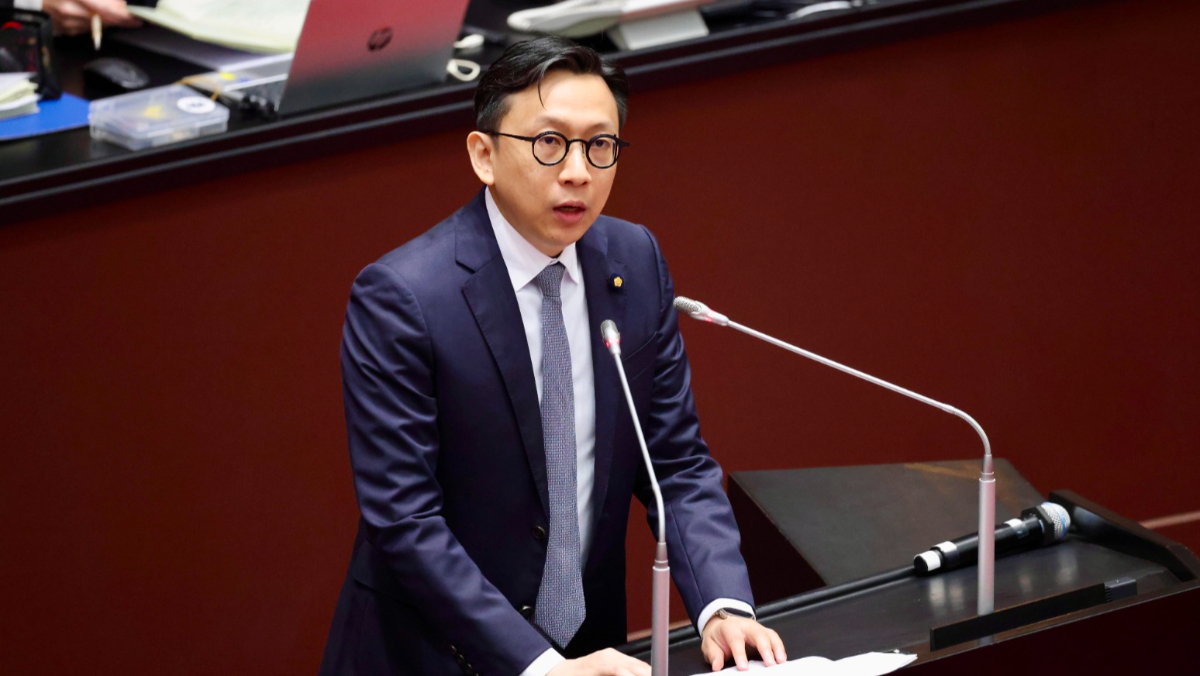
Taiwan lawmaker Ko Ju-chun used an April 28 legislative interpellation to press for a broader crypto policy package, including tax incentives for VASPs, a domestically issued Bitcoin ETF, and a virtual asset education fund. Premier Cho Jung-tai said the government would support an organized review, while Financial Supervisory Commission Chair Peng Jin-lung said related proposals would be studied and addressed in reports expected within one month.
Education fund proposal targets fraud prevention and investor awareness
Taiwan has already seen its first batch of compliant VASP operators, and a draft Virtual Asset Service Act has been sent to the legislature. Even so, Ko argued that anti-fraud awareness and investor education still lag behind the pace of market development.
He proposed setting up a “virtual asset education fund” financed jointly by the government and industry participants, giving an example in which both sides would contribute NT$100 million each. The FSC said it would collect international examples and examine alternative approaches before submitting a more detailed review report within a month.
Executive Yuan to lead study on tax breaks for the sector
Ko also called for dedicated tax benefits for the virtual asset industry, saying Taiwan needs stronger policy tools to compete internationally. During the session, he cited policy approaches in Thailand, El Salvador, and Germany.
Cho said the idea was consistent with the logic behind industrial innovation incentives and pledged that the Executive Yuan would take the lead. The finance ministry, working with the FSC, was tasked with studying the issue and producing a broad direction for possible tax incentives within one month.
Retail access to Bitcoin ETF products remains under review
Another focus was market access. Ko urged regulators to broaden access to Bitcoin ETFs and to advance stock tokenization. He noted that spot Bitcoin ETFs have already been approved in the United States, Canada, and Hong Kong, while Taiwan currently limits access to overseas products through sub-brokerage channels for professional investors only, a setup he said could contribute to capital outflows.
Peng responded that any expansion allowing the public to buy overseas virtual asset ETFs through sub-brokerage arrangements still depends on an assessment report from the securities industry association. If that review supports wider access, regulators would provide a public explanation in the near term. On stock tokenization, he said the required infrastructure is still not in place, making a near-term launch unrealistic.
Strategic reserve debate includes Bitcoin and stablecoins
Ko also renewed his call for a review of strategic reserves involving Bitcoin, stablecoins, and other virtual assets. He suggested the central bank should evaluate whether a very small share of foreign exchange reserves could be shifted into stablecoins or tokenized bonds.
Cho replied that there is currently no case of a country formally listing Bitcoin as part of its foreign exchange reserves. The report added that the Czech case does not amount to Bitcoin being held as FX reserves. Instead, the Czech central bank has described it as an experimental investment portfolio for blockchain-based digital assets, intended to test digital asset management processes, with price fluctuations not affecting its ability to conduct foreign exchange intervention.