
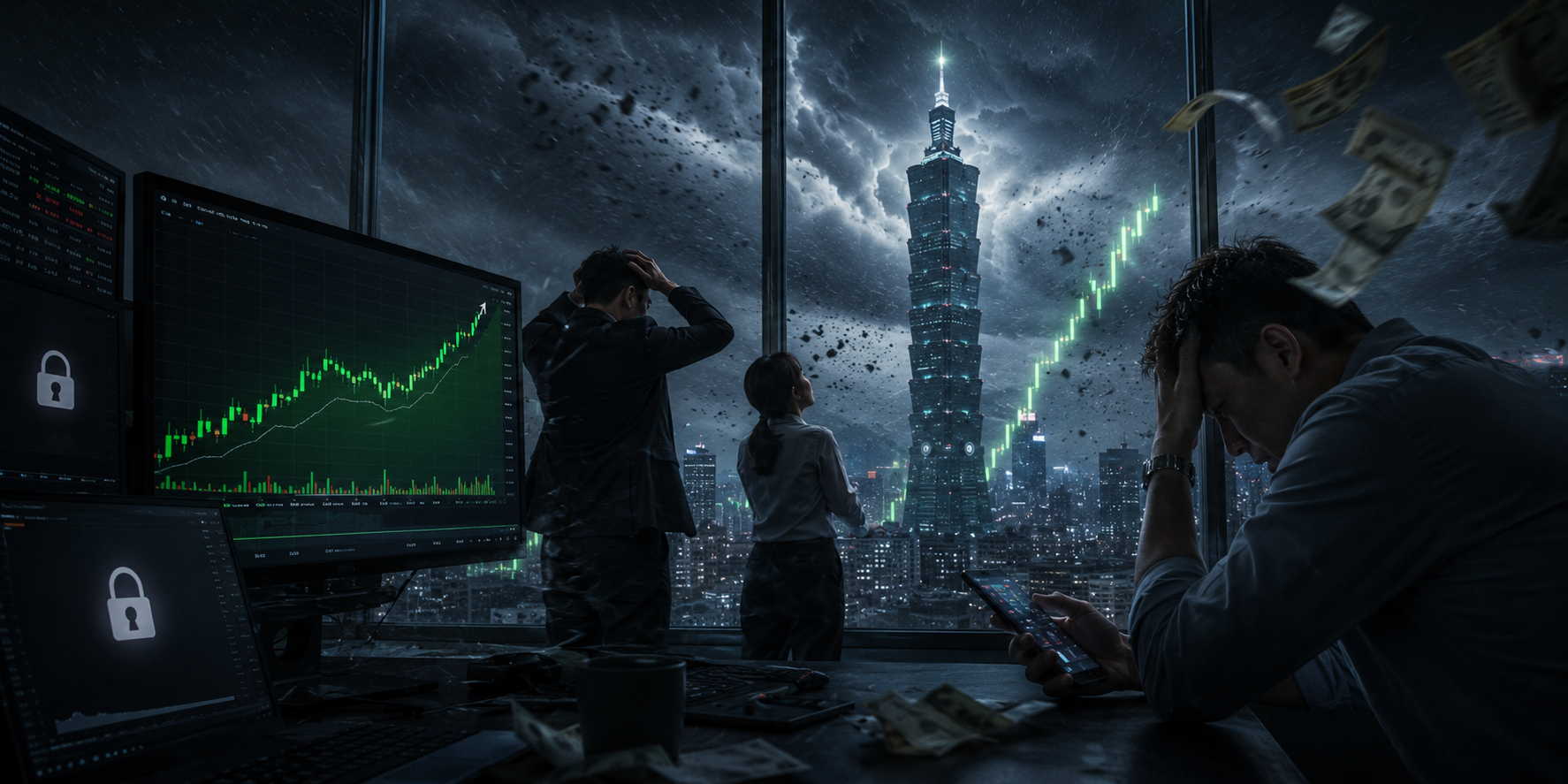
On July 23, Taipei City government declared a day off for public offices as Typhoon Bavi approached, prompting the Taiwan Stock Exchange and the GreTai Securities Market to suspend trading for the day. Meanwhile, Asian markets rallied sharply: Japan's Nikkei 225 surged over 1,400 points intraday and closed up nearly 1,000 points, while South Korea's KOSPI index jumped more than 3.5%, with Samsung Electronics and SK Hynix both rising over 4%.
Taiwanese retail investors took to social media to complain: 'If the market had been open today, we could have caught this rally... big missed profits.' This raises a recurring question: Could Taiwan's stock market ever operate like cryptocurrencies — without any holiday closures?
No 'Typhoon Day' in Crypto
Bitcoin and Ethereum spot and derivatives markets run 365 days a year, 24 hours a day, regardless of weather, holidays, or geopolitical events. The reason lies in the settlement logic: decentralized blockchain networks with globally distributed nodes execute transactions on-chain in real time, eliminating the need for a 'market close'.
Traditional exchanges are slowly moving in that direction. The 24X National Exchange in the U.S. received SEC approval in November 2024 to become the first national-level exchange operating nearly around the clock — Phase 1 launched on October 14, 2025, offering 23-hour trading five days a week; Phase 2, expected in the second half of 2026, will expand to continuous trading from Sunday evening to Friday evening, with only one hour daily for maintenance. Separately, Nasdaq plans to launch 24-hour trading in H2 2026, pending regulatory clearance, and NYSE announced in January 2026 it is building a blockchain platform to enable 24/7 trading of stocks and ETFs, also subject to SEC approval.
Why Taiwan Struggles: Centralized Settlement Is the Core Bottleneck
Taiwan's stock market relies on a centralized clearing model: T+2 physical delivery, a single centralized venue, and brokers that require physical staff on site. If any link breaks — for example, an entire city shuts down due to a typhoon — the entire chain freezes. This contrasts sharply with crypto's decentralized design, where nodes are spread globally and no single 'headquarters' can be disabled by weather.
In the near term, Taiwan's market is unlikely to achieve 24-hour trading. Physical delivery, dependency on a centralized clearinghouse, and broker staffing constraints are real structural barriers. However, tokenization combined with blockchain settlement could offer a way out. If stocks are minted as on-chain assets and settled via smart contracts, a typhoon holiday would no longer halt trading. Several initiatives already point in this direction: Kraken integrated BNB Chain with Backed to expand tokenized stocks; Bitget's rToken stock tokens surpassed $100 million in AUM; and Grayscale published a report on the three phases of RWA tokenization, naming Ethereum, Solana, and AVAX as key beneficiaries.