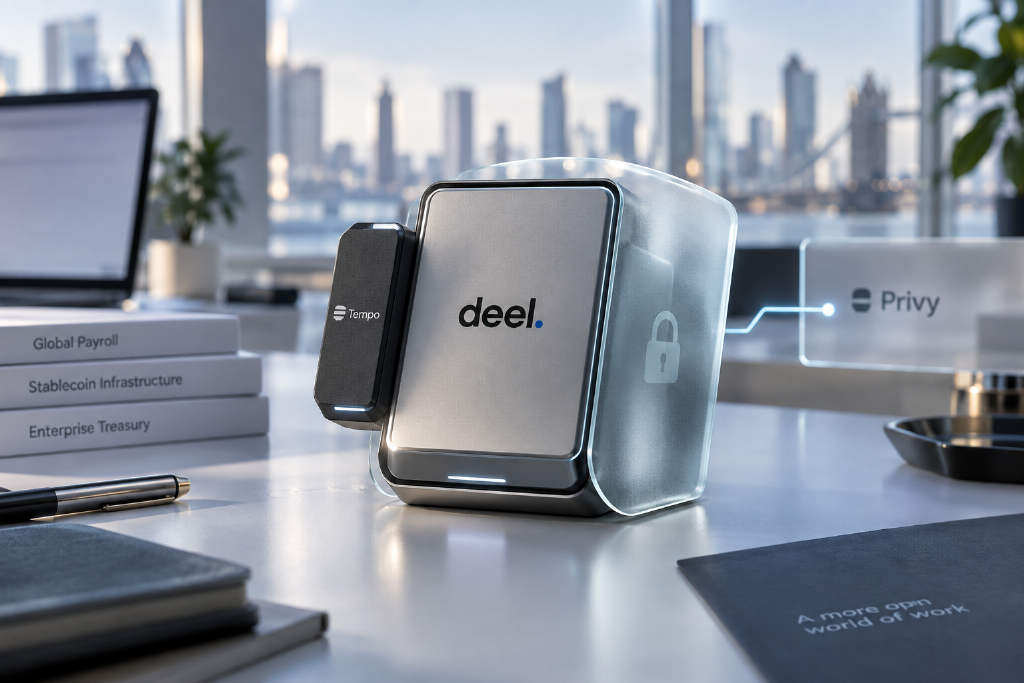
Tempo said on Oct. 14 that payroll platform Deel has become the first customer to use its Zones privacy system in a production environment, adding a privacy layer to Deel’s existing wallet setup for qualified contractors. Under the integration, funds deposited by Deel’s treasury into a Zone remain visible on the public network, but payment recipients, payment amounts, contractor balances, and asset holdings inside the Zone are kept private. Contractors can see their own balances, while Deel retains access for reconciliation and audit purposes.
Tempo said each Zone runs on a private ledger connected to the public Tempo network through a portal that holds backing assets. Its privacy documentation states that operators can read the private ledger, while deposits and withdrawals still leave public records, including token amounts and public network addresses. Operators can also restrict which participants and assets a Zone supports and apply issuer transfer policies. Tempo added that private accounts can still access public financial products such as its Earn offering and then move positions back into the Zone while keeping balances and holdings private. The company said the rollout does not change Deel’s existing customer wallet or treasury infrastructure, and embedded wallet provider Privy supports Zones through its API.
Tempo, a stablecoin payments blockchain, said on Oct. 14 that payroll platform Deel has become the first customer to use its Zones privacy system in a production environment. As a result, contractor balances and payment history are no longer publicly visible.
In a case study published by Tempo, the company said funds deposited by Deel’s treasury into a Zone can still be seen on the public network. What is not public are the identities of the contractors who receive payments, how much each one receives, and which assets they hold. Contractors can view their own balances. Deel keeps access for reconciliation and audit.
How Zones work
Tempo said each Zone maintains its own private ledger and connects to the Tempo public network through a portal that holds backing assets.
According to Tempo’s privacy documentation, the operator can read that ledger. Deposits and withdrawals still create records on the public network, including token amounts and public network addresses. The operator can also limit which participants and assets a Zone supports and apply transfer policies set by token issuers.
Using public products from a private account
Tempo also showed an example of a private account using a public financial product. After funds are deposited into a Zone, the account can access the public Earn product and later bring the position back into the Zone, while balances and holdings remain private.
What changed for Deel
Tempo said the launch adds privacy features to Deel’s existing wallet. That wallet was opened in August to qualified contractors in more than 80 countries.
The company added that the integration does not change Deel’s current customer wallet or treasury infrastructure. Embedded wallet provider Privy supports Zones through its API.
This article was originally published by Bit.Fan. For more cryptocurrency news and market insights, visit www.bit.fan. Disclaimer:
The market information, project data, and third-party content displayed on this platform are for industry information sharing only and do not constitute any form of investment advice or return commitment.
Cryptocurrency trading carries high risks. Users should fully assess their risk tolerance and make independent decisions. All profits, losses, and legal responsibilities are borne by the users themselves.