

Yunbao Smart Co., Ltd., a Shenzhen-based chip startup, has had its ChiNext IPO application accepted by the Shenzhen Stock Exchange. The company is using ChiNext’s fourth listing standard and is aiming to become China’s first publicly listed DPU company.
The company was founded in Shenzhen in August 2020 by Xiao Qiyang, who was born in Hong Kong. The report said Xiao graduated with top honors from New York University and Cooper Union, earned a PhD in electrical engineering from Stanford University at age 24, and later taught at the University of California, Irvine and the Massachusetts Institute of Technology.
Xiao previously co-founded chip company RMI in Silicon Valley in 2002. The report said Broadcom later acquired RMI in a $3.7 billion all-cash deal. In 2020, he returned to Shenzhen and started Yunbao Smart with a focus on DPUs. Not long after, Nvidia formally introduced the DPU concept at GTC, and Jensen Huang proposed a “CPU+DPU+GPU” three-chip strategy, pushing the segment into the spotlight.
From FPGA verification to 6nm mass production in four years
According to the report, Yunbao Smart developed what it described as China’s first high-performance, general-purpose programmable DPU SoC chip. It has network bandwidth of 400 Gbps, delivers four times the performance of traditional solutions, and cuts power consumption by more than 50%.
The prospectus said the company completed the full process from FPGA verification to 6nm SoC mass production in four years. It now offers one-stop solutions covering elastic networking and storage, virtualization, security, and low-latency RDMA.
Revenue jumped, but losses continued
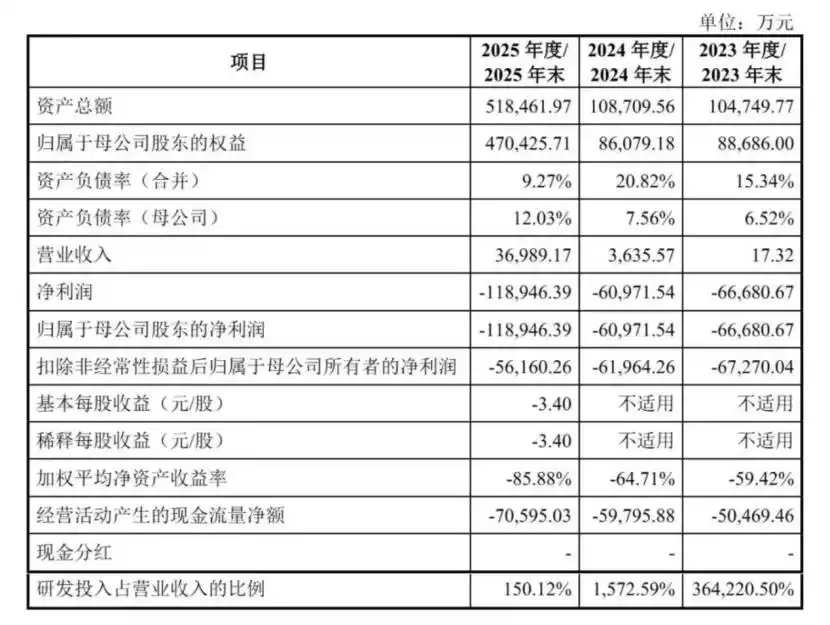
The prospectus showed revenue of RMB 170,000 in 2023, RMB 36.35 million in 2024, and RMB 370 million in 2025. Net losses were RMB 667 million, RMB 600 million, and RMB 1.19 billion, while net losses excluding non-recurring items were RMB 670 million, RMB 620 million, and RMB 560 million.
Revenue in 2025 rose by more than 900% from a year earlier, though the company remained loss-making.

Tencent built its position over multiple rounds
Before filing for the IPO, Yunbao Smart had already completed several funding rounds. At the end of 2020, just two months after registration, it raised a seed round from 5Y Capital, Lanchi-backed investors named in the report, Zhongxin Juyuan, Huaye Tiancheng, Yaotu Capital, and Hongzhuo Capital.
About half a year later, the company closed an angel round backed by Sequoia China, Shenzhen Capital Group, Tencent, 5Y Capital, Huaye Tiancheng, and QBN Capital. Xiao said in a speech cited by the report, “When I founded Yunbao Smart, I was alone. I only dared to hire the founding team after getting the angel round.”
Tencent made its first investment in that round and kept adding to the position. In September 2021, Yunbao Smart completed its Series A round, and Tencent invested several hundred million yuan again. Other investors included Sequoia China, Shenzhen Capital Group, 5Y Capital, Temasek, NIO Capital, Loyal Valley Capital, Yicun Capital, CMBC Capital, and Yaotu Capital.
In 2023, the company raised funds from Sunshine Insurance, Guoxin Capital, and Runxin Xinguanxiang Industry Fund. After 2024, government-guided funds entered the cap table, including the Shenzhen Guidance Fund and Bao’an District Industrial Investment Guidance Fund in the B round. In 2025, IDG Capital, Hangzhou Industrial Investment, Hangshi Asset Management, Xiaoshan Capital, Avary Holding, and Yunjian Information joined, with existing shareholders also participating.
At the end of November 2025, Cowin Capital, Oriental Fortune Capital, and Cornerstone Capital joined as local Shenzhen VC firms, while IDG Capital and Tencent also took part. The report said Yunbao Smart’s valuation exceeded RMB 14 billion after that round.
Before the IPO, Tencent, through affiliated entities, held 19.7792% of Yunbao Smart, making it the company’s largest shareholder. Actual controllers Xiao Qiyang and Zhang Xueli directly held a combined 7.1520%, and indirectly controlled 22.6588% of the voting rights through two shareholding platforms, Yunbao Chuangxin and Yunbao Chuangzhi.
The report noted one risk point: as the largest shareholder, any future increase or reduction in Tencent’s holdings in the secondary market could affect the stability of the company’s control structure.
Another Greater Bay Area semiconductor IPO candidate
The report placed Yunbao Smart’s filing in the broader context of semiconductor listings in the Greater Bay Area. It said earlier domestic GPU IPO candidates such as Moore Threads, MetaX, and Biren Technology were mostly based in Beijing and Shanghai, while Yunbao Smart’s DPU push fills an infrastructure-chip gap for Shenzhen.
Recently, CanSemi Technology Inc. passed its ChiNext IPO review and plans to raise RMB 7.5 billion. The report said CanSemi represents a breakthrough in wafer manufacturing for the Greater Bay Area, while Yunbao Smart represents progress in high-end chip design focused on DPUs.
On listing rules, the report said CanSemi used ChiNext’s third listing standard and became the second unprofitable company to pass review on that board after Dapu Micro. In April this year, ChiNext formally launched its fourth listing standard, which gives more weight to R&D spending and market value than short-term profitability. Yunbao Smart’s IPO is moving forward under that framework.
The article also said the ChiNext Index has risen about 150% since September 2024, making the board one of the most concentrated capital market venues for hard-tech companies in China.
The original article was published by the WeChat account PEdaily and written by Yang Jiyun, then republished by MarsBit.