
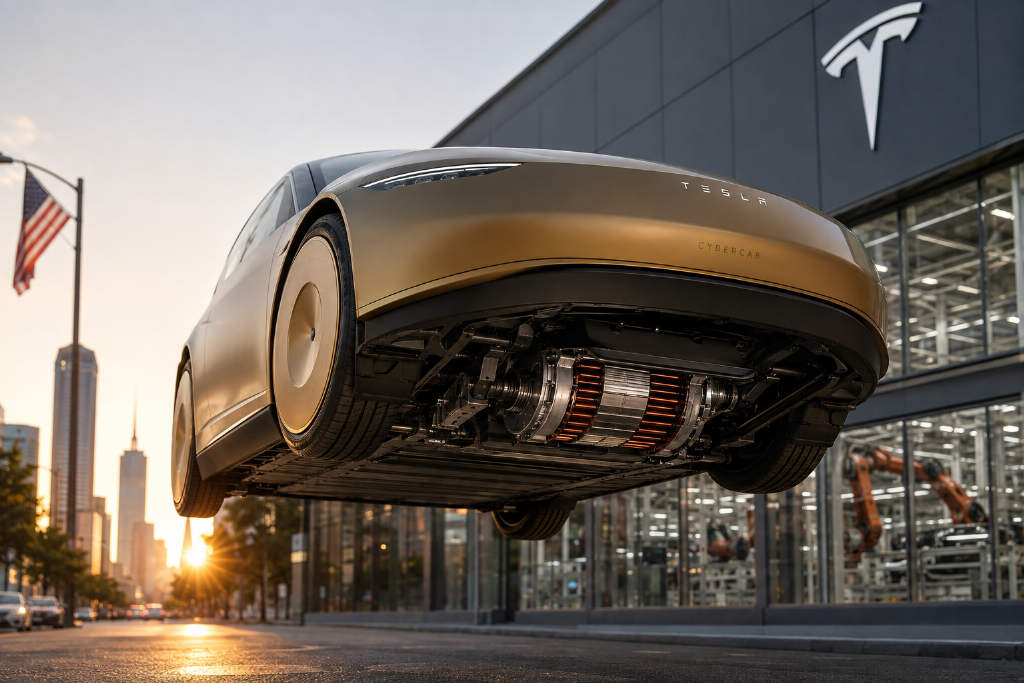
Elon Musk reposted a Tesla update on X saying the Cybercab drive motor uses no rare earth materials at all, while vehicle range is unchanged. He added that doing this was "very difficult."
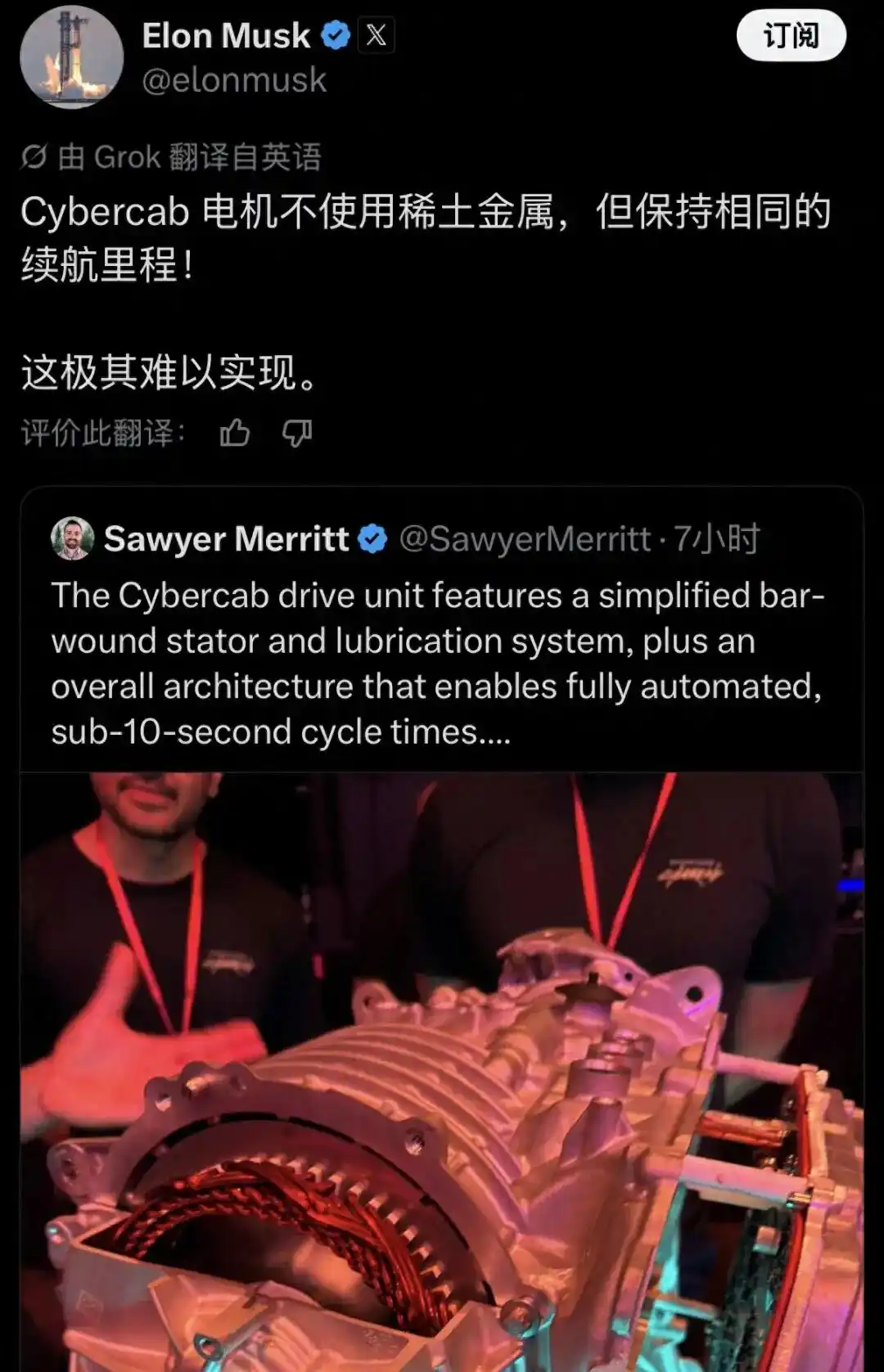
The challenge, as described in the source article, is straightforward in principle and hard in practice. Non-rare-earth magnetic materials such as conventional ferrite have only a fraction of the energy density of neodymium-iron-boron permanent magnets. Getting strong magnetic output from weaker materials, without giving up range, weight, or efficiency, has long been the barrier. In that context, Tesla’s claim is not simply that it removed rare earths. It is that it did so without shrinking range.
On the same day, Tesla’s gold-colored vehicles with no steering wheel and no pedals began picking up passengers on U.S. streets, according to the article. It presents the Cybercab motor as a production case rather than a lab demonstration.
Tesla has changed motor strategies before
The report reviews Tesla’s earlier choices. The first Model S and Model X vehicles used AC induction motors, which did not depend on rare earths. At that stage, the article says, Tesla had less leverage over its supply chain, so induction motors were a practical choice even though they were somewhat less efficient and heavier.
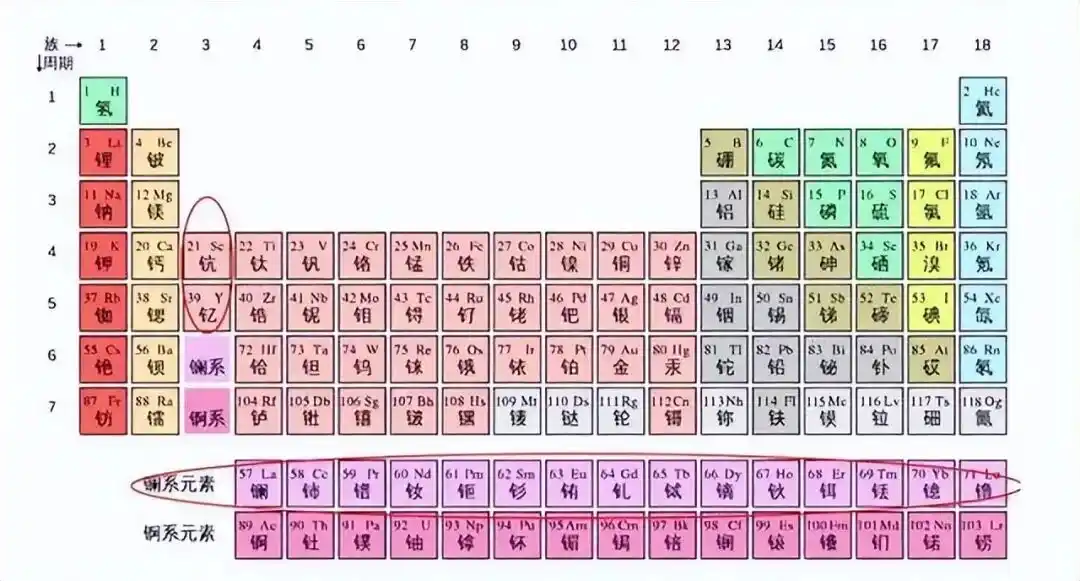
By the Model 3 and Model Y era, Tesla was pushing for higher volume, lower cost, and better range. That made the efficiency penalty of induction motors harder to accept, so the company moved toward permanent magnet synchronous motors. Those motors are efficient, compact, and light, but they rely on neodymium-based rare-earth permanent magnets.
The source article says Tesla showed a motor materials breakdown at its March 2023 Investor Day. At that time, its permanent magnet motors required three rare-earth materials: about 500 grams of neodymium, 10 grams of dysprosium, and 10 grams of terbium.
Later in 2023, Tesla said its next-generation drive motor would target zero rare earth use. Two years on, the article says Cybercab has delivered that concept in an actual vehicle. It describes the shift as a matter of priorities changing with scale: supply-chain security first when Tesla was smaller, efficiency and cost during the volume ramp, and now supply-chain security again as the company grows larger and faces geopolitical risk.
How Tesla is described as keeping performance intact
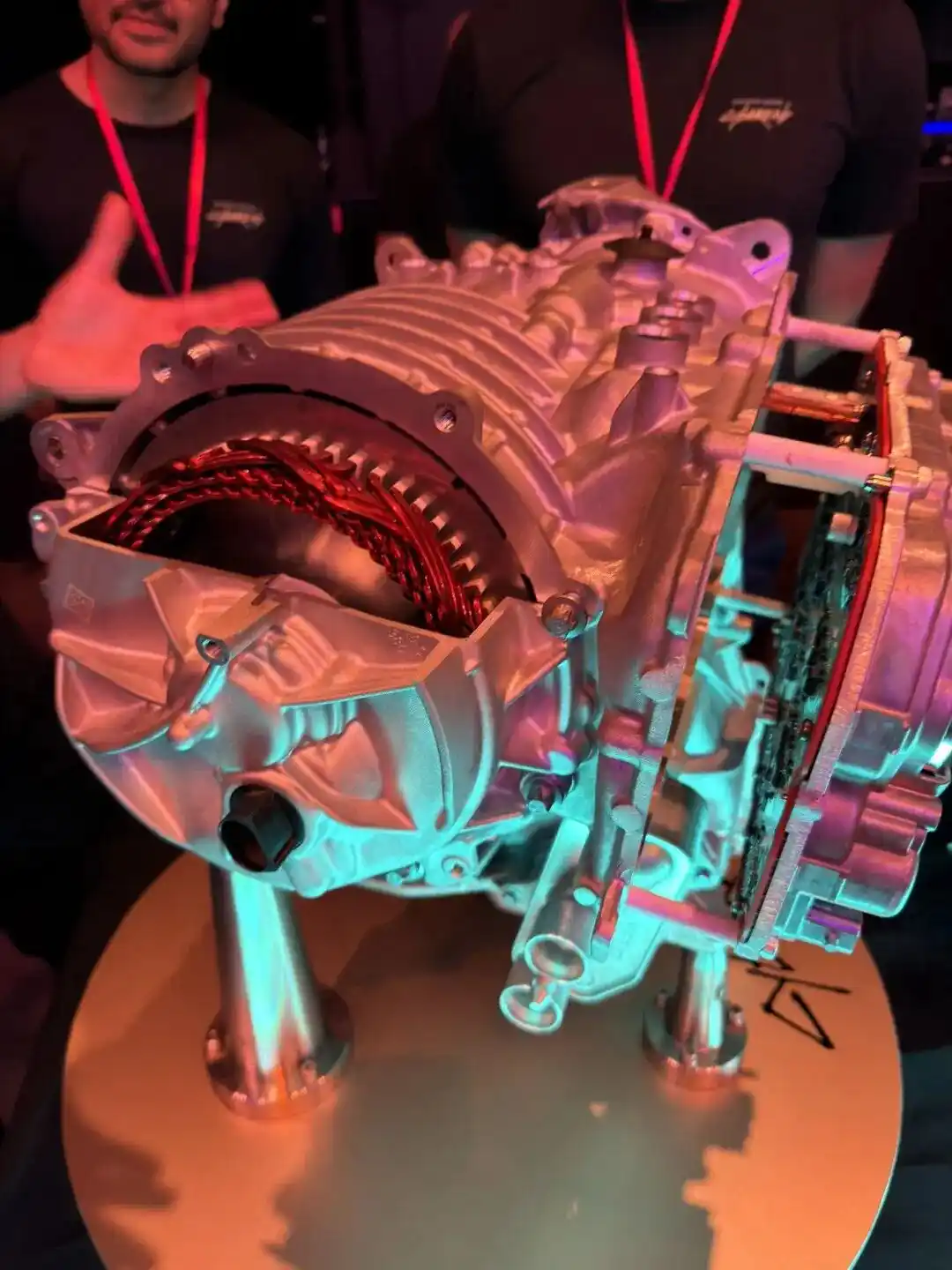
A conventional permanent magnet synchronous motor depends on rare-earth magnets to generate a strong magnetic field, which helps keep the motor small, light, and efficient. Remove those magnets and performance usually falls. The article says Tesla’s approach combines three elements.
- First, it leans harder on the synchronous reluctance route, using the rotor core’s magnetic path design to provide more of the driving force.
- Second, it explores new ferrite composite magnetic materials, pairing weaker magnetic materials with structural design to approach the output of stronger magnets.
- Third, it uses hairpin windings to raise copper fill rate, then offsets efficiency and thermal losses with a stronger temperature-control system.
The article argues that none of those moves, taken alone, is the entire story. The difficulty lies in combining them into one package while preserving performance and lowering cost. It presents that as a systems-engineering achievement rather than a single breakthrough.
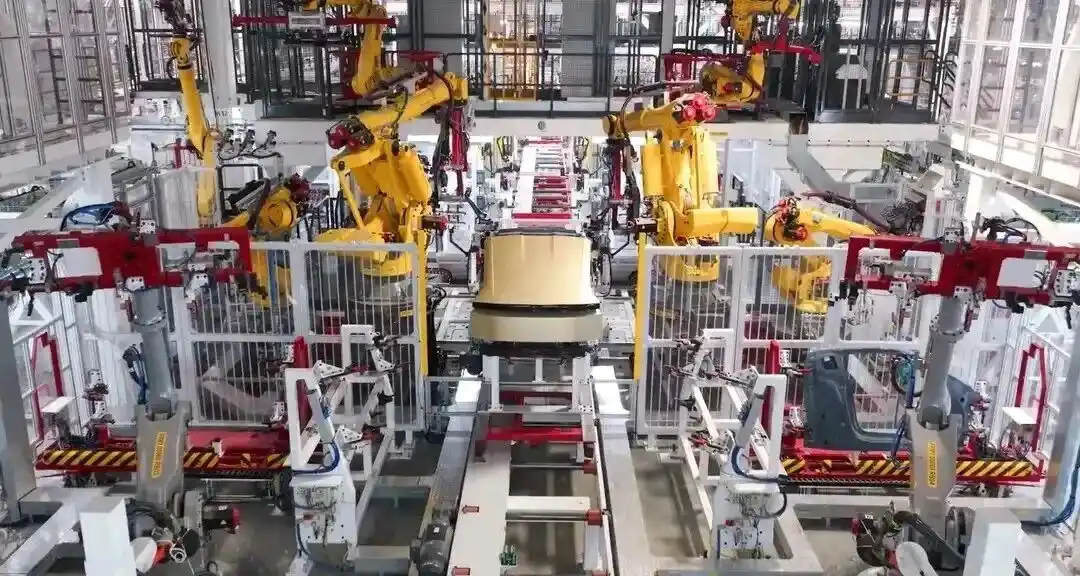
It also places heavy emphasis on manufacturing metrics. According to the report, automated production cadence for the drive unit has been compressed to under 10 seconds. Traditional automakers, the article says, may need tens of minutes or even hours to assemble a high-performance motor. Tesla’s next-generation motor line is also said to use 50% less floor space, cut demand for silicon carbide chips in the inverter, and reduce drive-unit cost by about $1,000.
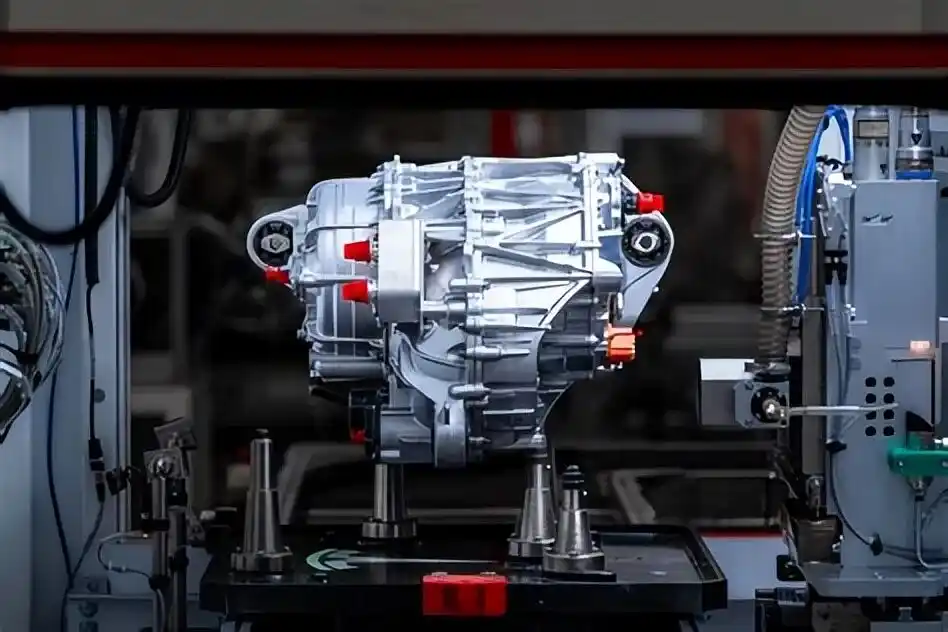
In the framing of the original piece, rare earth use is down, chip demand is down, floor space is down, labor demand is down, and cost is lower by roughly $1,000. The point is not only that Tesla has a zero-rare-earth prototype. It is that the company appears to have a lower-cost product already installed in Cybercab and manufacturable at a pace of one unit in less than 10 seconds.
Supply-chain risk sits in the background
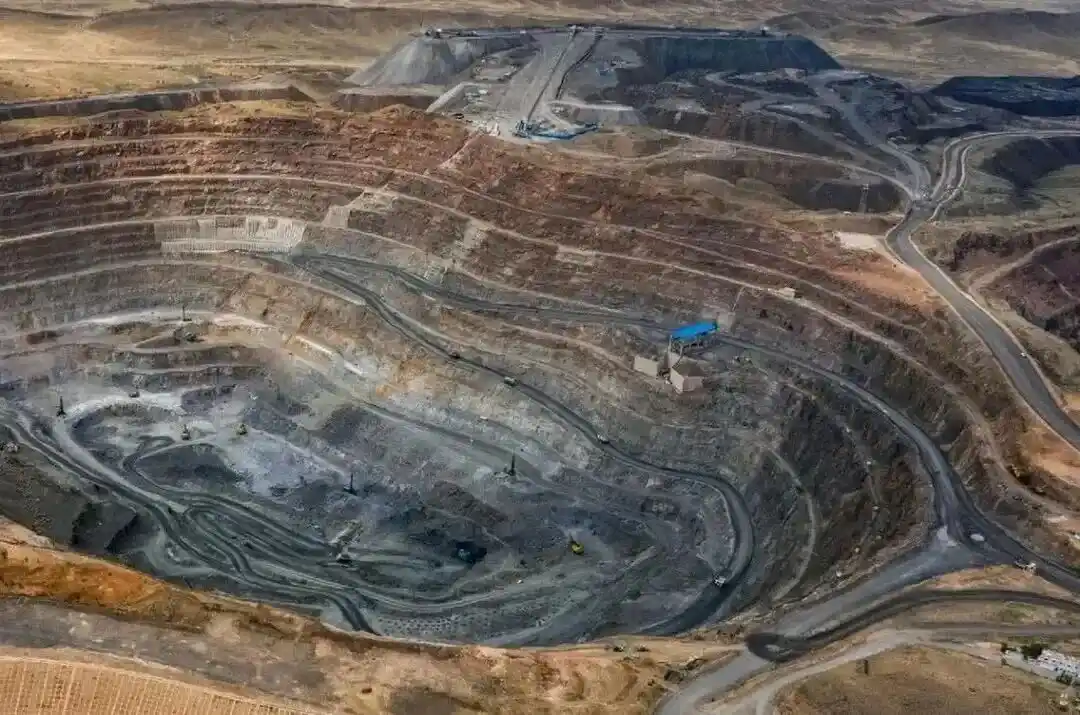
The source article notes that China has built a complete rare-earth supply chain, spanning mining, separation, refining, and high-performance magnetic material production. That scale is an advantage for China, but the article says it also creates a supply-chain risk for buyers that want alternatives.
Its example is simple: 500 grams of rare earths per motor may not look large in isolation, but Tesla sells millions of vehicles a year. Add future demand from robotaxi and humanoid robot programs, and motor demand could rise by several times or even by an order of magnitude from current levels. At that point, stable supply of key materials becomes a central issue.
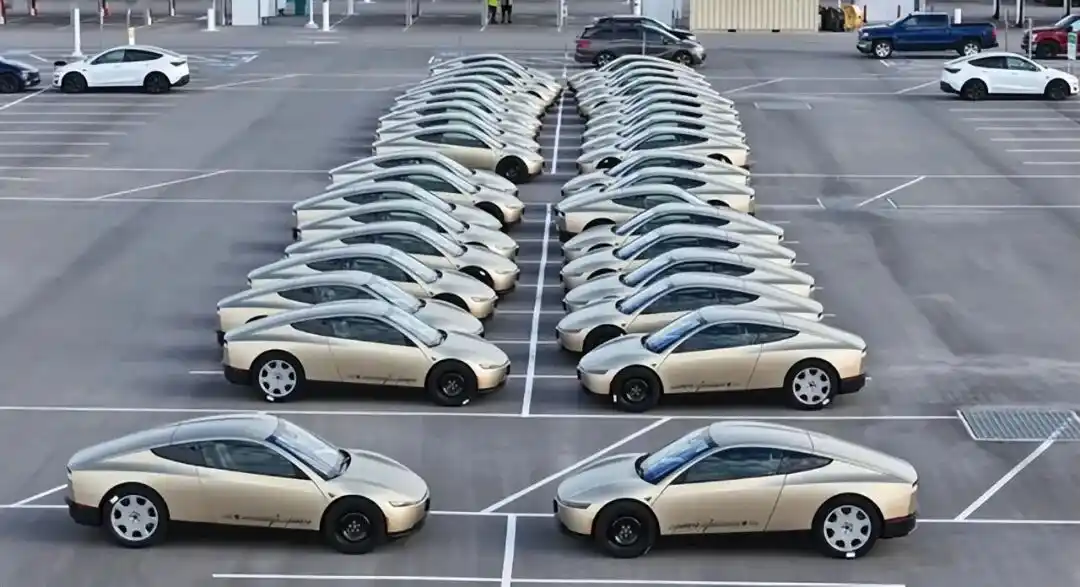
The article also highlights where the new motor appears first. Cybercab’s target market is described as mainly North America. From that, the piece argues Tesla is building technical reserves for a North American supply chain less dependent on China. If geopolitical pressure were to intensify and vehicles sold in North America faced restrictions on Chinese rare earths, Tesla would already have a ready-made alternative.
China’s advantage remains, but the route may change
The article says China’s new-energy vehicle supply chain is strong and that rare earths remain one of its core cards. It states that China has not only the world’s richest rare-earth reserves but also more than 90% of global rare-earth refining capacity and high-performance neodymium magnet manufacturing capacity. From mining and separation to refining and magnet processing, the report describes China’s position as deeply entrenched.
At the same time, the U.S. has been moving ahead with new mines, refining plants, and magnet factories. Still, the article argues that buying equipment again, adjusting separation processes, and getting magnets validated by automakers could take 3 to 5 years, and even then the products may not match the competitiveness of Chinese suppliers.
That is why, in the source article’s telling, Tesla chose a different path. Instead of waiting for a domestic U.S. rare-earth chain to mature, it redesigned the motor and tried to eliminate rare earth use altogether. The piece calls zero grams of rare earths an attempt to rewrite the rules of the game.
Chinese companies have already worked on rare-earth-free routes
The report says the shift is both a warning and an opportunity for Chinese automakers. The warning is that a supply-chain advantage does not automatically become a lasting technology moat. If one side competes today with lower rare-earth cost, but another side proves a rare-earth-free motor with even lower cost tomorrow, the old edge is no longer secure.
It adds that if future competition in electric drive systems moves away from "who has the stronger magnet" and toward "who uses fewer materials, reaches higher efficiency, and cuts cost further," then rare earths may stop being the unavoidable bottleneck in traction motors. The article extends the same logic to chips, battery materials, and other critical supply-chain links.
Still, the article stresses that Chinese industry is not starting from zero. It says companies in China have already laid out three rare-earth-free technical routes — synchronous reluctance, switched reluctance, and electrically excited designs — and many of those products are already in mass production.
- In industrial applications, Wolong Electric Drive and Inovance Technology have already shipped synchronous reluctance motors in volume. The article says their combined market share is above 34%, with energy efficiency benchmarked against Siemens and ABB and costs 30% lower.
- In automotive use, BYD’s variable flux motor has already been installed in vehicles, cutting rare-earth consumption by half while lifting power by 12% and improving high-speed range by 15%.
- The article adds that NIO and XPeng have already completed technical reserves for electrically excited motors, and that domestic automakers can also build the electrically excited route used in the BMW iX3.
The article’s closing argument is that Tesla is not just showing a zero-rare-earth concept. It is showing a different engineering path. For Chinese carmakers, the task is not only to defend current strength in rare earths but also to stay ready if the technological route shifts. The original piece puts it this way: if others have it, China’s automakers should be able to have it too; if others do not, they should still be able to build it.
The article was originally published by the WeChat public account "热点微评" (ID: redianweiping) and written by Wang Xinxi.