


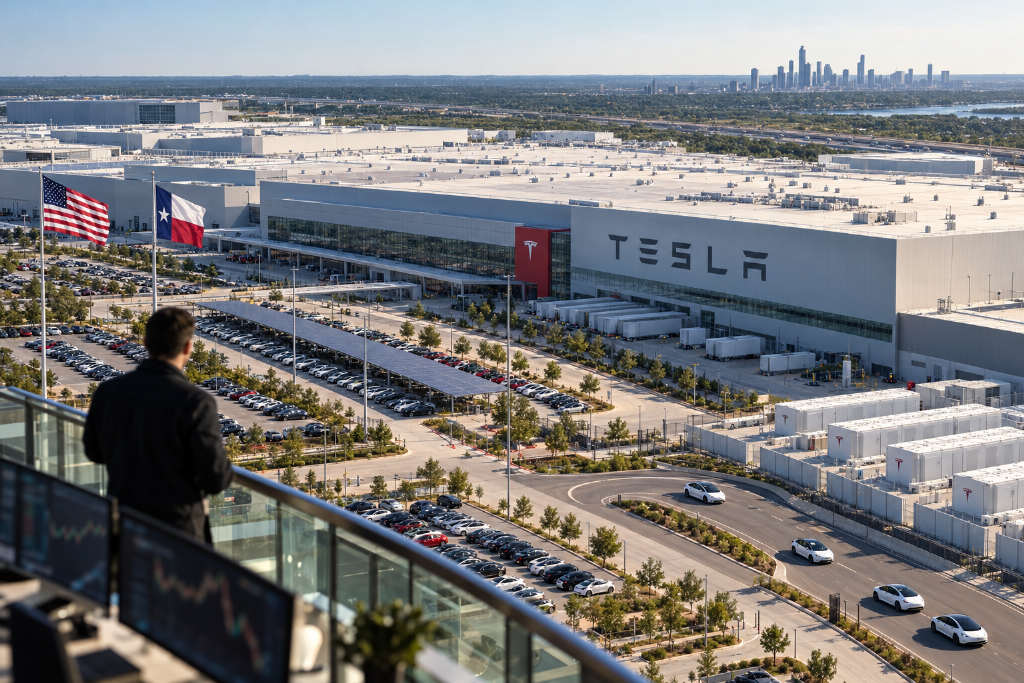
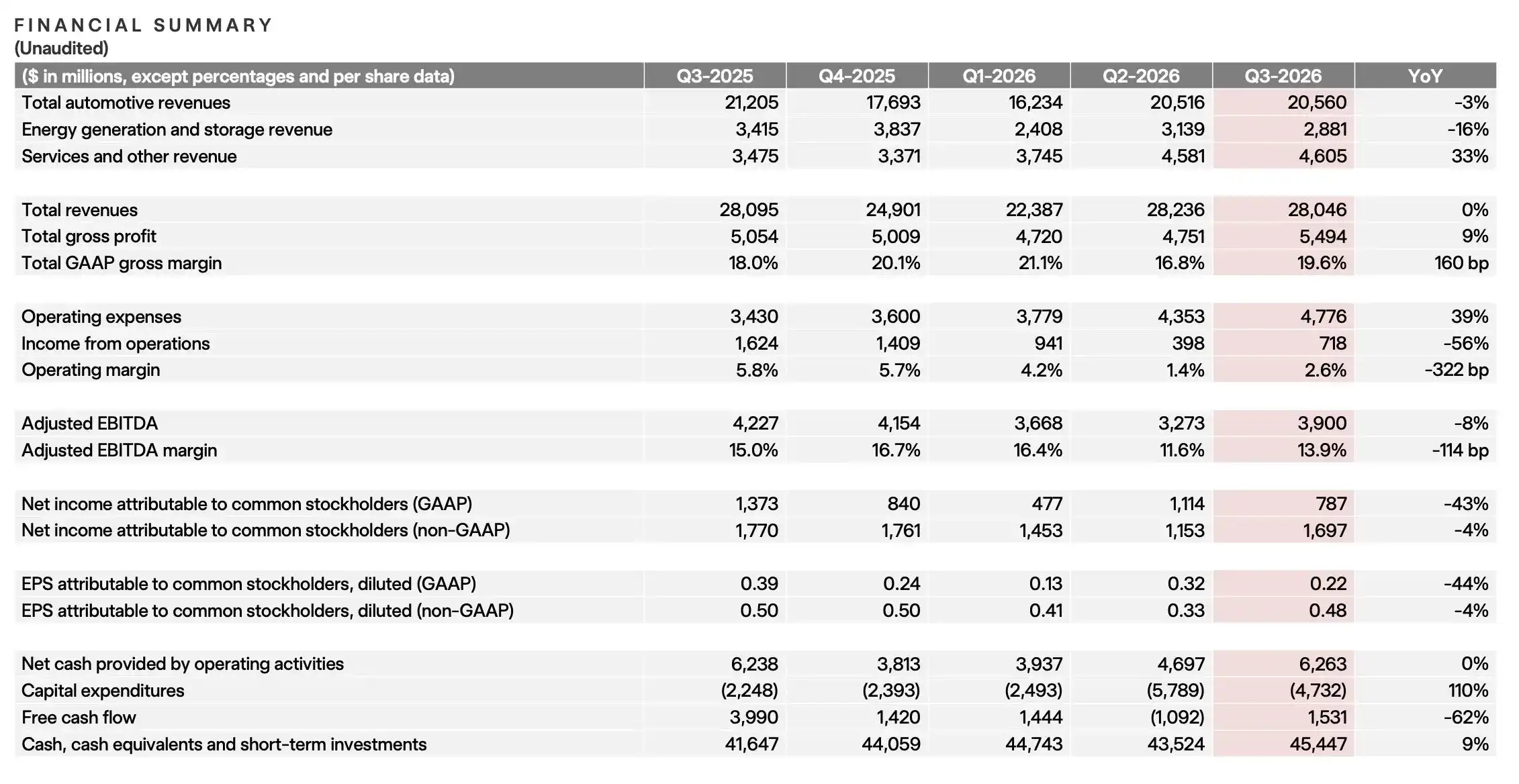
Tesla released its third-quarter 2026 results after the U.S. market close on Oct. 21, six days after staging a Roadster flight demonstration in Texas on Oct. 15. The company reported revenue of $28.046 billion, roughly flat from $28.095 billion a year earlier and slightly below the $28.13 billion market expectation. Net income attributable to common stockholders came in at $787 million, down 43% year over year, while adjusted earnings per share reached $0.48, above the expected $0.43.
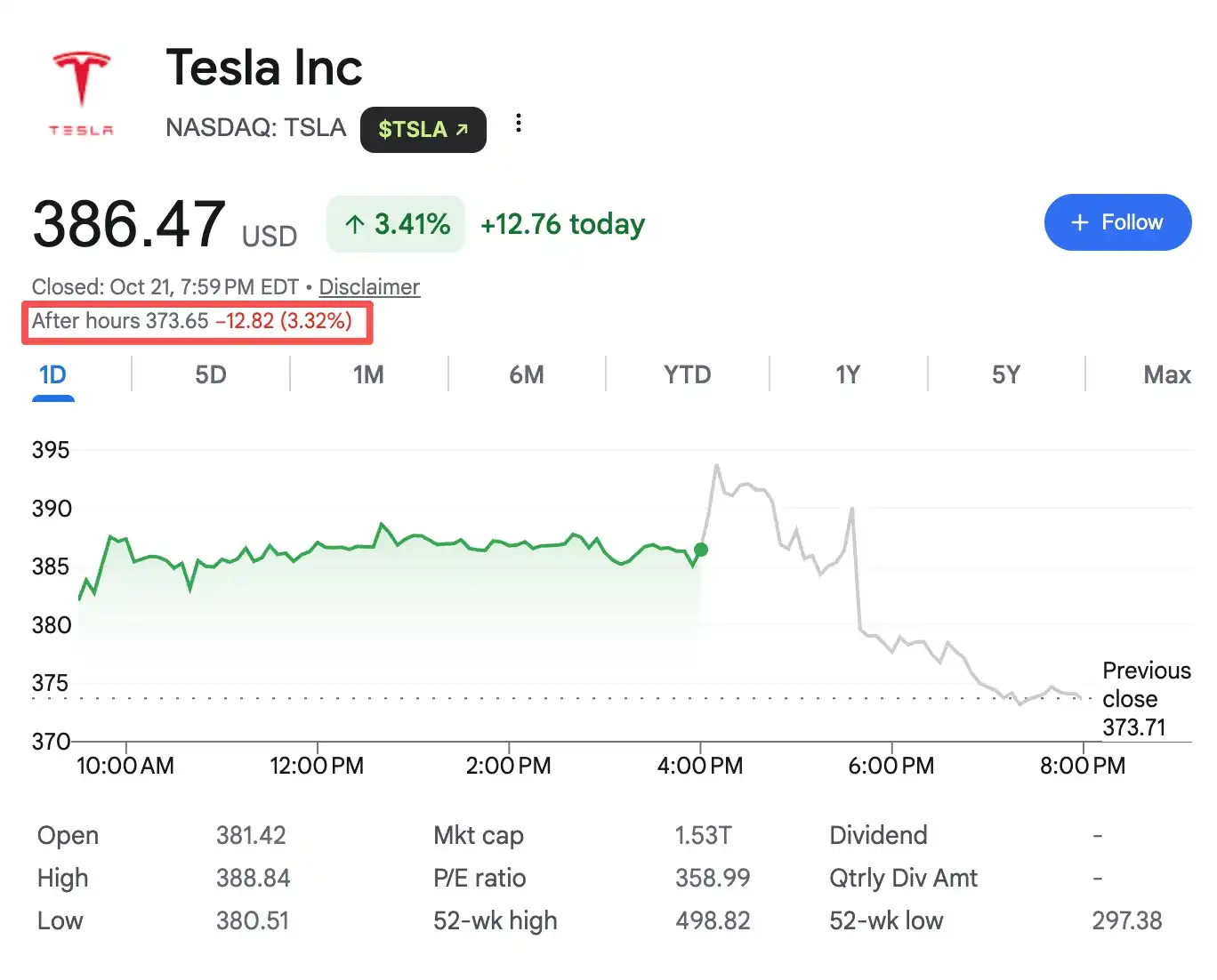
The quarter delivered a mixed message. Gross margin and free cash flow came in better than many had expected, and Tesla disclosed unusually detailed operating metrics for Full Self-Driving, or FSD, and Robotaxi. But energy revenue slowed, research and incentive costs rose, and operating margin fell to 2.6%. In after-hours trading, the stock initially rose more than 2% on the margin and cash flow surprise, then reversed course and fell more than 3% as investors reassessed fourth-quarter capital spending and the timeline for profit conversion.
Revenue held steady, but operating profit fell sharply
Tesla’s operating profit dropped from $1.624 billion a year earlier to $718 million in the third quarter, a 56% decline. Operating margin slid from 5.8% to 2.6%, meaning the company kept $2.6 in operating profit for every $100 of revenue.
By segment, automotive revenue was $20.56 billion, down 3% year over year. Energy generation and storage revenue was $2.881 billion, down 16%, making it the biggest drag on top-line growth in the quarter. Services and other revenue rose 33% to $4.605 billion, but that increase was not enough to offset declines in automotive and energy.
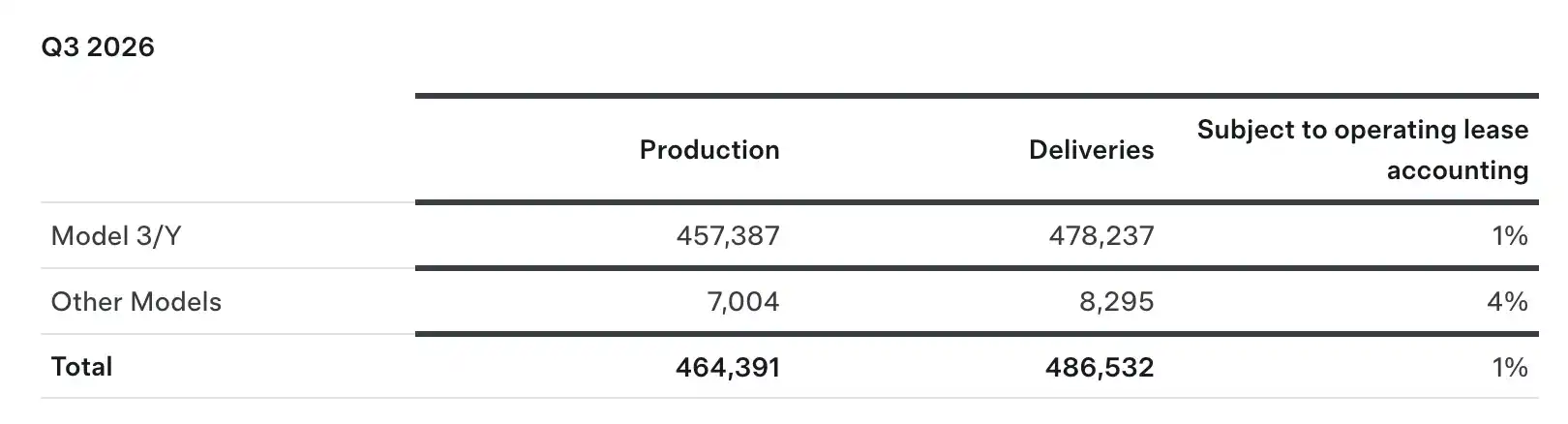
Tesla had already signaled pressure in its delivery report published on Oct. 2. The company delivered 486,500 vehicles in the quarter, down about 2% from a year earlier. Model 3/Y deliveries totaled 478,200, down 1%, while deliveries of other models fell 48% to 8,295.
Gross margin improved, but expenses and valuation changes weighed on earnings
Even with softer deliveries, Tesla’s gross profit improved. Total gross profit reached $5.494 billion in the third quarter, up 9% year over year, and total gross margin recovered to 19.6% from 16.8% in the second quarter.
The closely watched automotive gross margin excluding regulatory credits rose to 18.1% from 16.3% in the prior quarter and 15.4% a year earlier. Regulatory credit revenue fell 73% year over year to $113 million. Tesla said regional product mix optimization and stronger FSD software subscription volume helped offset pressure from lower average selling prices.
The squeeze on profit came from operating expenses and non-operating adjustments. Operating expenses climbed 39% year over year to $4.776 billion. Research and development expense jumped from $1.630 billion a year earlier to $2.761 billion, an increase of nearly 70%. Selling, general and administrative expense rose to $2.015 billion.
The gap between GAAP and non-GAAP earnings also widened. GAAP net income was $787 million, while non-GAAP net income was $1.697 billion, a difference of nearly $910 million.
- Stock-based compensation reached $1.165 billion in the quarter. Tesla said the after-tax impact was $982 million, or $0.28 per share, including amortization tied to the 2025 CEO performance award plan.
- On fair-value changes, Tesla’s SpaceX equity investment, which had contributed more than $1 billion in pretax paper gains in the second quarter, recorded an unrealized loss of $142 million in the third quarter, with an after-tax impact of $108 million. Digital assets generated an unrealized gain of $288 million, or $224 million after tax, partly offsetting that loss.
The result was a quarter in which Tesla’s gross profit base improved, but much of the incremental benefit was absorbed by heavier spending on research, talent incentives, and valuation swings in investments.
Free cash flow turned positive, though capital spending pressure remains
The income statement looked heavy. The cash flow statement looked very different.
Before the release, Wall Street had expected third-quarter free cash flow to deteriorate to between negative $4.5 billion and negative $4.99 billion after second-quarter free cash flow came in at negative $1.092 billion and Tesla kept spending aggressively on AI infrastructure. Instead, cash from operating activities reached $6.263 billion, and free cash flow turned positive at $1.531 billion.
Cash, cash equivalents, and short-term investments rose to $45.447 billion at quarter-end, up by about $1.9 billion from the prior quarter. At the same time, Tesla carried about $9.5 billion in interest-bearing debt and finance lease liabilities, including $1.387 billion current and $8.136 billion non-current, with most of it described as non-recourse debt.
That balance sheet helps explain why Tesla can keep funding several fronts at once. Still, investors cooled quickly after the initial reaction because the free cash flow beat appears to have been helped in part by spending that did not fully land in the quarter.
Capital expenditures were $4.732 billion in the third quarter, up 110% year over year. Even so, that figure was below the second quarter’s $5.789 billion and well under the market estimate of $7.77 billion.
Tesla had previously guided for more than $25 billion in capital expenditures for full-year 2026. If that target remains unchanged, the company would need to spend about $12 billion in the fourth quarter alone, roughly 2.5 times the third-quarter level. On that reading, the positive free cash flow in the third quarter looks more like a pause in spending cadence than the end of the capex peak.
FSD subscribers reached 1.74 million, and Robotaxi unsupervised miles neared 2 million
Tesla used the report to provide harder operating data on autonomous driving.
Active global FSD subscribers reached 1.74 million in the third quarter, including one-time purchases and monthly subscriptions but excluding free trials. That was up 67% from a year earlier, above the second quarter’s 1.48 million, and ahead of the 1.57 million market expectation.
In North America, Tesla said the FSD attach rate on new vehicle deliveries exceeded 75%, up by nearly 20 percentage points from the previous quarter.
Outside North America, Tesla said it secured approvals in Croatia, Slovenia, the Czech Republic, and Slovakia since the end of the second quarter. FSD is now live in nine European Union countries. Active users in Europe have surpassed 100,000, and cumulative mileage has exceeded 160 million kilometers.
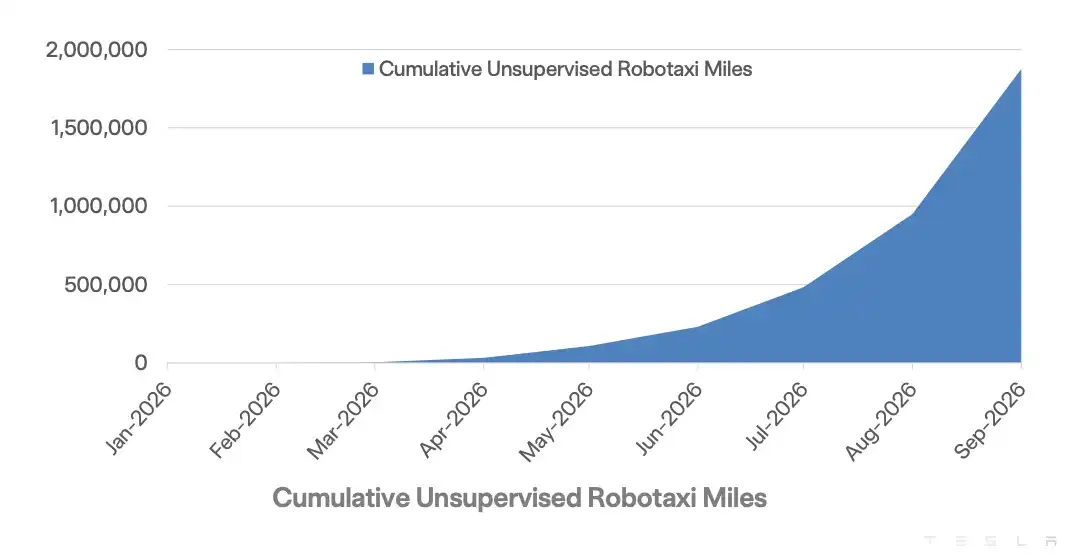
On Robotaxi, Tesla said it added the steering-wheel-free Cybercab to its commercial Robotaxi fleet in Austin, Texas, on Sept. 3. By the end of the third quarter, cumulative unsupervised Robotaxi mileage had approached 2 million miles. Quarterly mileage increased eightfold from the prior quarter, supported by continued double-digit weekly growth.
Operating hours in Austin now run from 6 a.m. to midnight. Tesla also said it has deeply integrated the Grok AI assistant into Cybercab. Riders can use full voice interaction to access Grok Bot and Connectors for email inboxes, calendars, work files, chats, and scheduling tasks. Tesla’s stated direction is to turn Cybercab from a transport tool into what it describes as a mobile office and a second living room.
Morgan Stanley, in its pre-earnings report, said fleet size and mileage growth are only the first step. The next tests are vehicle utilization, safety performance in extreme road conditions, and unit economics after depreciation and operating costs.
Energy revenue fell, but margin rose to 33.1%
The biggest surprise on the weaker side of the report was energy generation and storage. Revenue in the segment fell 16% year over year to $2.881 billion, below Wall Street expectations. But the underlying operating details pointed to a more complicated picture than simple demand weakness.
- Energy storage deployments reached 13.7 GWh in the third quarter, up 10% year over year and slightly above the second quarter’s 13.5 GWh.
- Management said part of the revenue decline was tied to tariff-related customer refunds and changes in average selling prices.
- Segment gross profit was about $954 million, and gross margin rose to 33.1%, well above the automotive business and sharply higher than roughly 20.4% in the second quarter.
Tesla also said both order growth and backlog for energy storage products hit record highs in the third quarter.
Capacity expansion is moving ahead as well. The Texas Megafactory, planned for annual capacity of 50 GWh, has officially started production. Tesla also shipped the first Megapack units assembled entirely with LFP cells produced in Nevada, a step the company framed as important for reducing outside cell dependence and avoiding tariff barriers.
Tesla tied the storage business more closely to AI infrastructure demand. As large AI data centers continue to expand, grid capacity constraints and peak-load volatility are becoming more visible, and Megapack is positioned as a ready-made option to add grid-connected power and smooth electricity demand swings.
Optimus, Semi, and Roadster are moving at different speeds
Tesla also updated investors on several long-running future programs.
For Optimus, the company said the high-capacity line at its Fremont, California factory has started producing the first batch of robots that meet production-quality standards. Tesla said the current manufacturing process has been proven suitable for commercial products, even though hardware and process iterations will continue. The Fremont line is in an early ramp phase, while the Texas Optimus line remains under construction. Tesla did not disclose output or revenue.
For Tesla Semi, the Nevada factory’s high-volume line, planned for annual capacity of 25,000 units, entered volume production in the third quarter. Tesla said the top-spec Semi can deliver 500 miles of range at a gross combined weight of 82,000 pounds, with energy consumption of 1.7 kWh per mile per 100 miles and energy cost equal to one-third that of comparable diesel trucks. The first factory pre-assembled Megacharger site has also been deployed to support deliveries.
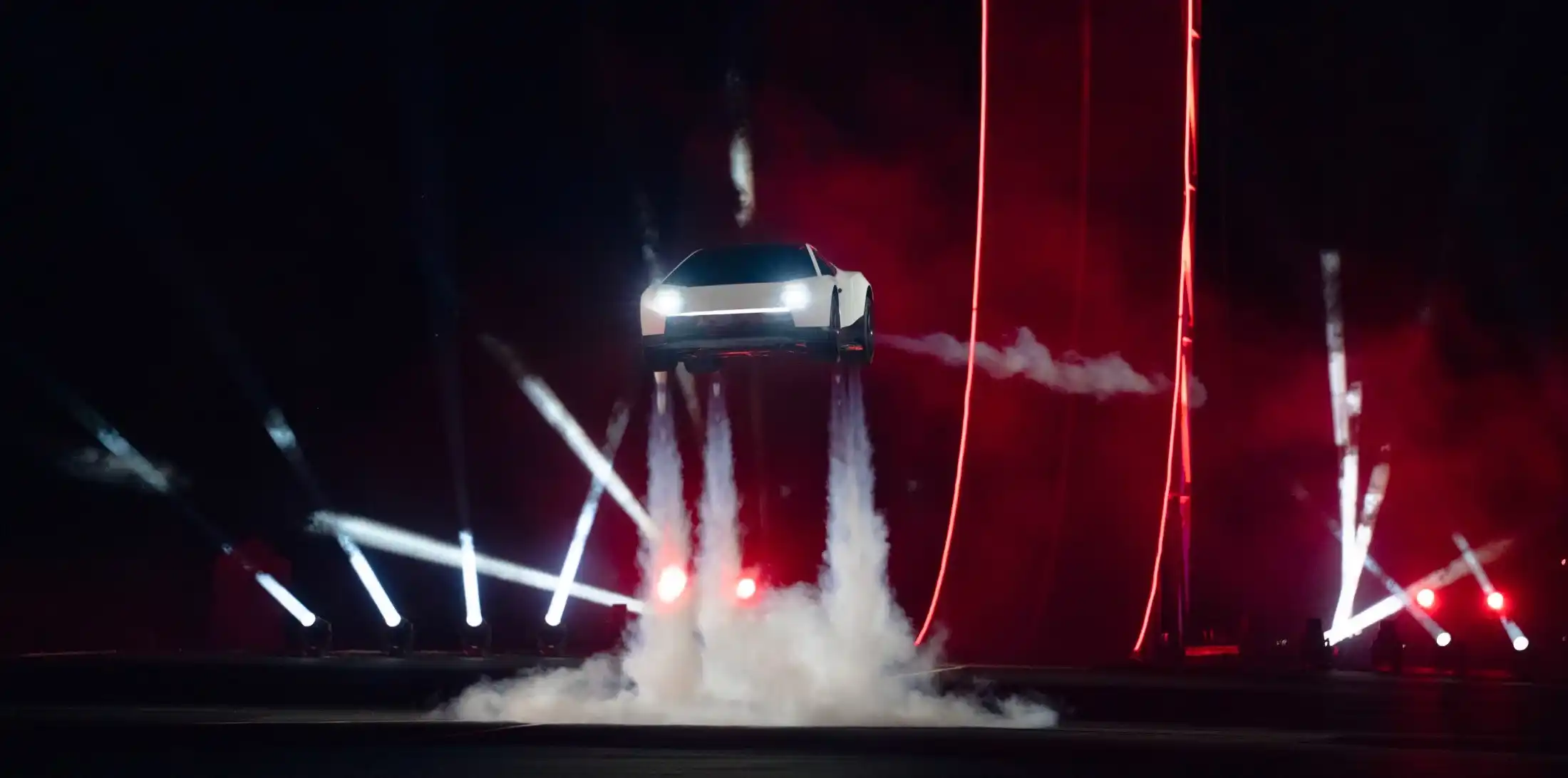
For the Next Gen Roadster, the Oct. 15 flight demonstration drew attention, but the production status table in the earnings materials still listed the vehicle’s location as TBD and its status as design development. In practical terms, the Roadster remains a technology and brand showcase rather than a near-term source of incremental revenue.
The central question is when future businesses start showing up in the financials
Read together, the quarter shows a company still relying on the cash flow of its established business while spending heavily on newer bets. Vehicle pricing and deliveries remain under pressure. GAAP net income fell 43%, and operating margin dropped to 2.6%.
At the same time, automotive gross margin excluding credits rose to 18.1%, cash reserves reached $45.447 billion, the FSD attach rate on new vehicles in North America topped 75%, and cumulative unsupervised Robotaxi mileage approached 2 million miles. Those figures give investors more concrete signals on the commercial path for autonomous driving and embodied AI.
Technology demonstrations can lift expectations quickly, and production line launches can validate engineering progress. Public markets, though, still come back to the income statement and the cash flow statement. For Tesla, the next test is not just whether it can keep telling a bigger story, but whether Robotaxi, energy storage, and robotics can move toward a verifiable business loop during a period that may still include tens of billions of dollars in capital spending.