
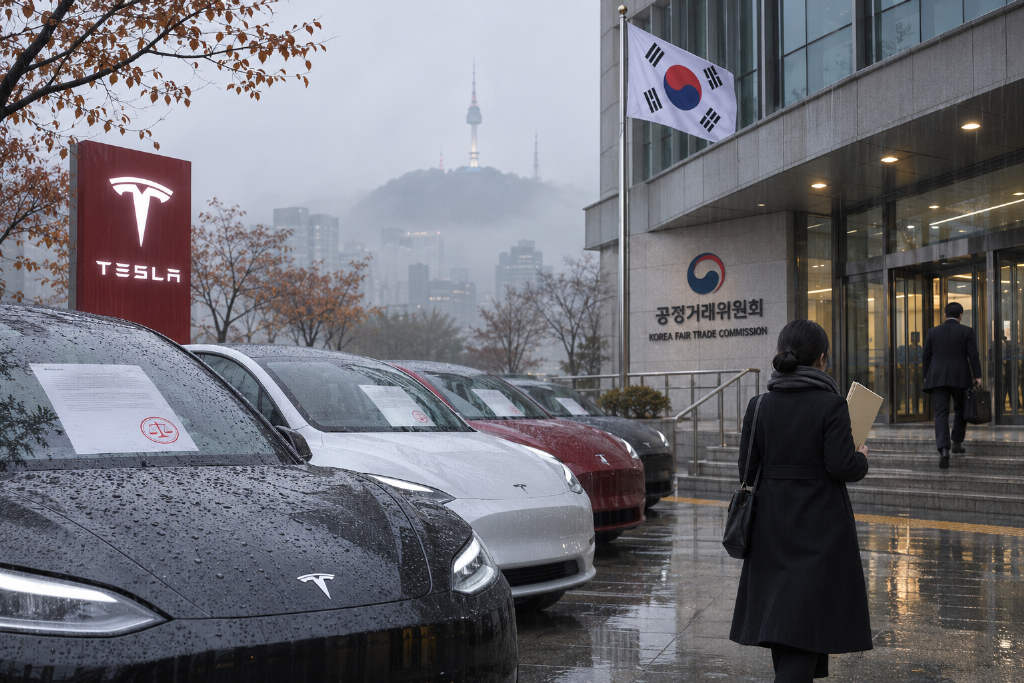
A South Korean consumer group plans to file a complaint with the Korea Fair Trade Commission, or KFTC, on Nov. 5, accusing Tesla of promoting Full Self-Driving, or FSD, to tens of thousands of buyers even though most Tesla vehicles in the country could not legally use the feature.
Reuters, which first reported the complaint on Nov. 4, said the filing came from Citizens United for Consumer Sovereignty. The group argues that Tesla continued to market FSD to all customers in South Korea despite knowing that most of its vehicles there were not legally eligible for the software.
Documents Tesla submitted to South Korea’s National Assembly show that 99% of the new vehicles it sold in the country last year could not legally use FSD. Put another way, only one out of every 100 new Tesla vehicles sold in South Korea was legally able to activate the feature.
Only a minority of Tesla vehicles in South Korea can use FSD
FSD is Tesla’s "supervised" Full Self-Driving feature. It is a driver-assistance system, and drivers are still required to monitor the vehicle at all times while it is in use.
Seo Young-deuk, the head of Tesla’s South Korean unit, appeared as a witness before the National Assembly’s Land, Infrastructure and Transport Committee on Oct. 8. He said that out of about 230,000 Tesla vehicles in South Korea, roughly 45,000 can use FSD. Those vehicles are all made in the United States and account for about 20% of the total.
Materials Tesla Korea submitted to lawmakers ahead of that hearing showed that as of the end of September, 185,491 Tesla vehicles in South Korea could not use FSD. Of those, 183,407 were China-made Model 3 and Model Y vehicles. Nearly all ineligible vehicles were built in China.
Eligibility depends on where the vehicle was built
The complaint says legal eligibility for FSD in South Korea depends on the vehicle’s country of manufacture. U.S.-made Teslas meet U.S. motor vehicle safety standards, and South Korea recognizes those standards under the Korea-U.S. Free Trade Agreement. China-made vehicles do not have a similar arrangement available.
Tesla’s submissions to the National Assembly also show that the company has sold more than 170,000 Shanghai-made vehicles in South Korea since 2023. Sales of those China-made Teslas that cannot use FSD rose more than fivefold from 2023 to last year. South Korean imported car statistics also show that Tesla has overtaken BMW this year to become the country’s best-selling imported car brand.
How FSD rollout and pricing changed in South Korea
FSD was not officially launched in South Korea until late November last year. At first, only U.S.-made Model S, Model X, and Cybertruck vehicles were eligible.
On July 10, Tesla Korea said it was expanding the eligible lineup to include U.S.-made Model 3 and Model Y vehicles that had already been approved for FSD. In South Korea, however, Model Y vehicles have been supplied from China since 2023, and Model 3 vehicles since 2024. Those China-made versions remain outside the approved list.
For years, Tesla sold FSD in South Korea as a one-time purchase priced at 9.043 million won, or about $6,726. In August this year, the company switched to a subscription model priced at 150,000 won, or about $112, per month. Reuters said the one-time price was roughly equal to five years of subscription payments. Reuters also reported that Tesla had been charging customers for FSD for more than three years and only recently began seeking certification for China-made vehicles.
Complaint targets "coming soon" marketing
The filing says Tesla advertised FSD as "coming soon" last year and released demonstration videos filmed in South Korea. According to the complaint, those promotions did not clearly disclose that the feature was available only for a small portion of the models on sale. The complaint states that Tesla knew about those restrictions and still marketed the software to all customers.
Choi Young-suk, who handles auto issues for Citizens United for Consumer Sovereignty, said: "Tesla sold an expensive driver-assistance system to mass-market buyers and earned substantial revenue, but those buyers could not use it for even a single day."
The group is asking the KFTC to order Tesla to stop promoting FSD for ineligible vehicles, impose administrative fines, and refer the case to national investigative authorities.
KFTC says it already opened an investigation earlier this year
A KFTC official told Reuters that the regulator had already opened an investigation earlier this year into Tesla’s FSD advertising. The official said the agency had also received a written response from Tesla, but did not provide more detail. Tesla did not respond to Reuters’ request for comment.
Separately, a refund lawsuit brought by vehicle owners failed in October. On Oct. 29, the Seoul Central District Court rejected claims from 88 owners who had sought full refunds of their FSD payments. The court said the FSD option did not promise fully autonomous driving without human intervention, and that delays in rolling out some functions were caused by domestic and overseas regulatory limits, for which Tesla was not responsible.



