
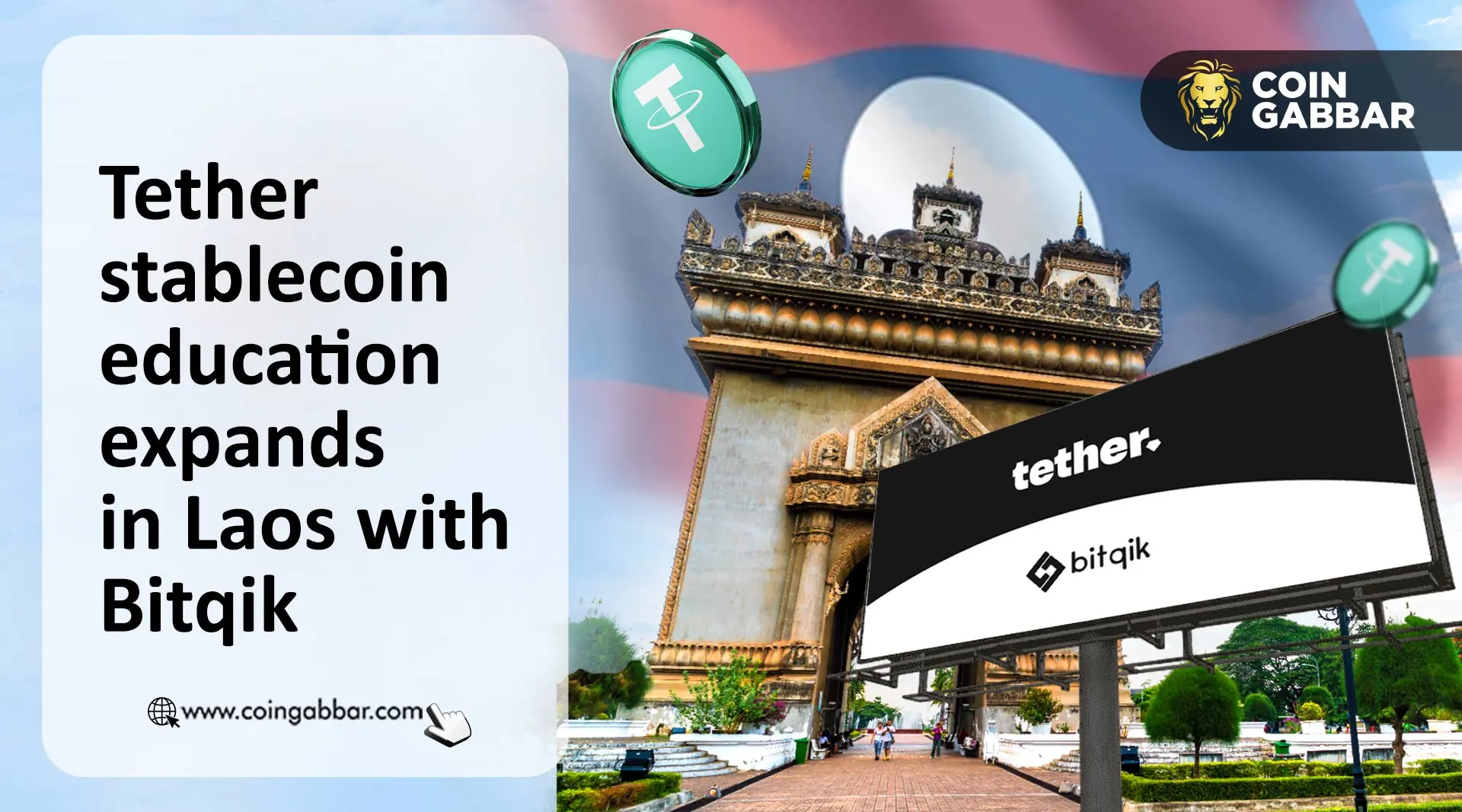
Tether has partnered with Bitqik, a licensed crypto exchange in Laos, to roll out a stablecoin education program focused on digital finance and the practical use of tokens such as USD₮. The initiative will use virtual learning materials and quarterly in-person events in Vientiane, Pakse, Luang Prabang, and Vang Vieng, with a stated goal of educating more than 10,000 people during 2026.
Program centers on digital dollars and safe usage
According to the source material, the campaign is designed to explain how digital dollars work, how people can use stablecoins safely, and why these assets are becoming part of everyday finance. The format combines e-learning with live community events, aiming to make digital finance more practical for a broader audience in Laos, including communities, students, and entrepreneurs looking for access to blockchain knowledge.
Stablecoins remain the most widely used crypto segment
The report describes stablecoins such as USDT and USDC as the most practical and widely used area of crypto. They function as digital dollars on blockchains, allowing faster and lower-cost transfers without the price swings commonly seen in Bitcoin or Ethereum. Their use cases listed in the source include cross-border money transfers, access to wallets and mobile apps for people without bank accounts, use as collateral or settlement tools in DeFi, and smoother movement between fiat systems and blockchain-based assets.
The article says the global stablecoin market has reached record levels, with a total market capitalization of about $310 billion to $311 billion and annual transaction volume of roughly $33 trillion to $40 trillion. USDT accounts for around $187 billion, or about 60% of the market, while USDC holds about 25%, leaving other stablecoins with roughly 15% to 20%.
Laos initiative also aims to build local confidence
The source links broader stablecoin growth to clearer regulations in the US, the EU, and parts of Asia, which have encouraged institutional adoption. In Laos, the Tether-Bitqik program is framed as an effort to expand understanding and trust around digital assets. Bitqik CEO Virasack Viravong said the project will improve access to blockchain education for communities, students, and entrepreneurs. Tether CEO Paolo Ardoino said that financial inclusion requires understanding, and he described education as key to building confidence in using USD₮ and other digital assets. The source also notes that the program could strengthen USD₮'s position in Laos, where high inflation and limited banking access have been felt.