
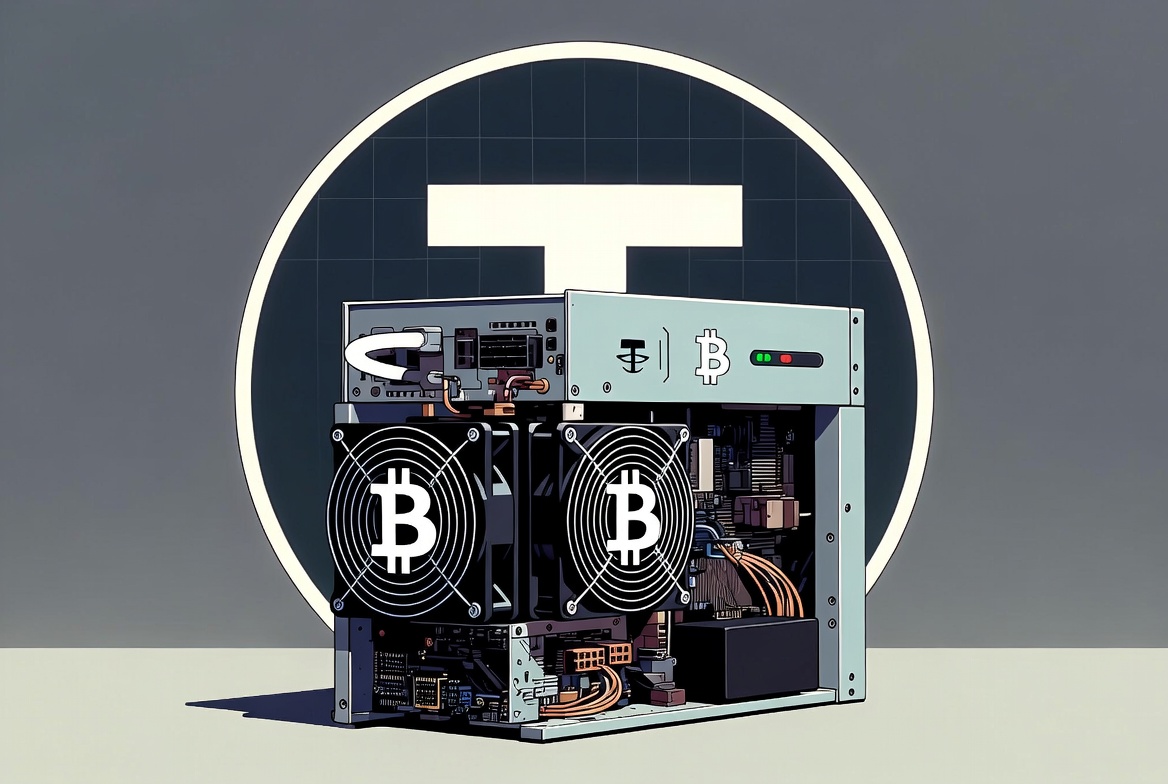
Stablecoin issuer Tether is accelerating its push into Bitcoin's infrastructure. On April 27, 2026, Tether officially announced the open-source launch of the Mining Development Kit (MDK), a full-stack framework that gives mining operators and developers unified control over their infrastructure.
Breaking Vendor Lock-In, Ending Mining System Fragmentation
The Bitcoin mining industry has long struggled with system fragmentation and vendor lock-in. When farms span multiple energy systems, data centers, and distributed sites, operators are forced to use proprietary, closed monitoring tools from hardware vendors, raising costs and hindering scale. MDK solves this with an open modular architecture and agnostic interfaces—no binding to specific hardware or vendors, full support for Windows, macOS, and Linux. Operators can see all connected devices through a single control layer and integrate new hardware without rebuilding the underlying stack.
Two Core Stacks: MDK Core and UI Kit
Technically, MDK consists of two independent layers: MDK Core, a highly open-source JavaScript backend SDK using a capability-based architecture where independent workers interact with devices under a central coordinator; and the UI Development Kit, which provides standard React front-end components for quickly building dashboards, pool management tools, and data pipelines, ensuring consistent interfaces across mine sites.
From Home Miners to Industrial Farms, Tether Aims to Reshape Mining Infrastructure
The release follows Tether's earlier open-sourcing of its Mining OS (MOS), underscoring Tether's commitment to strengthening Bitcoin network resilience and reducing reliance on centralized suppliers. Tether CEO Paolo Ardoino said: "Infrastructure is the heart of any mining operation. MDK is drawing the blueprint for a universally programmable and scalable mining facility. The next generation of mining will be centered around automation and optimization, and MDK will be the backbone driving that transformation."
The open-source license allows anyone to modify and distribute the code, theoretically benefiting everyone from home miners to large enterprises. The move may also pressure traditional mining hardware makers to open more interfaces to stay compatible with the emerging open ecosystem.