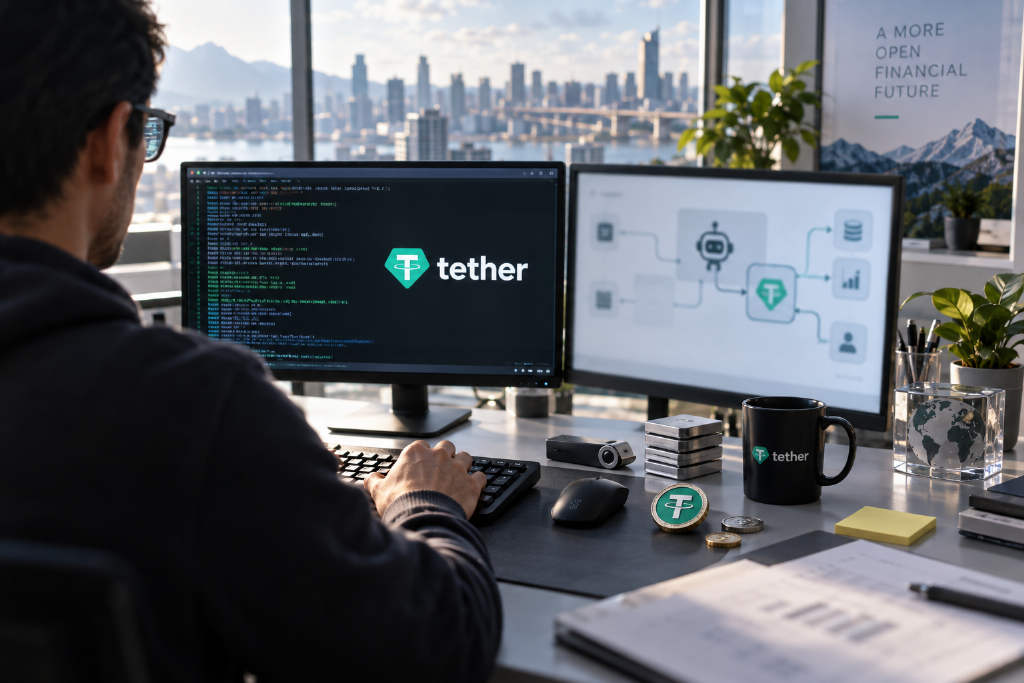
Tether has expanded its wallet development kit with a command-line wallet and an MCP interface designed for AI agents. The company said the same local wallet daemon can be controlled either by a user through a terminal or by compatible AI software through the Model Context Protocol. The release is currently in beta, and Tether said it recommends testing with limited funds only. Tether framed the update around agentic payments, saying software in automated workflows could pay for services, move funds, or interact with financial protocols. Beyond the new tools, Tether’s broader WDK stack includes modular support for gasless transactions, swaps, cross-chain bridges, lending, and fiat on- and off-ramps, widening the set of actions that software agents could potentially initiate.
Tether has expanded its wallet development kit, adding a command-line wallet and an MCP interface for AI agents.
According to the announcement cited by Techub, the same local wallet daemon can be controlled by a user through a terminal or by compatible AI software through the Model Context Protocol, or MCP. The tool is currently in beta, and Tether said it recommends testing with limited funds.
Tether positioned the release as infrastructure for agentic payments. As part of automated workflows, software could pay for services, transfer funds, or interact with financial protocols.
Its broader WDK stack also includes modular support for gasless transactions, swaps, cross-chain bridges, lending, and fiat ramps, creating a wider range of potential actions that agents could initiate.
This article was originally published by Bit.Fan. For more cryptocurrency news and market insights, visit www.bit.fan. Disclaimer:
The market information, project data, and third-party content displayed on this platform are for industry information sharing only and do not constitute any form of investment advice or return commitment.
Cryptocurrency trading carries high risks. Users should fully assess their risk tolerance and make independent decisions. All profits, losses, and legal responsibilities are borne by the users themselves.