
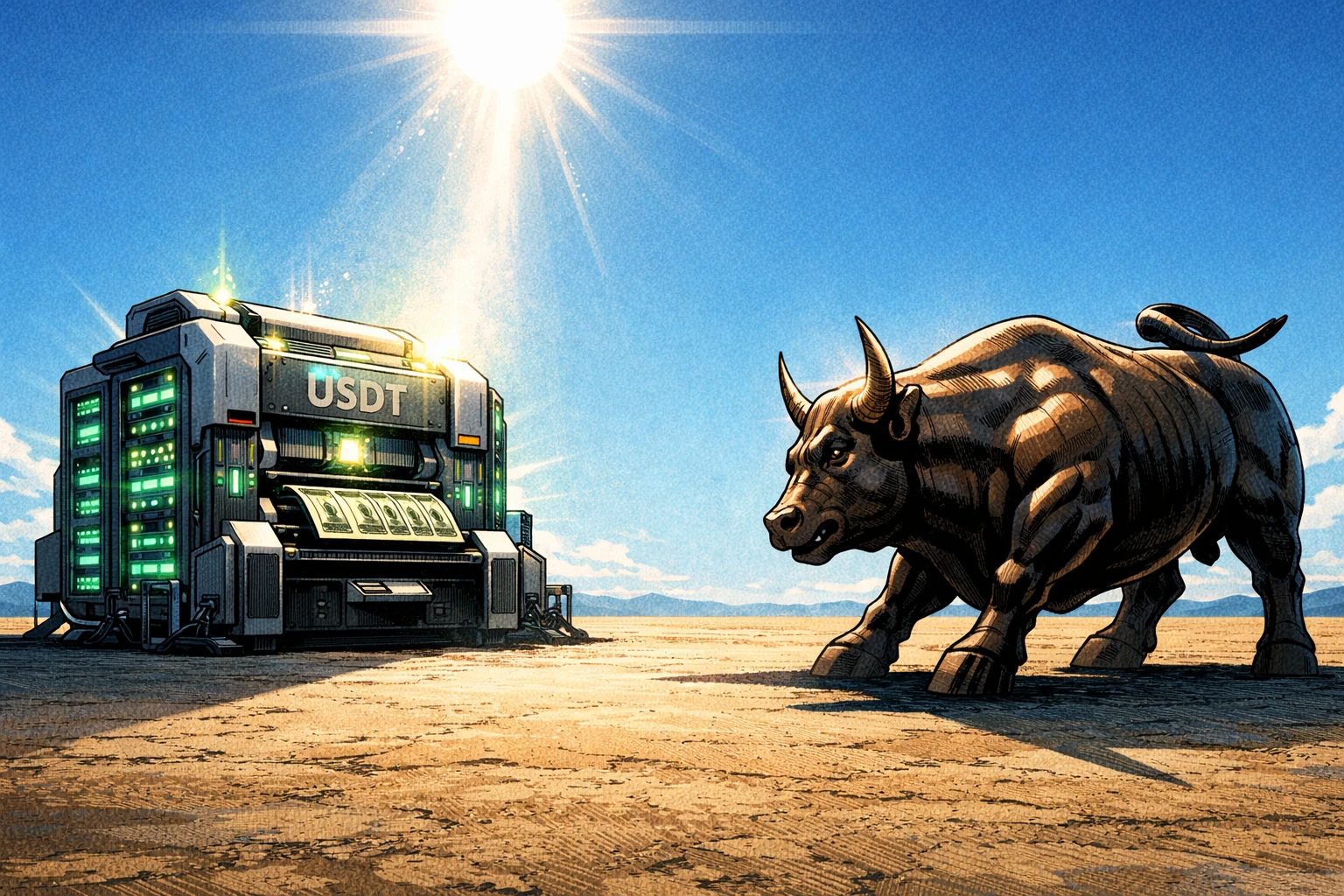
Tether has slashed its fundraising target from $15–20 billion to just $5 billion, a decision that signals Wall Street's rejection of the stablecoin issuer's audacious $500 billion valuation. The gap between ambition and reality boils down to pricing power.
Fundraising Cut: From $20B to $5B
According to the Financial Times on August 4, Tether reduced its fundraising goal from the originally reported $15–20 billion range to $5 billion. The rumored $500 billion valuation failed to convince institutional investors. Tether's core business combines stablecoin issuance with U.S. Treasury investments, plus forays into gold and AI. Traditional finance typically assigns a P/E ratio of 10–15x to such interest-margin businesses. To hit a $500 billion valuation, investors would have to treat Tether like a hyper-growth AI firm — a leap Wall Street is unwilling to take.
CEO: 'We're an AI Company That Makes Money'
CEO Paolo Ardoino pushed back on the notion of a downgrade. He quipped, "AI companies produce the same amount of profit as we do, but with a minus sign in front." The remark mocks Silicon Valley's loss-heavy AI valuations. Ardoino stressed that Tether has ample internal cash flow and that major shareholders are reluctant to sell equity. The company is pivoting toward AI computing through investments in Northern Data, trying to reshape its image beyond stablecoins.
Profit Slips 25%, But Asset Moat Remains
Numbers tell a nuanced story. Tether reported roughly $10 billion net profit in 2025, still dwarfing many Wall Street banks, but down 25% from $13 billion in 2024. Despite USDT supply hitting a record $186.5 billion, profit compression comes from compliance costs — launching USAT under the GENIUS Act and expanding fiat on-ramps globally. Still, Tether's balance sheet reveals a fortress: $141 billion in U.S. Treasuries (making it a major creditor of the U.S. government), $17.4 billion in gold, and $8.4 billion in bitcoin. The Cantillon effect favors those nearest the money printer.
Why Raise Cash If You Don't Need It? Buying Old Money's Insurance
Why sell equity when annual profits top $10 billion? The answer is about buying a seat at the traditional finance table. In the second year of the Trump administration, crypto regulation may look relaxed, but legacy banks are preparing a counterattack. Tether doesn't need the $5 billion in cash — it needs the shareholders behind that cash, Wall Street names with influence in Washington. Equity deals lock in traditional capital as allies. Whether the valuation hits $500 billion is just bargaining chips changing hands.