
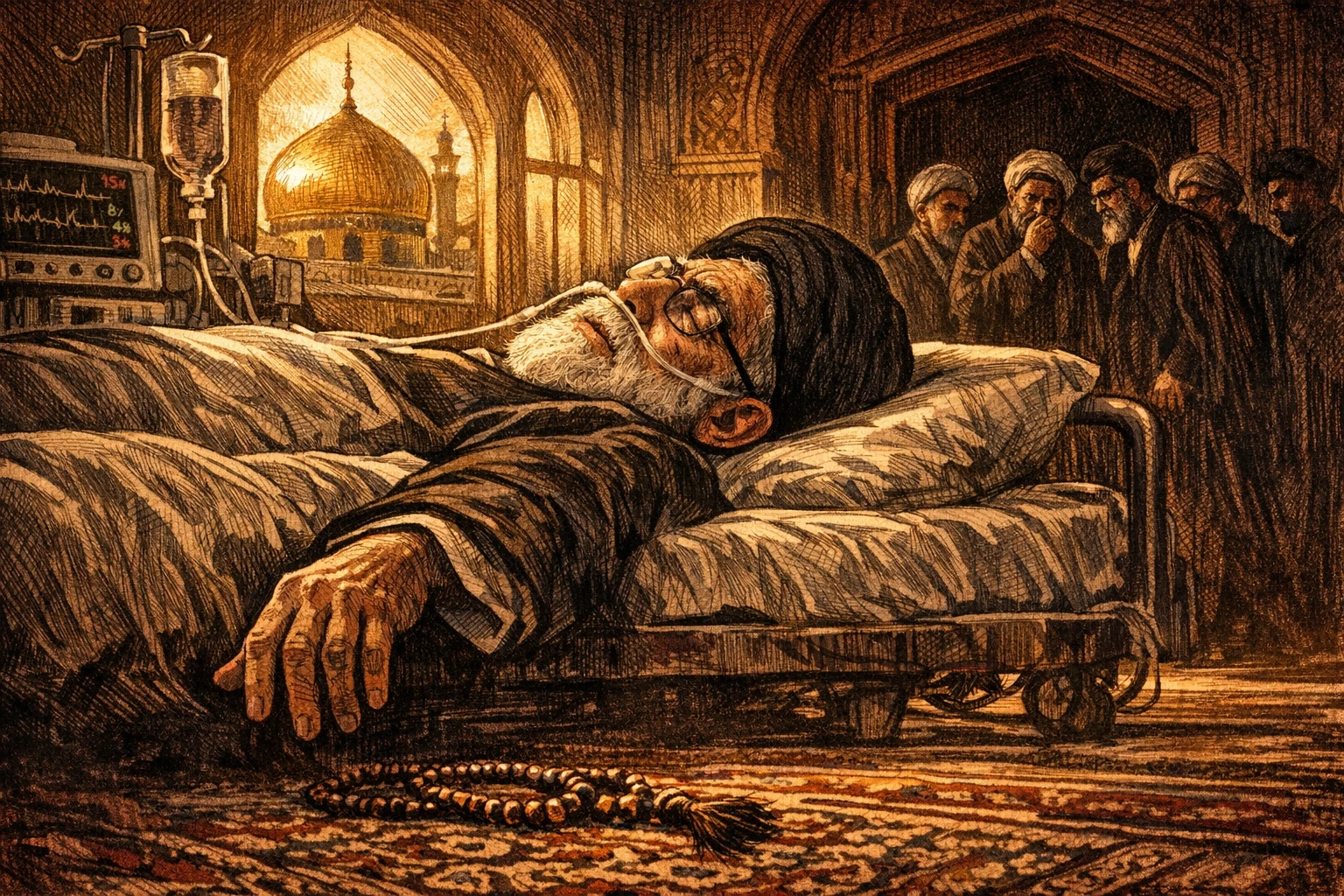
The Times reported that a diplomatic memo based on U.S. and Israeli intelligence, and shared with Gulf allies, says Iran’s current Supreme Leader Mojtaba Khamenei is receiving medical treatment in Qom and has been unconscious for weeks. According to the report, he is unable to take part in state decision-making, raising questions over who is actually running the Iranian system. The document also marks the first public disclosure of his reported location.
Memo links his condition to the February 28 airstrike
The memo, as cited by The Times, traces Mojtaba Khamenei’s severe injuries to a joint U.S.-Israeli airstrike on February 28. The same attack reportedly killed his father, former Supreme Leader Ali Khamenei, as well as his mother, his wife, and one of his sons. Mojtaba, 56, then emerged as the new Supreme Leader, but the report says he has not appeared in public at any point since the war began.
Iranian state television has aired two declarations issued in his name. Still, no direct audio or video of him speaking has been shown. Opposition-linked sources cited in the report say he remains in critical condition. That gap between official messaging and visible public proof has intensified doubts over whether he is in a position to exercise real authority.
Developments in Qom add to succession questions
The memo also says a large mausoleum is being prepared in Qom for Ali Khamenei, and possibly for other family members. That detail contrasts with earlier expectations that mourning ceremonies would be held in Tehran. The delay in a state funeral carries extra weight in Shiite communities, where burial is traditionally expected to take place quickly, making any prolonged delay politically and religiously sensitive.
Qom holds major importance in Shiite Islam and in the Khamenei family’s succession network. The report says Israel struck Qom in early March, hitting a building where 88 members of the Assembly of Experts were meeting to discuss the succession. If Mojtaba Khamenei is indeed being treated there, the overlap between the leadership’s location, the religious-political center, and a recent strike zone becomes hard to ignore.
Leadership uncertainty clouds any negotiation track
The report adds that as Trump’s deadline for Iran approaches, even Iran’s allies appear unable to verify the real state of decision-making in Tehran. With the country’s top leader absent from public view and his condition disputed, the credibility of any negotiation channel remains in question. At the same time, Iran’s Foreign Ministry has previously insisted that Mojtaba Khamenei is in good health.