
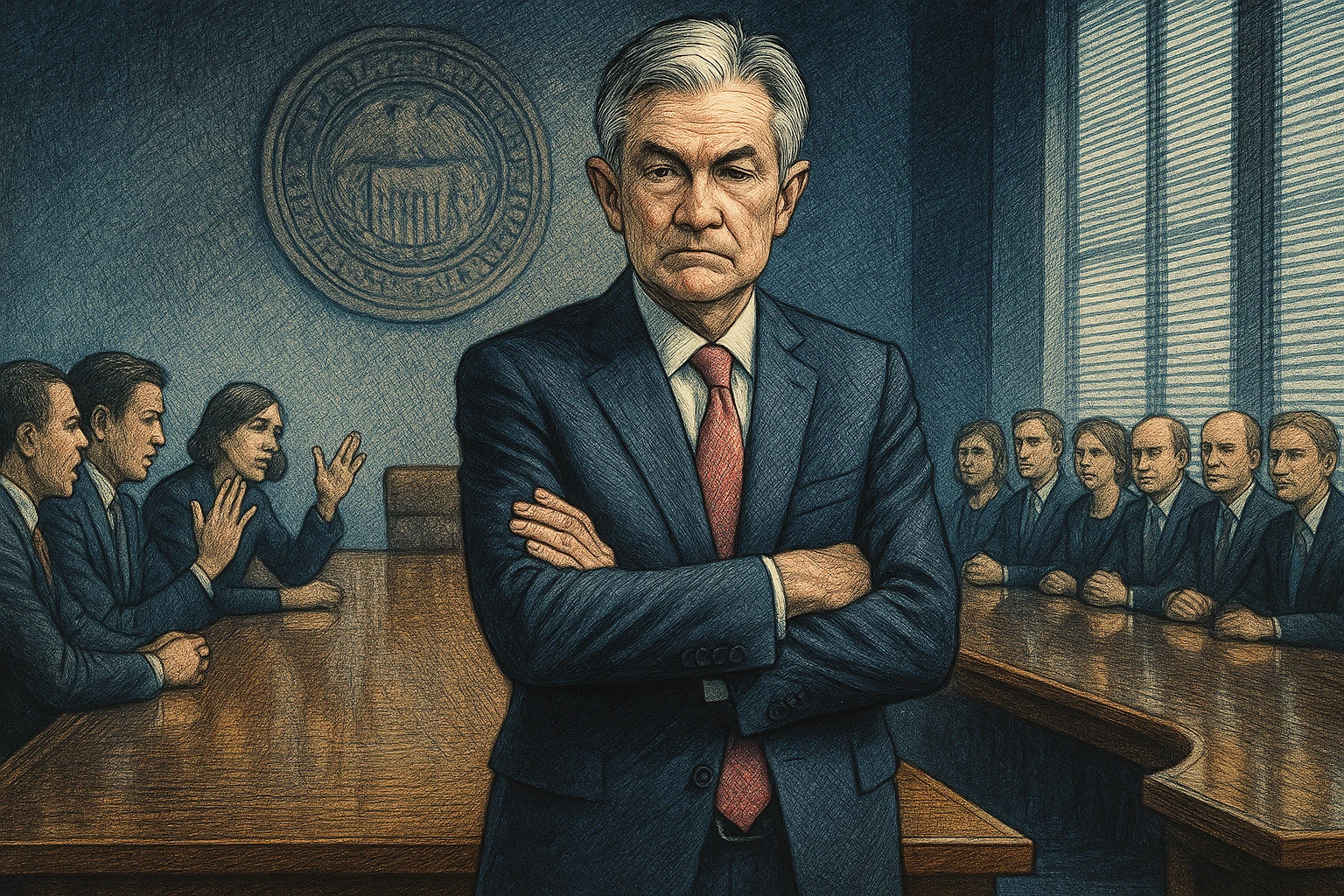
This week's Federal Reserve meeting could see an unprecedented display of internal dissent. Nick Timiraos, the Wall Street Journal reporter known as the "Fed whisperer," warned that three governors appointed by President Donald Trump may vote in unison against the rate decision—something not seen since 1988. Timiraos argues this goes beyond a routine policy disagreement, marking a shift from technical divisions to overt political strife.
Three Governors, Three Agendas
Timiraos detailed the positions of each potential dissenter.
Stephen Miran, the most vocal critic, has voted against every meeting since joining the board last September. A former top economic advisor to Trump, his political ties run deep.
Christopher Waller dissented in January. Timiraos notes that weak February payroll data reinforced Waller's long-held view that the labor market is nearing a tipping point, and the Fed should not sit idle.
Michelle Bowman draws the most attention. She recently stated in a TV interview that the economy "could benefit from looser interest rate policy." In December, she projected three rate cuts in 2026, making her the board's most dovish member. Trump has nominated her to become the vice chair for banking supervision, adding political weight to any dissent she might issue.
Why Governor Dissent Matters More
Timiraos dedicated a significant portion of the article to explaining the structural differences in voting impact.
The FOMC consists of seven governors and five regional bank presidents, with 12 votes total. Governors are presidential appointees confirmed by the Senate, making them inherently political actors. Regional presidents, selected by local boards, are seen as apolitical technocrats. Thus, a governor's vote is subject to much closer political scrutiny.
Bowman broke a 19-year tradition of governor unanimity in 2024 by casting a solo dissent. Last summer, she and Waller joined forces—the first dual governor dissent since 1993. If Miran joins them now, it marks an entirely different magnitude of rebellion.
Alarm from Former Officials
Timiraos quoted former policymakers expressing deep concern.
Jim Bullard, former St. Louis Fed president and now dean of Purdue's business school, was blunt: "If you vote against a rate hike when your core inflation is above 3% and moving in the wrong direction, you are signaling that you accept inflation. That is a very hard position to defend."
Eric Rosengren, former Boston Fed president, offered a systemic warning: "It's hard to know motives from the outside, but if the market believes the vote is political ... that is a very dangerous place." He explained that in countries where central banks have been politicized, public confidence erodes and inflation becomes even harder to tame—a vicious cycle.
Waller himself made a telling remark, cited by Timiraos: "If we really get to 7 to 5, one defector in the next meeting flips the entire path." This acknowledges the immense uncertainty that a unified dissent would create for future policy.
Vincent Reinhart, a former Fed senior advisor now chief economist at BNY Investments, delivered the grimmest prediction: "From now on, your forecast for the Fed is more about political economy than macroeconomics."
Weak Economic Case for Cuts
Timiraos noted the macro backdrop: inflation above 3% and rising oil prices due to Iran tensions make the case for a rate cut thin. Last December's decision saw three dissents too, but in the opposite direction—two regional presidents wanted to hold, while Miran wanted a bigger cut. Internal division is not new, but its nature is shifting.
Trump publicly demanded an immediate rate cut last week, fueling perceptions of political interference. Timiraos contrasted the Fed with the Bank of England: dissents are normal at the BOE, but the Fed's credibility has long relied on consensus. That culture, once broken, may not recover.
Vice Chair Kevin Warsh, awaiting Senate confirmation, will likely inherit this fractured committee.
Crypto Market's Mixed Signals
For crypto markets, the Fed's fracture offers a dual narrative.
Optimistically, a louder dovish voice could revive rate-cut expectations, giving risk assets like Bitcoin short-term support. But Timiraos' article focuses on the darker side: if the market starts linking FOMC votes to Trump's political will, the Fed's independence—a foundational trust anchor for crypto—begins to erode.
Historically, when central bank credibility wavers, Bitcoin has rallied as a "decentralized safe haven." However, if Reinhart's "political economy" model becomes reality, uncertainty itself becomes the risk, and markets tend to sell first and ask questions later.